The Serra de Tramuntana is a must-ride for cyclists because it combines dramatic mountain scenery, well-maintained roads, and a variety of climbs that suit every level of rider. Stretching along the northwest coast of Mallorca for roughly 90 kilometres, this UNESCO World Heritage mountain range offers some of the most rewarding cycling terrain in Europe. Below, we answer the most common questions cyclists ask before heading into the Tramuntana.
What makes the Tramuntana roads so popular with cyclists?
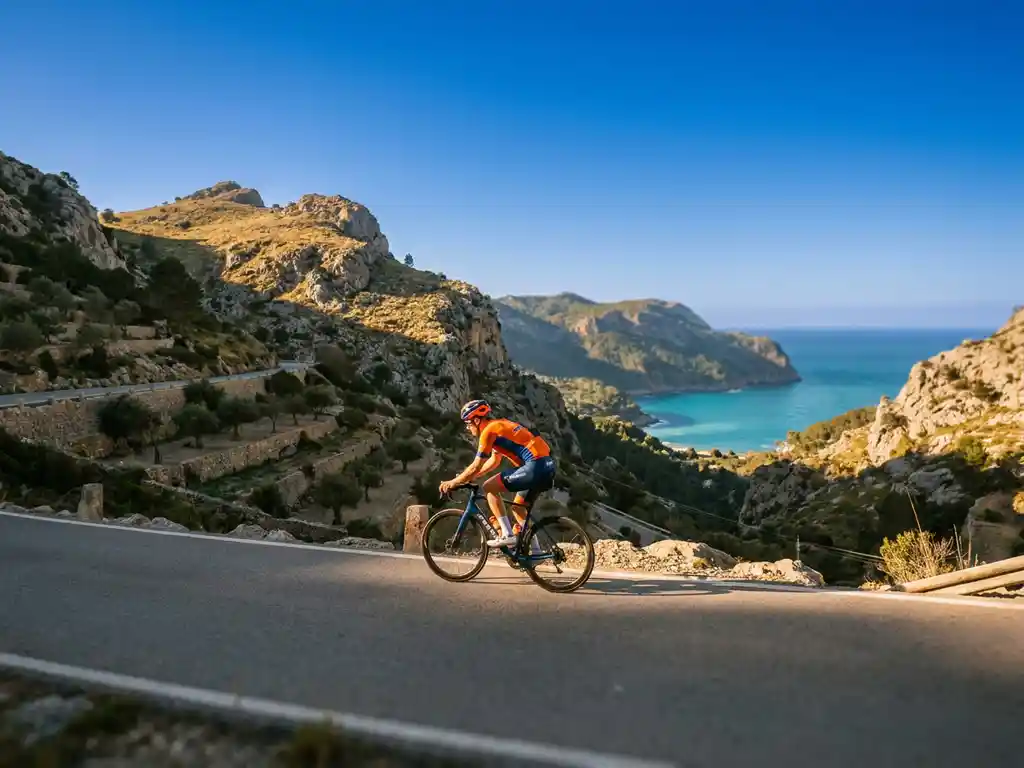
The roads through the Serra de Tramuntana are popular with cyclists because they offer smooth tarmac, low traffic levels, and a constantly changing landscape of olive groves, cliff edges, and mountain villages. The combination of challenging gradients and stunning coastal views creates a riding experience that is genuinely hard to find anywhere else in Europe.
Unlike many mountain destinations where roads are shared with heavy freight or fast-moving traffic, the Tramuntana’s interior routes feel calm and manageable even during peak season. The infrastructure has been developed with cyclists in mind over decades, and local drivers are generally accustomed to sharing the road. Villages like Valldemossa, Deià, and Sóller act as natural waypoints, giving riders a reason to stop, refuel, and take in the surroundings. For recreational cyclists, this rhythm of riding and resting is exactly what makes a cycling holiday on Mallorca so enjoyable.
Which climbs in the Serra de Tramuntana are the most iconic?
The most iconic climbs in the Serra de Tramuntana are Puig Major, Sa Calobra, and the Coll de Sóller. These three ascents are known throughout the European cycling community and draw riders from across the continent every year, from weekend enthusiasts to professional teams in winter training.
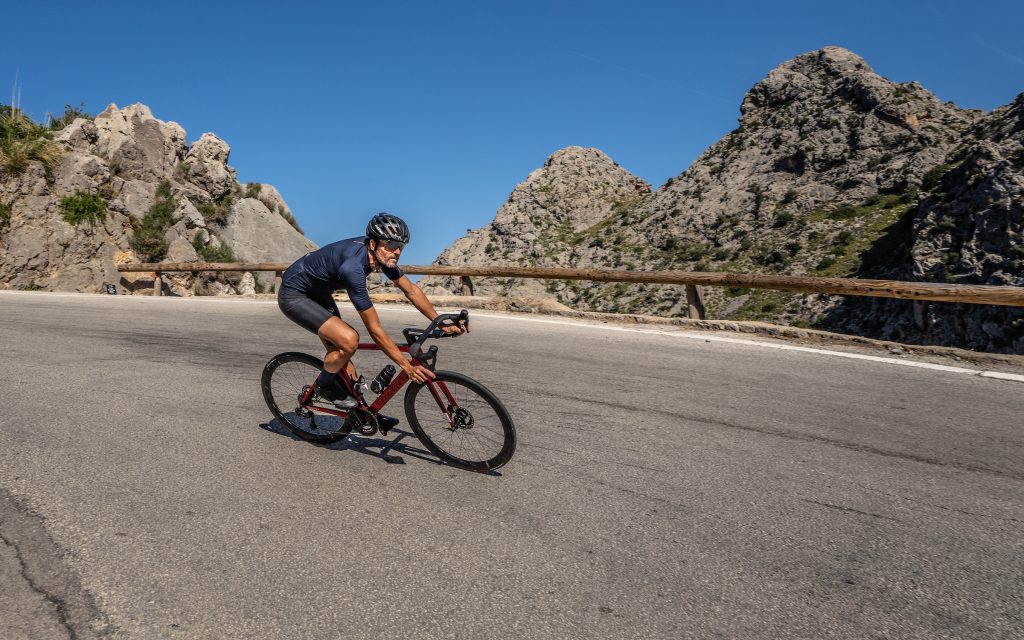
Sa Calobra is arguably the most photographed climb on Mallorca. The road winds down to a rocky cove through a series of tight hairpins, including the famous loop where the road passes beneath itself. The descent is thrilling, but the return climb is where riders truly earn their coffee stop. Puig Major is the highest point on the island and rewards those who reach the top with sweeping views across the mountains and the Gorg Blau reservoir. The Coll de Sóller is a more accessible option that still delivers a genuine sense of achievement, making it a favourite for riders who want a taste of Tramuntana climbing without committing to the most demanding routes. You can explore a full overview of these Mallorca cycling climbs to plan your route.
Why is the Serra de Tramuntana a UNESCO World Heritage Site?
The Serra de Tramuntana was designated a UNESCO World Heritage Site in 2011 for its cultural landscape, which reflects centuries of human interaction with a challenging mountain environment. The terraced hillsides, dry-stone walls, water management systems, and historic villages represent a remarkable example of sustainable land use that has shaped the region for over a thousand years.
For cyclists, this heritage adds a layer of meaning to every ride. The stone walls lining the mountain roads were built by hand over generations, and the villages you pass through have maintained their character despite the growth of tourism on the rest of the island. Riding through the Tramuntana is not just a physical experience but a journey through a living cultural landscape that has been recognised as irreplaceable by the international community.
When is the best time of year to cycle the Serra de Tramuntana?
The best time to cycle the Serra de Tramuntana is from February to May and from September to November. During these months, temperatures are comfortable for sustained riding, the roads are less crowded than in peak summer, and the landscape is at its most vivid, with almond blossoms in late winter and golden light in autumn.
In 2026, Mallorca continues to attract cyclists from January onwards, with many professional teams and serious amateurs arriving in late winter to take advantage of the mild climate when northern Europe is still cold. Summer months bring heat that can make the longer mountain climbs genuinely demanding, and midday temperatures in July and August can exceed 35 degrees Celsius on exposed roads. If you do ride in summer, starting early in the morning is essential. Spring and autumn remain the sweet spots for most recreational riders seeking both comfort and scenery.
What level of fitness do you need to ride in the Tramuntana?
You do not need to be an elite cyclist to enjoy the Serra de Tramuntana. The mountain range offers routes for a wide range of fitness levels, from gentle coastal roads at the foot of the hills to serious alpine-style climbs for experienced riders. What matters most is choosing routes that match your current ability rather than overreaching on your first day.
Recreational cyclists who ride regularly but are not race-fit can comfortably enjoy many of the Tramuntana’s most scenic roads, particularly the routes through the villages of the western coast. The key is pacing yourself and not underestimating the cumulative effect of the hills. We organise guided group rides at multiple levels, including our Easy Riders option covering 50 to 60 kilometres at a relaxed pace of around 20 kilometres per hour. This is an ideal way to experience the Tramuntana without pressure, with a guide who knows the roads and can adjust the route to suit the group. If you want to find out which ride suits you best, feel free to get in touch with us directly.
How does the Serra de Tramuntana compare to other European cycling destinations?
The Serra de Tramuntana stands out from other European cycling destinations because it combines mountain terrain with a mild climate, short travel distances between points of interest, and a well-established cycling culture that makes the experience seamless for visiting riders. Compared to destinations like the Alps or the Pyrenees, the Tramuntana is more accessible and less intimidating while still offering genuine challenge.
The Alps and Pyrenees offer longer and higher climbs, but they also require more travel time between stages and can be affected by unpredictable weather, particularly outside of summer. The Tramuntana delivers concentrated, high-quality cycling terrain within a compact area, meaning you can experience several iconic routes in a single week without long transfers. The island setting also means you are never far from the coast, a good restaurant, or a comfortable hotel. For cyclists looking for a destination that balances sport, scenery, and relaxation, Mallorca mountain cycling offers a combination that very few places in Europe can match.