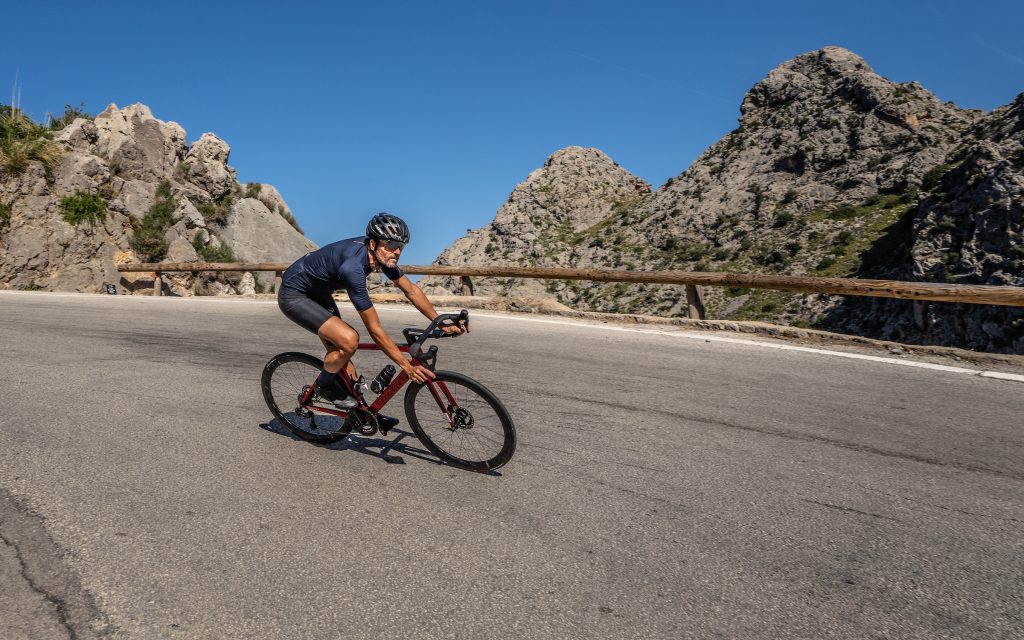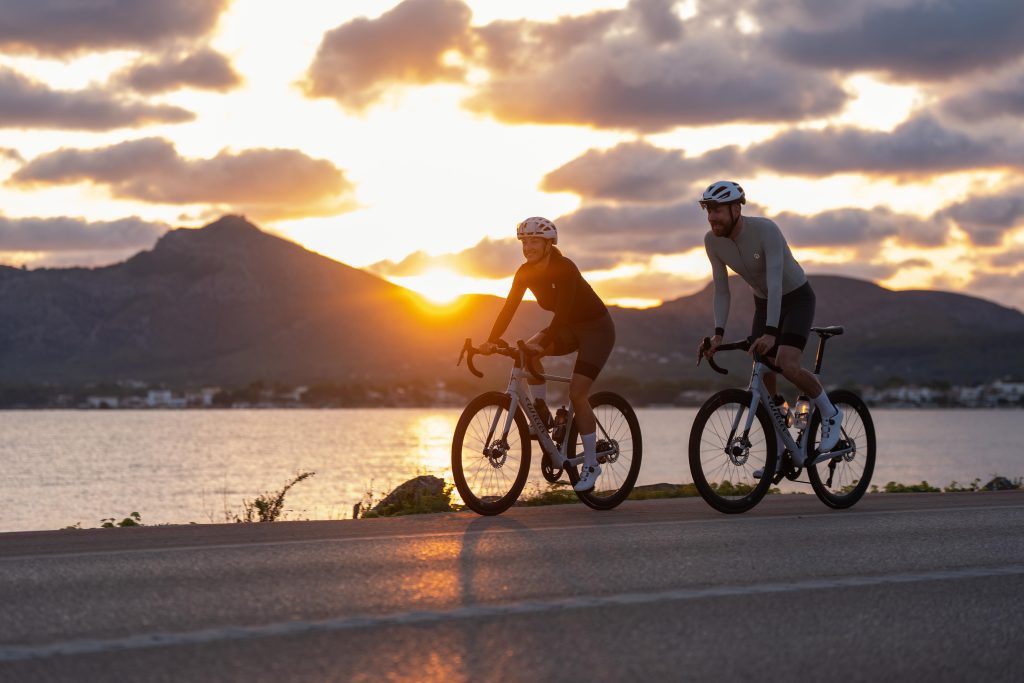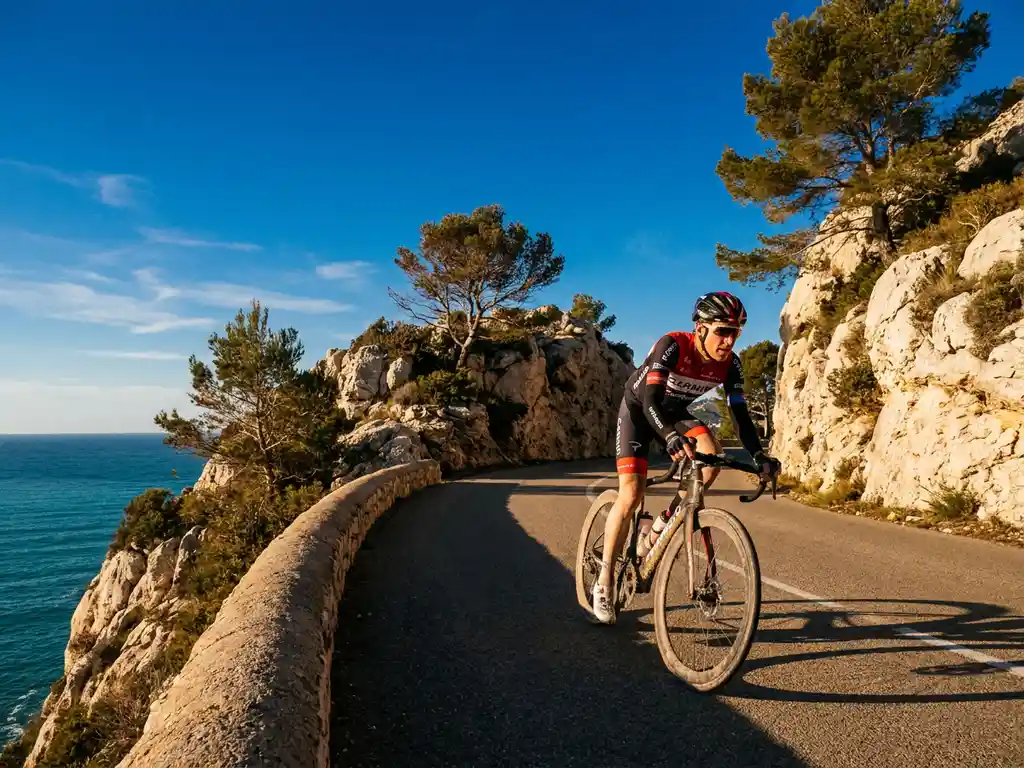
Mallorca’s most challenging descents are found in the Tramuntana mountain range, where roads like Sa Calobra, the Coll de Sóller, and the descent from Puig Major combine steep gradients, tight hairpin bends, and fast open sections that demand full concentration and strong technical skills. These routes are what draw serious cyclists from across Europe to the island every year. Below, we answer the most common questions about Mallorca’s toughest descents so you know exactly what to expect before you ride.
What makes a descent technically difficult for cyclists?
A technically difficult descent combines several factors: a steep gradient, tight or blind corners, variable road surface quality, exposure to crosswinds, and limited visibility ahead. On Mallorca’s mountain roads, these elements often appear together, which is what makes certain Mallorca cycling descents genuinely demanding even for experienced riders.
Gradient alone does not define difficulty. A long, straight descent at 10% is manageable for most cyclists. What creates real technical challenge is the combination of gradient with corners that arrive quickly, roads that narrow without warning, and surfaces that change from smooth tarmac to rough patches mid-corner. On mountain descents in Mallorca, you also encounter traffic, including coaches on the Sa Calobra road, which adds another layer of complexity. Braking technique, body position, and the ability to read the road well ahead are the skills that separate a confident descent from a dangerous one.
Which descent in Mallorca is considered the hardest?
Sa Calobra is widely considered the hardest and most technically demanding descent in Mallorca. The road drops approximately 680 metres over around 9 kilometres, featuring 26 hairpin bends, including the famous 270-degree loop known as the Nus de sa Corbata. The combination of tight switchbacks, steep sections, and two-way traffic makes it the benchmark for challenging descents in Mallorca.
What sets Sa Calobra apart from other Mallorca mountain descents is the sheer density of technical corners packed into a relatively short distance. There is almost no recovery time between bends, and the road surface, while generally well maintained, can be damp in shaded sections even on sunny days. Descending Sa Calobra requires constant braking control, smooth line selection, and awareness of vehicles coming uphill. Many professional cycling teams use this road during winter training camps precisely because it tests every technical skill a rider has.
How difficult is the descent from Puig Major?
The descent from Puig Major, the highest peak in Mallorca at 1,436 metres, is a serious technical challenge. The road from the summit area drops sharply through multiple exposed hairpins with long sight lines on some sections but sudden tight bends on others. Speeds can build quickly, making precise braking and confident cornering essential throughout the descent.
The Puig Major descent is part of the MA-10 road, which connects Sóller with Pollença through the heart of the Tramuntana. Unlike Sa Calobra, this descent is longer and more varied in character. Some stretches feel fast and open, then the road tightens abruptly. Crosswinds can be a genuine hazard on the exposed upper sections, particularly in spring and autumn. Cyclists who have ridden Alpine or Pyrenean passes will find Puig Major comparable in feel, though the road is narrower in places and traffic can be unpredictable.
What are the most dangerous corners on Mallorca’s mountain roads?
The most dangerous corners on Mallorca’s mountain roads are blind hairpins where oncoming traffic crosses the centre line, particularly on Sa Calobra and the Coll de Sóller. The Nus de sa Corbata loop on Sa Calobra and the lower hairpins of the Coll de Sóller descent are consistently cited by experienced cyclists as the points requiring the most caution.
On the Coll de Sóller, the descent toward Sóller town includes several sharp bends where coaches and cars regularly drift wide. The road is narrow, and the barriers are low or absent in places. On Sa Calobra, the danger increases when tourist traffic is heavy, typically from mid-morning onward, as vehicles climbing the road occupy more than their lane on tight bends. Timing your descent for early morning significantly reduces this risk. The upper section of the Puig Major road also has corners where the road camber works against you, meaning the surface tilts outward rather than inward through the bend, which reduces grip and requires earlier braking.
Should beginners attempt the steep descents in Mallorca?
Beginners should not attempt Sa Calobra or the Puig Major descent without prior experience on technical mountain roads. These descents require confident braking technique, the ability to hold a line through fast corners, and the composure to manage speed on long gradients. Riders new to mountain cycling are better served starting with gentler routes and building skills progressively.
This does not mean Mallorca’s mountains are off-limits for less experienced cyclists. There are many beautiful routes in the Tramuntana that offer the scenery and the experience of mountain riding without the extreme technical demands of Sa Calobra. The roads around Alcúdia, the eastern coast, and the flatter interior are excellent for building confidence. If you want to explore the mountains with proper guidance and support, our guided rides on Mallorca are structured across five different levels, so you can ride at a pace and on terrain that genuinely suits your ability. The Easy Riders group, for example, covers 50 to 60 kilometres at a relaxed pace, with routes chosen for enjoyment rather than extreme challenge.
How can cyclists prepare for a technical descent in Mallorca?
To prepare for a technical descent in Mallorca, cyclists should practise braking technique before the trip, arrive physically fresh for mountain days, study the route in advance, and descend in the morning when traffic is lightest. Bike setup, particularly brake pad condition and tyre pressure, is equally important and should be checked before every mountain ride.
- Practise controlled braking: Use both brakes progressively rather than grabbing hard. Feathering the brakes maintains speed control without locking wheels or overheating rims.
- Study the route: Knowing where the sharpest corners fall on Sa Calobra or Puig Major allows you to position yourself correctly well in advance rather than reacting at the last moment.
- Check your equipment: Brake pads wear quickly on long descents. Tyre pressure should be slightly lower than your flat-road preference to increase grip on mountain surfaces.
- Ride early: Starting your descent before 9am significantly reduces traffic on Sa Calobra and the Coll de Sóller.
- Ride with experienced cyclists: Following a rider who knows the road is one of the fastest ways to learn the correct lines and braking points on an unfamiliar descent.
If you are planning your first serious mountain cycling experience on the island and want personalised advice on routes and preparation, feel free to get in touch with us directly. We have been guiding cyclists on Mallorca’s roads for more than 30 years and can help you match the right routes to your current level.