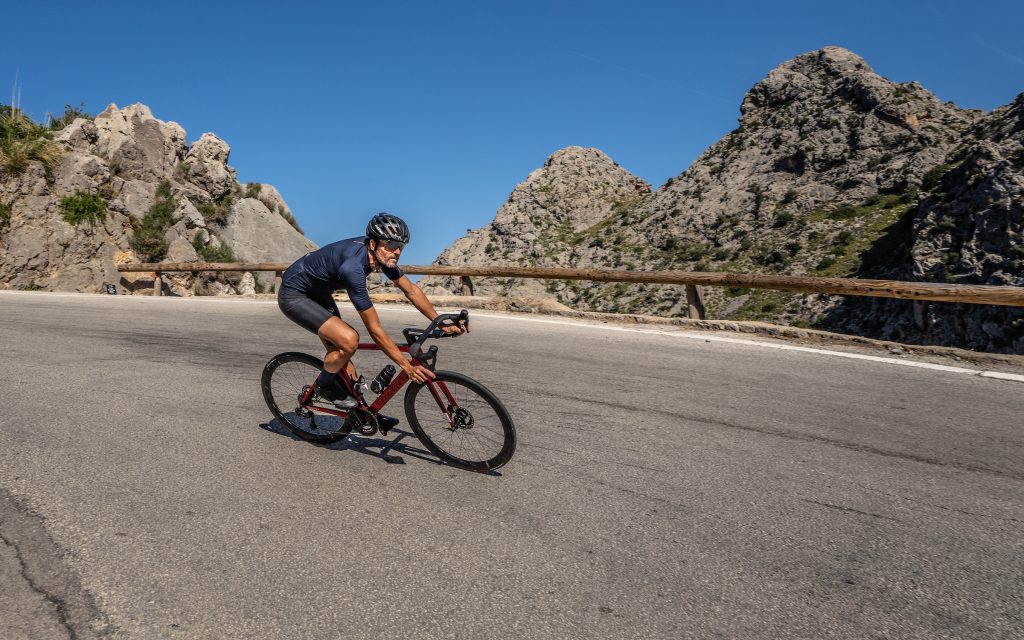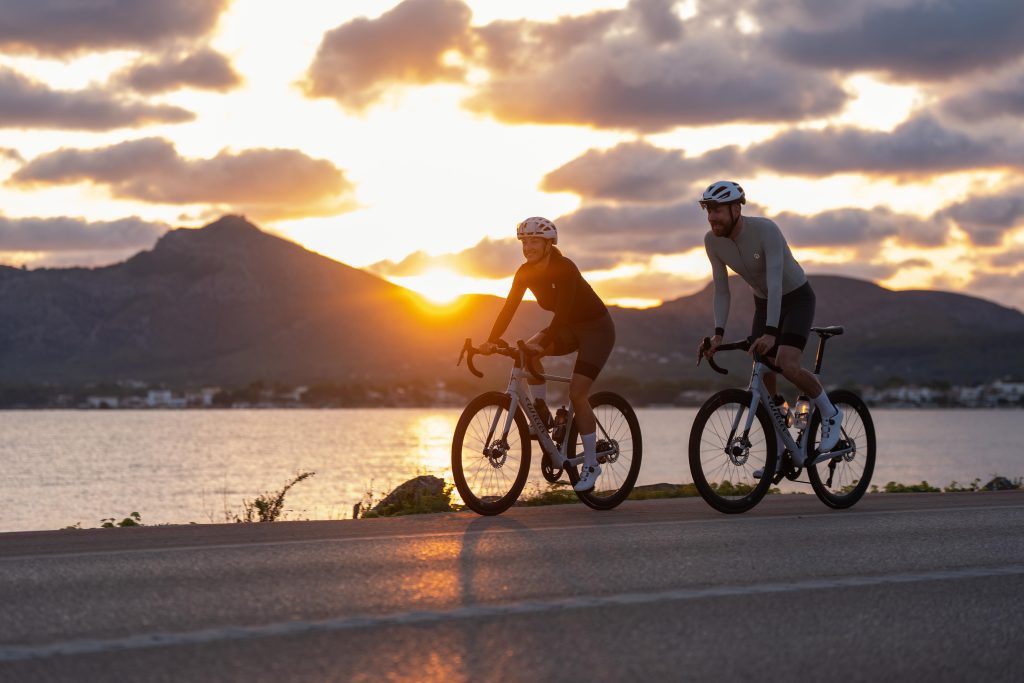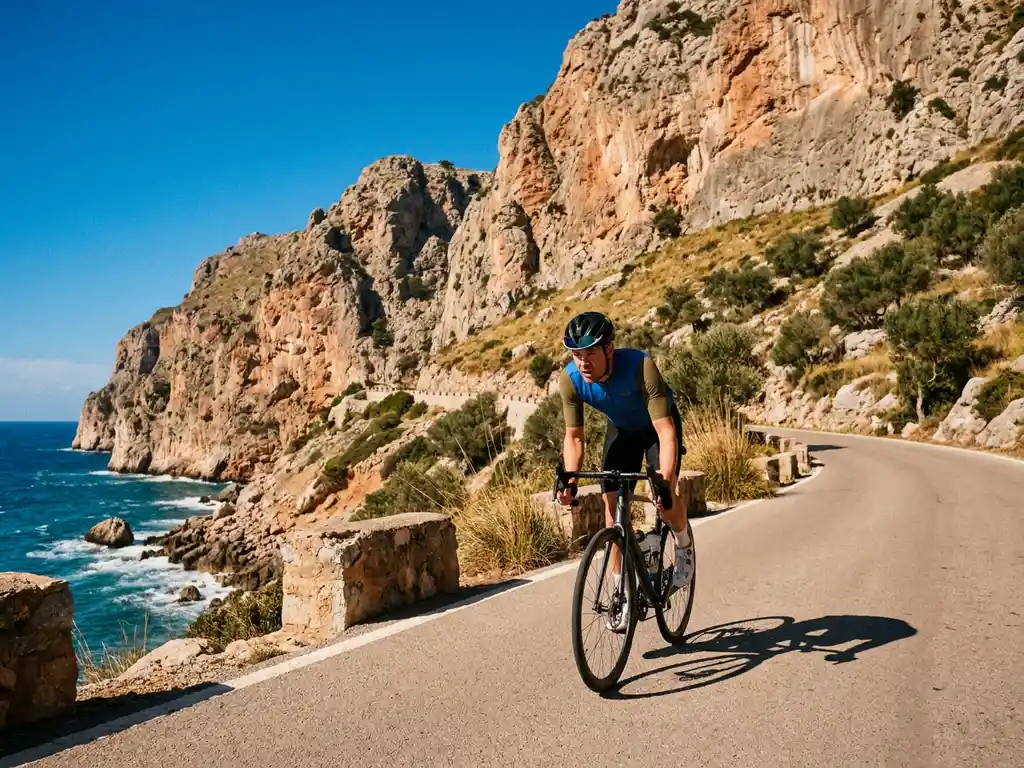
The best way to deal with headwinds on a cycling holiday in Mallorca is to lower your effort, not your speed expectations. Reduce your gear, maintain a steady cadence, tuck your body into a more aerodynamic position, and ride with others whenever possible. Wind is one of the most consistent features of cycling on the island, so knowing how to manage it makes the difference between a frustrating ride and a genuinely enjoyable one. Below, we answer the most common questions cyclists have about wind on Mallorca bike rides.
Why is Mallorca so windy for cyclists?
Mallorca is windy because of its geography and Mediterranean climate. The island sits in the western Mediterranean, exposed to airflow from multiple directions, and its varied terrain, including the Serra de Tramuntana mountain range to the northwest and open coastal plains to the east and south, creates conditions where wind is almost always present in some form. The Tramuntana wind, which gives the mountain range its name, is a cold northerly wind that can arrive with little warning and significantly affect cycling conditions.
The island’s flat central and eastern zones offer little natural shelter, which means wind moves across them freely. Coastal roads, which are among the most scenic on the island, are particularly exposed. Even on calm days in spring or autumn, sea breezes tend to pick up in the afternoon as temperatures rise. This is why many experienced cyclists on Mallorca start their rides early in the morning, when conditions are typically calmer and more predictable.
What makes headwinds harder than other cycling challenges?
Headwinds are harder than hills because they are invisible, relentless, and offer no recovery. When you climb a hill, you know it will end. A headwind can persist for an entire ride, and unlike a steep gradient, it gives you no visual cue of progress. The psychological weight of riding into the wind is often as draining as the physical effort, which is why many cyclists find it the most demoralising challenge on a bike.
From a physical standpoint, wind resistance increases exponentially with speed. Doubling your speed into a headwind requires roughly eight times the effort. This means that pushing harder to maintain pace into a strong wind costs a disproportionate amount of energy. The result is that cyclists who fight the wind rather than adapt to it arrive at their destination significantly more fatigued than they would after the same distance on a calm day.
How do you pace yourself when riding into a headwind?
When riding into a headwind, pace yourself by accepting a lower speed and focusing on maintaining a consistent effort level rather than a target pace. Shift to an easier gear, keep your cadence smooth, and resist the urge to sprint or push through gusts. Think of a headwind section as a climb: steady effort, controlled breathing, and patience are more effective than force.
A practical approach is to use perceived exertion rather than speed as your guide. If you normally ride at a comfortable effort on flat roads, aim to keep that same feeling of effort in the wind, even if your speed drops noticeably. This preserves energy for the rest of the ride and prevents the kind of early fatigue that turns a pleasant outing into a struggle. If you are riding a loop, remind yourself that the headwind on the outward leg often becomes a tailwind on the return, which makes the effort worthwhile.
What riding techniques reduce the effort of cycling into wind?
Several riding techniques meaningfully reduce the effort of cycling into a headwind. The most effective are reducing your frontal profile, drafting behind other riders, and choosing the right gear and cadence combination. Together, these adjustments can make a significant difference to how much energy you expend on a windy Mallorca bike ride.
Reduce your frontal profile
Lower your body position by bending your elbows, dropping your chest toward the handlebars, and tucking your chin. Even a small reduction in your frontal area cuts wind resistance noticeably. Wearing a close-fitting jersey rather than a loose one also helps. On a road bike, moving to the drops gives you a more aerodynamic position without requiring any equipment change.
Draft behind other riders
Riding closely behind another cyclist significantly reduces the wind resistance you face. In a group, riders take turns at the front and rotate back, sharing the workload. Even sitting two or three positions back in a small group makes a measurable difference to your effort level. This is one reason our guided group rides are so popular on windy days. Our Easy Riders group rides at a relaxed pace that makes drafting comfortable even for less experienced cyclists.
Choose the right gear and cadence
Spinning a lighter gear at a higher cadence is generally more efficient into a headwind than grinding a big gear at low revs. A higher cadence keeps your muscles working aerobically rather than pushing into anaerobic effort, which helps you sustain the ride without burning out. Aim for a cadence that feels smooth and controlled rather than laboured.
Which Mallorca cycling routes are best sheltered from wind?
The most sheltered cycling routes in Mallorca are those that run through the Serra de Tramuntana mountain range, particularly the inland valleys and forested roads between Sóller, Valldemossa, and Esporles. The mountains themselves block the dominant northerly and westerly winds, and the winding nature of the roads means you are rarely exposed to a sustained headwind for long. Routes that follow river valleys or pass through villages also offer natural breaks from open exposure.
By contrast, the flat roads of the Pla region in central Mallorca and the coastal roads along the eastern and southern shores are the most exposed. These are beautiful routes, but on a windy day they can be relentless. If the forecast shows strong winds, choosing a mountain route over a coastal flat one is a smart adjustment. You can explore the full range of Mallorca cycling climbs to find routes that combine shelter with rewarding terrain.
Should you plan your ride around wind direction in Mallorca?
Yes, planning your ride around wind direction in Mallorca is one of the most effective ways to improve your experience on the bike. Check the forecast the evening before and identify the dominant wind direction. Then structure your route so that you ride into the wind during the first half of your ride, when you are fresh, and return with the wind at your back. This approach is sometimes called the “out-and-back into wind” strategy, and it transforms what could be a miserable return leg into an effortless glide home.
For loop routes, try to arrange the direction of travel so that the windward sections fall earlier in the ride. Apps and websites that show hourly wind forecasts by location are particularly useful for planning on Mallorca, where conditions can vary significantly between the coast and the mountains. Riding early in the morning also tends to mean calmer conditions, as winds on the island typically strengthen through the day as temperatures rise. A little planning goes a long way toward making your cycling holiday in Mallorca both enjoyable and rewarding, whatever the weather brings.