A cycling vacation in Mallorca stands apart from other destinations because it combines world-class road infrastructure, dramatic mountain terrain, and near-perfect riding weather on a single island that is compact enough to explore fully in a week. Few places on earth offer such a concentrated mix of challenging climbs, fast coastal roads, and professional-grade cycling culture. The questions below unpack exactly what makes Mallorca the benchmark for a sportieve fietsvakantie and why competitive riders keep coming back year after year.
What makes Mallorca’s road network so ideal for cyclists?
Mallorca’s road network is ideal for cyclists because the island offers an exceptional variety of well-maintained routes within a compact area, ranging from flat coastal roads along the Bay of Alcudia to steep mountain passes through the Serra de Tramuntana. Riders can switch between terrain types in a single day without covering excessive distances, making every hour in the saddle productive and varied.
The roads themselves are generally smooth, well-signposted, and relatively free of heavy traffic outside the main tourist corridors. The island’s infrastructure has been shaped in part by decades of professional cycling use, which means route quality is taken seriously. Quiet inland roads connect villages like Sineu, Petra, and Llucmajor through rolling farmland, offering ideal warm-up or recovery rides. Meanwhile, the mountain roads through the Tramuntana have been designated a UNESCO World Heritage landscape, which limits industrial development and keeps the riding environment clean and scenic. For anyone planning a fietsvakantie, this combination of road quality and route diversity is genuinely difficult to match elsewhere in Europe.
Which climbs in Mallorca are considered must-rides for competitive cyclists?
The must-ride climbs in Mallorca for competitive cyclists are Sa Calobra, Puig Major, and Cap de Formentor. These three ascents are widely regarded as the defining challenges of any serious racefiets vakantie on the island, each offering a distinct physical and technical test that attracts riders from across Europe every season.
Sa Calobra
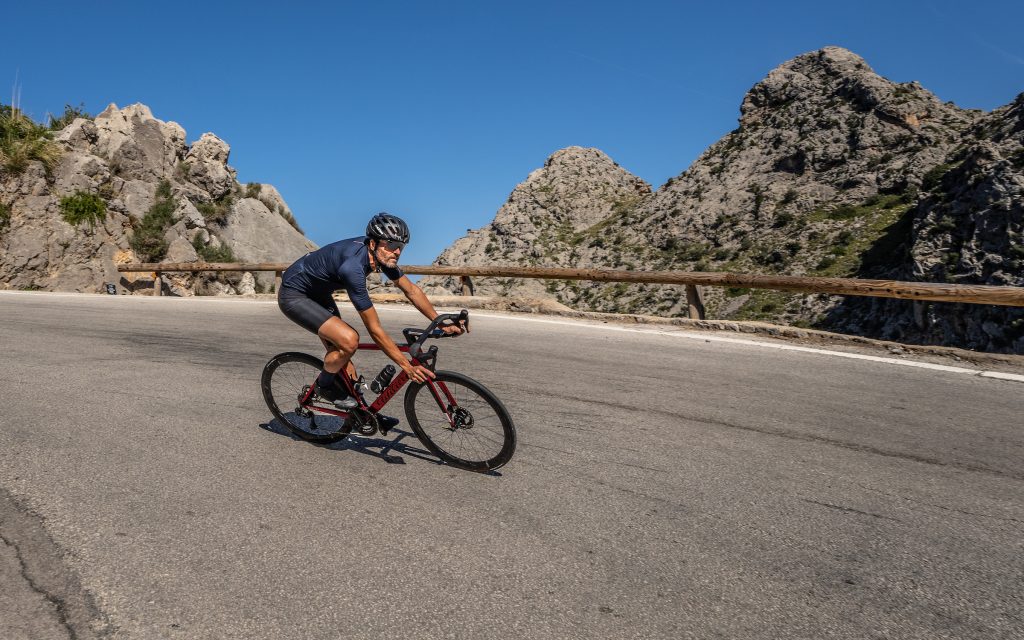
Sa Calobra is arguably the most iconic climb in Mallorca and one of the most celebrated road cycling ascents in the world. The descent into the cove is a series of tight hairpins carved into limestone cliffs, and the return climb demands sustained power output over roughly nine kilometres. The road’s dramatic scenery and technical character make it a benchmark effort for competitive riders.
Puig Major and Cap de Formentor
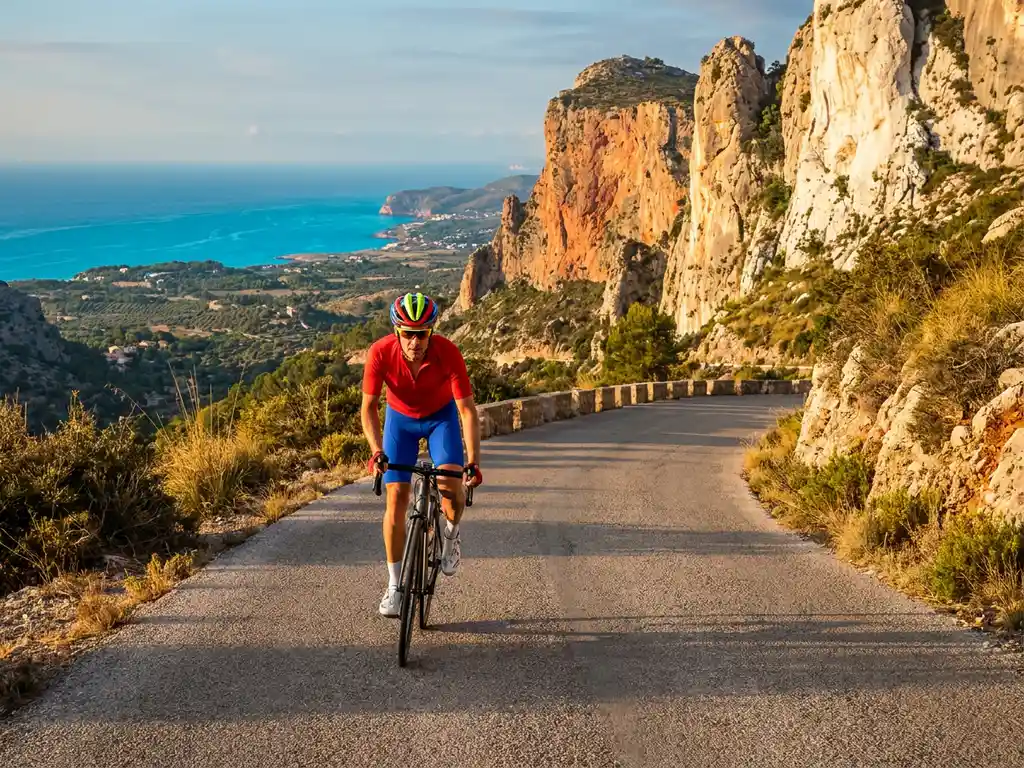
Puig Major is the highest point reachable by road on the island and forms a natural pairing with Sa Calobra when ridden together in a single day, a combination that separates serious cyclists from casual tourers. Cap de Formentor, at the northeastern tip of the island, rewards riders with a long, exposed climb and panoramic views across the Mediterranean. Both ascents appear regularly in professional training programmes and are central to what makes a fietsvakantie Mallorca experience genuinely challenging for ambitious riders.
How does Mallorca’s climate compare to other popular cycling destinations?
Mallorca’s climate is significantly more reliable for cycling than most European alternatives, offering mild temperatures and low rainfall from February through November. While destinations like the French Alps or the Pyrenees are limited to a narrow summer window, Mallorca’s Mediterranean climate extends the usable riding season across nearly ten months of the year.
In early spring, when northern Europe is still cold and wet, Mallorca regularly sees daytime temperatures between 14 and 18 degrees Celsius, which is close to ideal for sustained road cycling efforts. Summer temperatures can climb into the mid-thirties, which pushes serious training rides to early morning starts, but the shoulder months of March, April, October, and November offer conditions that are hard to beat anywhere in Europe. Compared to Tenerife, another popular winter training destination, Mallorca benefits from flatter coastal options alongside its mountains, giving riders more flexibility in managing daily training load. For anyone targeting a sportieve fietsvakantie with consistent conditions, Mallorca’s climate is a decisive advantage.
What level of cyclist is a Mallorca cycling holiday suited for?
A Mallorca cycling holiday is suited to cyclists of all levels, from beginners enjoying flat coastal routes to elite riders tackling the island’s most demanding mountain passes. The island’s terrain diversity means that route selection, rather than the destination itself, determines how challenging the experience becomes.
Recreational riders can spend an entire week exploring the flat roads around the Bay of Alcudia or the gentle rolling countryside of the interior without encountering serious gradients. Intermediate cyclists can build progressively, mixing easier days with one or two moderate climbs. Competitive and training-focused riders can design a programme that rivals a professional pre-season camp, combining long mountain days with high-speed group rides on flat coastal roads. At Rompelberg Cycling Holidays, we offer a structured riding programme that covers this full spectrum, including our Breakaway group for speed-focused and competitive cyclists who want to push their limits alongside riders of a similar standard. Whether you are on your first fietsvakantie or your tenth, Mallorca scales to meet you.
Why do professional cycling teams choose Mallorca for pre-season training?
Professional cycling teams choose Mallorca for pre-season training primarily because the island delivers reliable weather, varied terrain, and high-quality roads during the critical January to March training window, when most of Europe is unsuitable for outdoor riding. The combination of mountain climbs and flat time-trial roads allows teams to work on both climbing strength and aerobic base in a single location.
The logistical advantages are equally important. Mallorca is well-connected by direct flights from most major European cities, hotels with dedicated cycling facilities are widely available, and the island has a well-established support infrastructure including bike mechanics, sports medicine practitioners, and neutral service vehicles familiar with the mountain roads. The presence of professional teams also raises the overall standard of cycling culture on the island, which benefits recreational riders who train alongside that environment. Seeing WorldTour squads on the same roads you are riding is both motivating and a clear signal that you have chosen the right destination for a serious sportieve fietsvakantie.
What should cyclists know before planning a Mallorca cycling trip?
Before planning a Mallorca cycling trip, riders should know that timing, route selection, and equipment quality are the three factors that most determine the quality of the experience. Arriving without a plan for the mountain roads in particular can lead to underestimating the physical demands of the island’s signature climbs.
- Best travel windows: March to May and September to October offer the most balanced conditions for serious riding, avoiding summer heat and winter unpredictability.
- Route difficulty: The Serra de Tramuntana climbs are significantly harder than they appear on paper. Gradients on Sa Calobra and Puig Major regularly exceed ten percent, and cumulative elevation on a full mountain day can exceed 3,000 metres.
- Equipment: A well-fitted carbon road bike with compact gearing is strongly recommended for the mountain routes. We offer a fleet of high-end Wilier bikes, including the Filante SLR and Cento10, which are specifically suited to the demands of Mallorca’s climbs.
- Group riding etiquette: Mallorca roads are shared with other cyclists, including professional teams during early season. Riding predictably and signalling clearly is both a safety requirement and a matter of respect.
- Accommodation location: Basing yourself in Playa de Palma gives quick access to the mountains and the airport, while Playa de Muro is better positioned for the northern routes around Cap de Formentor and the Alcudia plain.
Planning a fietsvakantie Mallorca with these factors in mind ensures that the riding matches your ambitions rather than catching you unprepared on a climb with no easy way down. If you would like tailored advice on building your ideal programme, feel free to contact us directly.