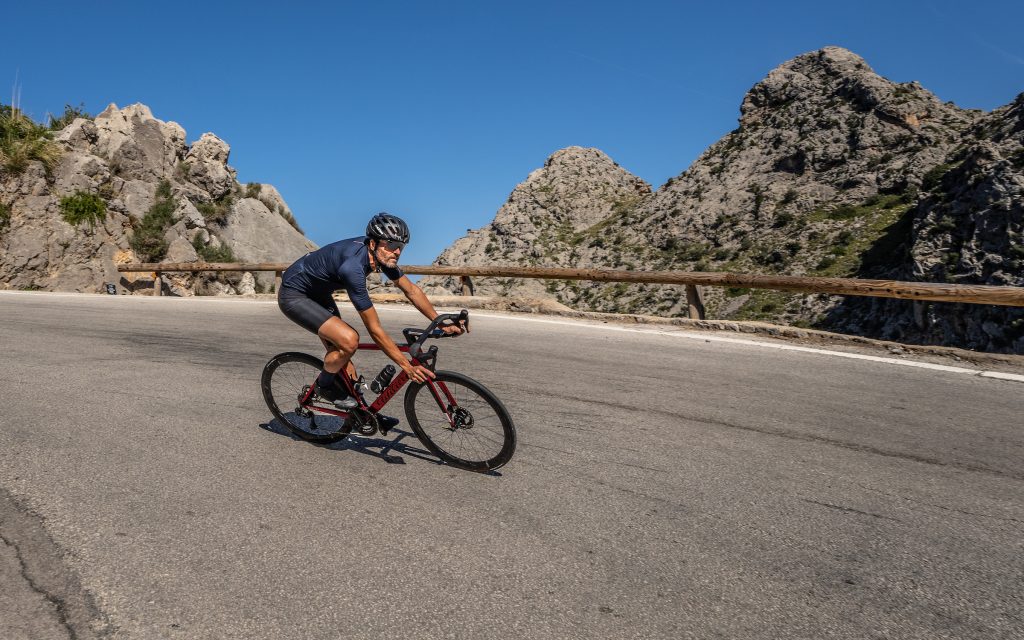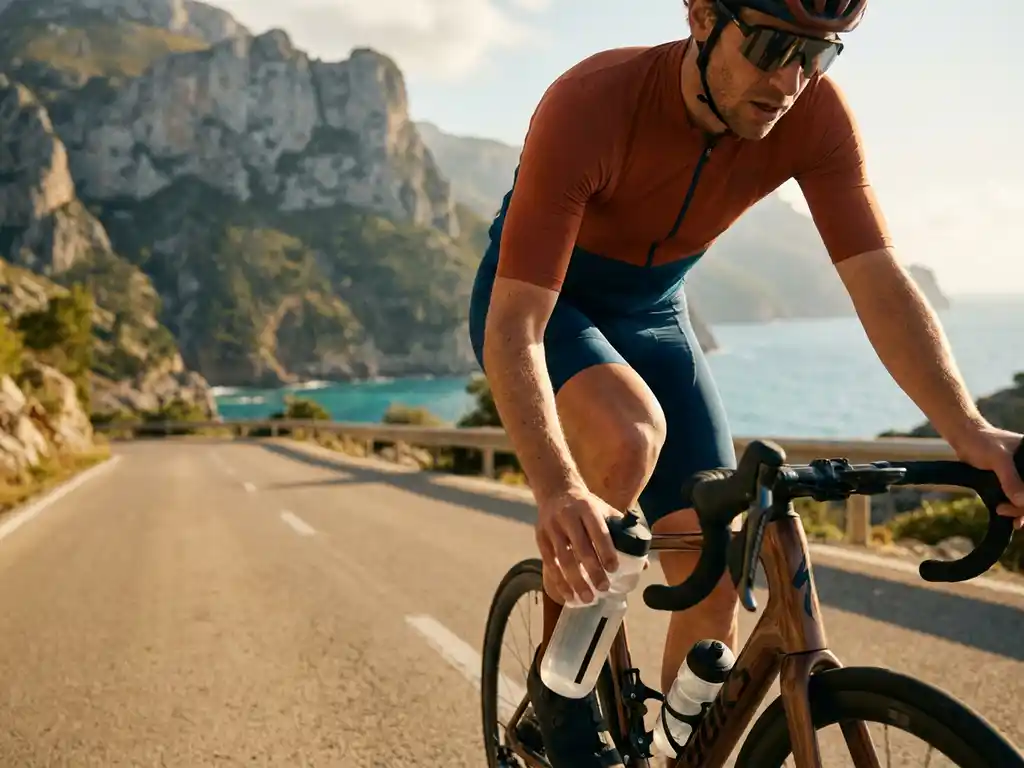
To stay hydrated during long road bike rides, drink consistently throughout your ride rather than waiting until you feel thirsty. A general rule is to consume around 500 to 750 ml of fluid per hour, adjusting upward in hot or humid conditions. On a cycling holiday in the mountains, smart hydration can be the difference between a strong finish and a painful bonk.
Hydration needs vary based on your intensity, the climate, and your individual sweat rate. Riders tackling challenging routes on a fietsvakantie Mallorca face heat, altitude, and long climbs that all significantly increase fluid loss. The sections below break down everything you need to know, from daily intake targets to the most common mistakes cyclists make.
How much water should you drink on a long road bike ride?
On a long road bike ride, aim to drink between 500 and 750 ml of fluid per hour. In hot weather or during high-intensity efforts, this can rise to 1 litre per hour or more. Spreading your intake evenly across the ride prevents both dehydration and the discomfort of drinking too much at once.
A practical way to manage this is to take two to three sips from your bottle every 15 to 20 minutes, regardless of whether you feel thirsty. Thirst is a delayed signal, meaning that by the time you notice it, your performance is already starting to dip. On multi-hour rides in warm climates, it is easy to lose 1.5 to 2 litres of fluid per hour through sweat, so consistent sipping is essential.
Before a long ride, pre-hydrating matters too. Drinking 400 to 600 ml of water in the hour before you set off gives your body a solid starting point. This is especially relevant on a sportieve fietsvakantie where you may be riding back-to-back days and need to recover fluid losses overnight as well.
What are the signs of dehydration while cycling?
The most common signs of dehydration while cycling include a dry mouth, dark-coloured urine, muscle cramps, headache, dizziness, and a noticeable drop in power or concentration. If you experience two or more of these symptoms together during a ride, you are likely already mildly dehydrated and need to stop and drink immediately.
Mild dehydration, even as little as a 2% loss of body weight in fluids, can noticeably reduce endurance performance. At higher levels of fluid loss, cognitive function deteriorates, coordination suffers, and the risk of heat exhaustion increases sharply. On exposed mountain climbs with little shade, these risks are amplified.
One of the simplest monitoring tools is urine colour. Pale yellow indicates good hydration. Dark yellow or amber signals you need more fluid. Checking this each morning before a ride day is a reliable habit, particularly during a multi-day fietsvakantie where cumulative fatigue and heat can mask dehydration until it becomes serious.
What should you drink on a road bike — water or sports drinks?
For rides under 90 minutes, water is generally sufficient. For rides lasting longer than 90 minutes, especially in heat or at high intensity, sports drinks that contain carbohydrates and electrolytes offer a meaningful advantage over water alone by replacing both fluid and the energy and minerals lost through sweat.
The practical approach most experienced cyclists use is to carry one bottle of water and one bottle of a sports drink or electrolyte mix. This gives you flexibility to sip water when you want something neutral and reach for the sports drink when you need a carbohydrate boost or feel your energy flagging.
On a racefiets vakantie with long mountain stages, the combination approach works particularly well. Climbs like Sa Calobra or Puig Major take well over an hour to complete, meaning that plain water alone will not replenish the sodium and energy your body burns through. Sports drinks with a carbohydrate concentration of around 6 to 8% are generally well tolerated and absorbed efficiently during moderate to high-intensity riding. If you are planning routes around iconic ascents, exploring Mallorca by bike offers some of the most demanding and rewarding climbs in Europe.
How do electrolytes help during long cycling rides?
Electrolytes, primarily sodium, potassium, magnesium, and calcium, help your body retain fluid, support muscle contraction, and maintain nerve function. During long cycling rides, you lose electrolytes through sweat, and replacing them prevents cramping, fatigue, and the dangerous condition known as hyponatraemia, which occurs when sodium levels drop too low from drinking plain water without replacing salts.
Sodium is the most critical electrolyte for cyclists. It regulates fluid balance and helps your intestines absorb water more efficiently. When you sweat heavily, particularly in warm Mediterranean conditions, sodium losses can be substantial. Drinking only plain water in large quantities without replacing sodium can actually worsen your hydration status by diluting what remains in your bloodstream.
Electrolyte tablets, powders, or drinks are the easiest way to maintain balance on the bike. Many cyclists also get electrolytes from real food sources during rides, such as bananas, salted nuts, or energy bars with added sodium. On a structured training camp or guided group ride, having access to the right nutrition at the right time makes a significant difference to how you feel across multiple ride days. Learn more about how we approach this by visiting our about us page.
How should you plan hydration for a multi-hour mountain ride?
For a multi-hour mountain ride, plan your hydration around three phases: pre-ride loading, consistent on-bike intake, and post-ride recovery. Calculate roughly how many bottles you will need based on your expected ride duration and the temperature, and identify where you can refill along the route before you set off.
Before the ride
Drink 400 to 600 ml of water or a light electrolyte drink in the 60 to 90 minutes before you start. Avoid large volumes immediately before riding, as this can cause discomfort on the bike. Eat a balanced meal two to three hours before your start time that includes carbohydrates, protein, and some sodium.
During the ride
Stick to your 500 to 750 ml per hour target and adjust based on how much you are sweating. On long climbs, it can be tempting to stop drinking because the effort feels manageable, but this is exactly when fluid loss is highest. Set a reminder on your cycling computer or watch if needed. On descents, use the recovery time to drink before the next climb begins.
After the ride
Rehydration after a long mountain ride should begin within 30 minutes of finishing. Aim to drink 1.5 litres of fluid for every kilogram of body weight lost during the ride. Including sodium in your post-ride drink or meal helps your body hold onto the fluid rather than flushing it out. This is particularly important on back-to-back ride days during a cycling holiday.
What hydration mistakes do cyclists most often make?
The most common hydration mistakes cyclists make are waiting until they feel thirsty to drink, not accounting for heat and altitude, drinking only plain water on long rides without replacing electrolytes, and failing to rehydrate properly between ride days. Each of these errors compounds over time and leads to declining performance or, in serious cases, heat-related illness.
Here are the key mistakes to avoid:
- Drinking reactively instead of proactively: Thirst lags behind actual fluid loss. By the time you feel thirsty, you are already behind.
- Underestimating heat impact: Riding in warm conditions dramatically increases sweat rate. What works on a cool morning at home may be completely inadequate on a hot afternoon in the Mediterranean.
- Ignoring altitude: Higher elevations increase respiratory fluid loss, even when temperatures feel cooler. Mountain routes require more fluid than flat coastal rides.
- Skipping electrolytes on long rides: Drinking large amounts of plain water without sodium replacement can cause cramping and hyponatraemia.
- Not recovering overnight: Arriving at the next morning’s ride already dehydrated from the day before is one of the most common reasons cyclists struggle mid-week on multi-day trips.
At Rompelberg Cycling Holidays, we design our ride programmes with these realities in mind. Whether you are joining a guided group ride or building your own itinerary on Mallorca, our team can advise on route planning, nutrition stops, and how to structure your days so that hydration and recovery work together rather than against you. Feel free to reach out via our contact page if you would like personalised advice before your trip. A well-planned sportieve fietsvakantie is not just about the kilometres you cover but how well you feel when you cover them.