Self-guided and guided road bike holidays differ primarily in how much structure and support you receive throughout the trip. On a guided holiday, a leader rides with your group, manages logistics, and sets the pace. On a self-guided holiday, you plan your own routes, ride at your own rhythm, and make your own decisions each day. The right format depends almost entirely on your experience level, your goals, and how much freedom you want on the bike. The sections below break down each key question so you can make a confident choice before booking your next cycling holiday.
What’s the main difference between self-guided and guided road bike holidays?
The core difference between self-guided and guided road bike holidays is the level of external support and structure. A guided holiday includes a ride leader who accompanies the group, handles navigation, and coordinates logistics such as luggage transfers and rest stops. A self-guided holiday gives you a set of routes and resources, but you ride independently and manage your own schedule.
Beyond the practical logistics, the two formats create very different riding experiences. Guided trips tend to foster group dynamics, shared motivation, and a social atmosphere that many cyclists find energising. Self-guided trips prioritise personal freedom: you stop when you want, push harder when you feel strong, and take detours without needing group consensus. Both formats can include the same quality of accommodation, the same high-end rental bikes, and access to the same iconic roads. The key variable is who is in control of the day.
Who is a guided road bike holiday best suited for?
A guided road bike holiday is best suited for cyclists who want structure, social riding, and expert local knowledge without the burden of planning every detail themselves. This format works particularly well for riders joining a group trip for the first time, those unfamiliar with the destination, or anyone who simply wants to focus entirely on riding rather than logistics.
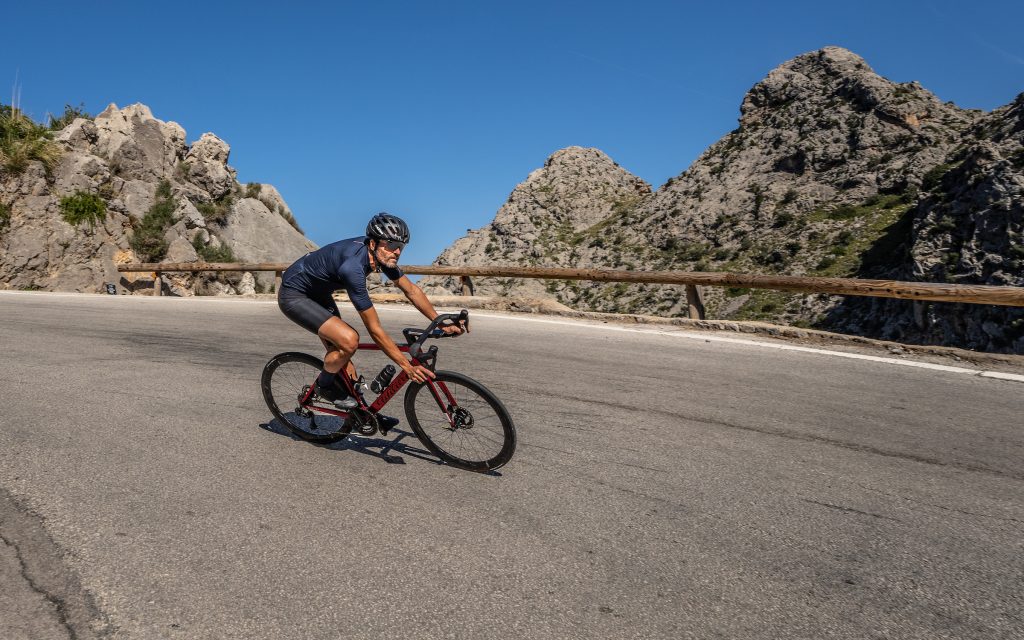
Guided holidays are also an excellent fit for cyclists who thrive in a group environment. Riding alongside others at a similar level creates natural motivation and accountability, which can push your performance further than solo riding often does. For competitive riders targeting climbs like Sa Calobra or Puig Major, a guided group with a strong pace sets the tone from the first pedal stroke. The social element after the ride matters too: shared meals, shared suffering on the climbs, and the camaraderie that builds over a week of riding together are genuinely difficult to replicate on a solo trip.
Who benefits most from a self-guided cycling holiday?
Self-guided cycling holidays benefit the most experienced riders who already know how to navigate, manage their effort across a week of riding, and adapt their plans based on how their legs feel each morning. If you have a clear training goal, a preferred daily mileage, and the confidence to handle minor mechanical issues or route changes independently, a self-guided format gives you the freedom to optimise every day around your own performance.
Couples and small groups of friends with mixed fitness levels also tend to prefer self-guided trips. Without a fixed group pace, faster riders can push harder on climbs while others take a more relaxed approach, and everyone meets at the same destination without compromise. Experienced cyclists who have already visited Mallorca and know the roads well often choose self-guided trips on return visits specifically because they want to revisit favourite routes on their own terms, without waiting for a group briefing before heading out.
How does route planning differ between the two holiday formats?
In a guided road bike holiday, route planning is handled entirely by the operator. The guide selects the daily routes, accounts for group fitness, and adjusts plans based on weather or conditions. In a self-guided holiday, route planning is your responsibility, though most operators provide GPS files, route notes, and suggested itineraries as a starting point.
The practical implication is significant. On a guided trip, you show up at the start point and follow the wheel in front of you. On a self-guided trip, you need to study the route the evening before, understand the elevation profile, and know where the key climbs and descents fall. For riders targeting Mallorca’s most demanding roads, such as the ascent to Cap de Formentor or the switchbacks of Puig Major, having a guide who knows exactly where to position the group, where to refuel, and how to pace the effort can make the difference between a great ride and a gruelling one. Self-guided riders need that knowledge themselves, or they need to research it thoroughly in advance.
What should you consider when choosing between the two formats?
When choosing between a guided and self-guided road bike holiday, the most important factors to weigh are your experience level, your social preferences, your training goals, and how much you want to control your own schedule. Neither format is universally better: the right choice depends on what you actually want from the week.
- Experience and navigation confidence: Less experienced riders or those unfamiliar with the destination benefit from guided support. Seasoned cyclists who know their way around a route map are well-placed for self-guided travel.
- Social versus solo riding: If group energy and shared motivation matter to you, guided is the stronger choice. If you prefer riding at your own pace without coordinating with others, self-guided suits you better.
- Training specificity: Riders with precise interval targets or very specific daily mileage goals often find self-guided trips easier to structure around their training plan.
- Logistics tolerance: Guided trips remove nearly all logistical friction. Self-guided trips require more personal organisation, from route files to knowing where to find a bike shop if something goes wrong.
At Rompelberg Cycling Holidays, we offer both complete guided packages and flexible self-guided arrangements, so riders can choose the format that genuinely fits their goals rather than settling for a one-size-fits-all approach.
Can you switch between guided and self-guided during the same trip?
Yes, many cycling holiday operators allow a hybrid approach where you join guided group rides on certain days and ride independently on others. This flexibility is particularly valuable for competitive riders who want the social energy and local expertise of a guided climb on a key day, but also want the freedom to do a solo recovery spin or a personal time trial effort on other mornings.
In practice, this kind of flexibility depends on how your holiday is structured and what your operator offers. Some days you might ride with a Breakaway group targeting a fast ascent of Sa Calobra, while on other days you head out alone with a GPS route loaded and no fixed schedule. The key is to clarify this with your operator before you book, so your accommodation, bike availability, and any group rides are coordinated around your preferred mix. A hybrid approach is often the best of both worlds for experienced riders who want structure on the hard days and freedom on the rest. Feel free to contact us to discuss which format suits your goals before committing to a booking.