The cycling route on Mallorca with the most elevation gain is the classic combination of Sa Calobra and Puig Major, often ridden from Port de Sóller or Sóller. This route can reach more than 3,500 meters of elevation gain in a single day, depending on the starting point and chosen detour. For cyclists looking to push their limits, the Tramuntana mountain range is the absolute epicenter of challenge on the island. In this article, we answer the most frequently asked questions about the toughest cycling routes on Mallorca.
Which route has the most elevation gain on Mallorca?
The route with the most elevation gain on Mallorca runs through the Serra de Tramuntana and combines several iconic cols. A full day from Palma towards Sa Calobra, over Puig Major and back via Sóller quickly adds up to 3,000 to 3,800 meters of elevation gain. This makes it one of the toughest cycling routes in all of Europe.
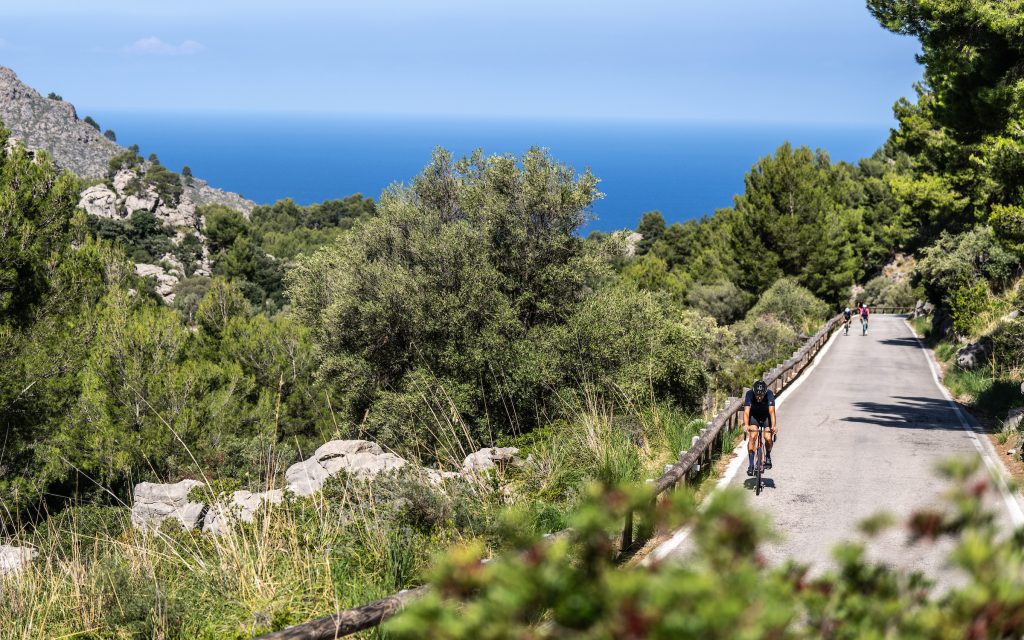
The Tramuntana has been designated a UNESCO World Heritage Site and offers not only spectacular views, but also a succession of steep gradients, hairpin bends, and long climbs. Cyclists who want to spend a full day in the saddle with maximum elevation gain often ride the so-called Gran Fondo Tramuntana route: a loop of 160 to 180 kilometers that takes in virtually all of the island’s major cols. Those who want to go even further add Cap de Formentor to the route for extra kilometers and a spectacular finale.
How tough is the climb to Sa Calobra?
The climb to Sa Calobra is one of the toughest and most famous ascents on Mallorca. The climb covers approximately 9.4 kilometers with an average gradient of 7.1 percent and peaks of up to 12 percent. The elevation gain is around 670 meters. The combination of a constant incline, winding roads, and little shade makes this a serious challenge for any cyclist.
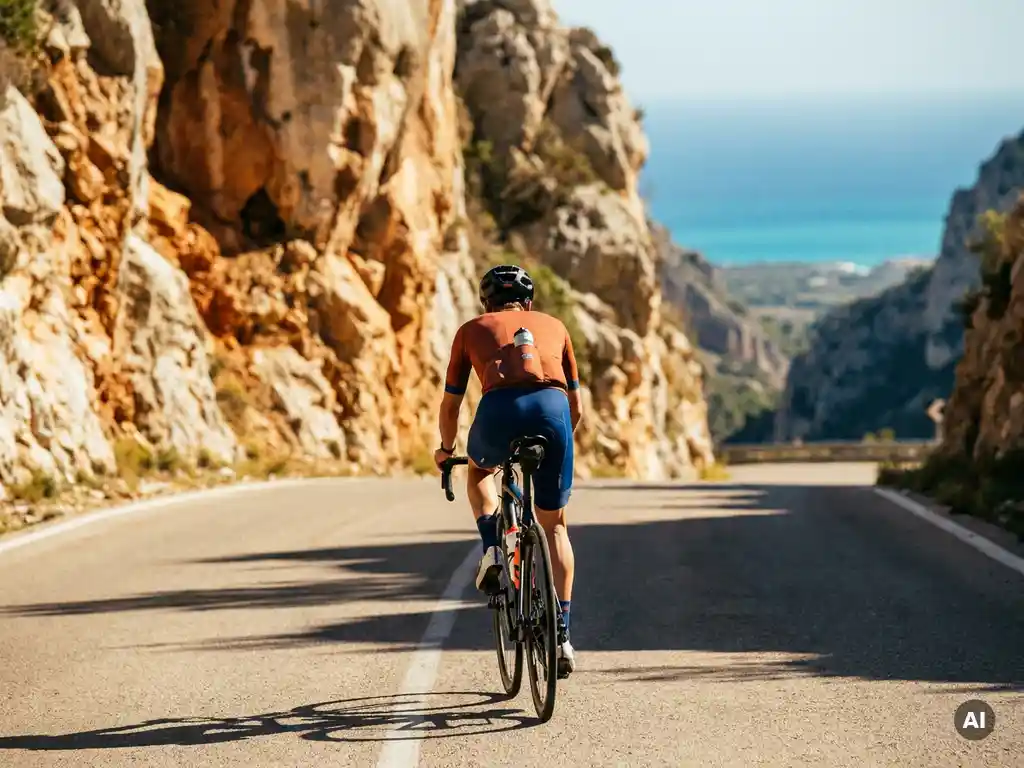
What makes Sa Calobra so special is its location. The road winds spectacularly down to a small bay at the foot of the mountains, surrounded by imposing rock walls. In practice, you ride the climb upward, as the road ends at the sea and there is no alternative way out. That means you have no choice: up is the only option. The climbs on Mallorca such as Sa Calobra are used by professional cycling teams worldwide as a training location, which only reinforces the reputation of this climb.
If you are riding Sa Calobra for the first time, it is wise to eat and drink well before the climb. Facilities at the top are limited, and while the descent to the bay is beautiful, the return climb is just as tough as the first time.
What is the difference between Sa Calobra and Puig Major?
Sa Calobra and Puig Major are both legendary climbs in the Tramuntana, but they differ greatly in character. Sa Calobra is an isolated, technical climb with dramatic bends and a high average gradient. Puig Major is the highest mountain on Mallorca (1,445 meters) and offers a longer, more gradual ascent with an impressive view.
Sa Calobra: technical and intense
Sa Calobra is famous for its Nus de sa Corbata, a 270-degree bend where the road loops over itself. The climb is relatively short but relentless, with little room for recovery. The surroundings are bare and rocky, giving the climb an almost dramatic character. This is the climb that cyclists remember most.
Puig Major: long and high
Puig Major is ascended via the road towards the military summit, but cyclists typically ride to the point where the road is publicly accessible. The climb from Sóller covers more than 12 kilometers with an average gradient of around 5 percent. What sets Puig Major apart is the altitude and the panorama: on clear days you can see the entire island. The combination of both climbs in a single day is the ultimate test for cyclists on Mallorca.
Which cycling routes combine multiple tough cols in a single day?
The most challenging routes on Mallorca combine Sa Calobra, Puig Major, and Cap de Formentor in a single day. These are the three toughest and most iconic cols on the island. Riding all three means a day with more than 4,000 meters of elevation gain and more than 200 kilometers in the legs.
A popular combination is the route from Playa de Muro or Alcúdia towards Cap de Formentor in the morning, followed by a ride along the coast to Sa Calobra and the return via Puig Major. The advantage of this order is that you tackle the longest climb (Formentor) fresh and ride Sa Calobra before it gets too hot.
Another classic combination is the loop via Pollença, Lluc, Sa Calobra, and Puig Major, back to Sóller. This is a more compact route of around 120 kilometers with approximately 2,800 meters of elevation gain, ideal for cyclists who want a tough but manageable day. The route is also popular with professional teams on training camp on the island.
When is the best time to ride the toughest routes?
The best time to ride the toughest cycling routes on Mallorca is from March through May and from September through November. During these periods, temperatures are pleasant, traffic is limited, and the roads are dry. Summer is too hot for long mountain rides, and in winter mountain roads can sometimes be closed due to rain or even snow at the highest points.
Setting off early in the morning is always advisable, regardless of the season. In the summer months, temperatures in the Tramuntana can rise quickly, and Sa Calobra offers little shade. In spring and autumn, you enjoy quiet roads and optimal riding conditions. Many professional cycling teams deliberately choose February and March to kick off their season on Mallorca, which underscores the quality of the climate and roads during that period.
Also take the wind into account. On Cap de Formentor it can blow hard, and a strong headwind makes an already tough climb even harder. Always check the weather forecast for the Tramuntana separately, as it can differ significantly from coastal areas.
How we help you ride the toughest routes on Mallorca
At Rompelberg Cycling Holidays, we know better than anyone what it means to ride Sa Calobra, Puig Major, and Cap de Formentor in a single day. We offer everything you need to make this challenge a success:
- High-end rental bikes such as the Wilier Filante SLR and Cento10, specially suited for tough mountain rides
- Guided group rides through our Breakaway group for competitive and ambitious cyclists
- Complete cycling packages including flight, hotel, and bike, so you only need to focus on the climb
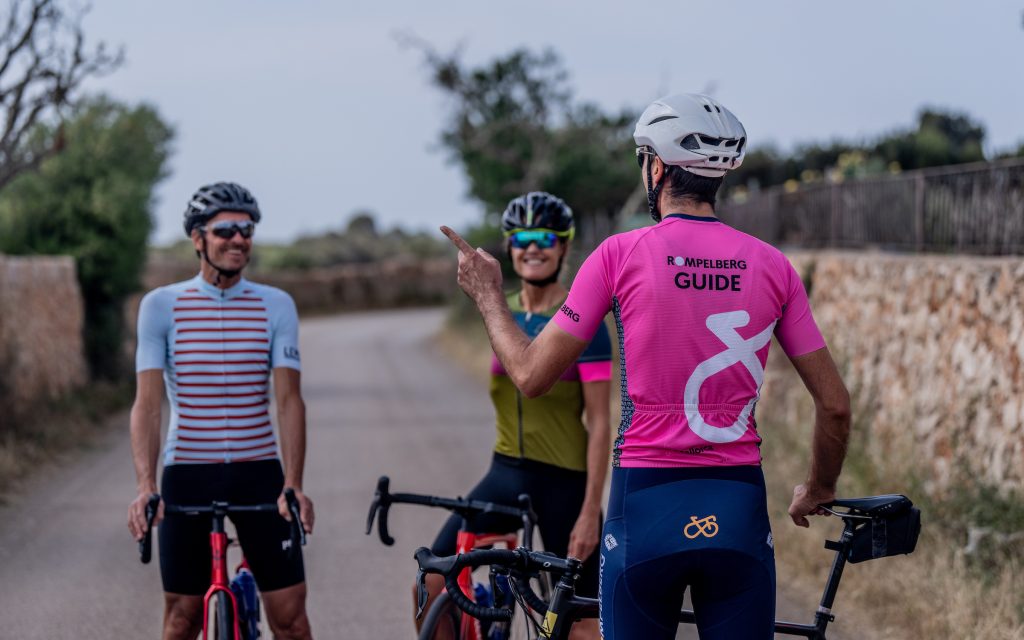
- Local route knowledge from experienced guides who know the Tramuntana inside out
- Cycling hotels in Playa de Palma and Playa de Muro with secure storage and a professional workshop
Do you want to tackle the toughest cycling routes on Mallorca in 2026 with the right support and equipment? Contact us and together we will put together a cycling holiday that perfectly matches your level and ambitions.