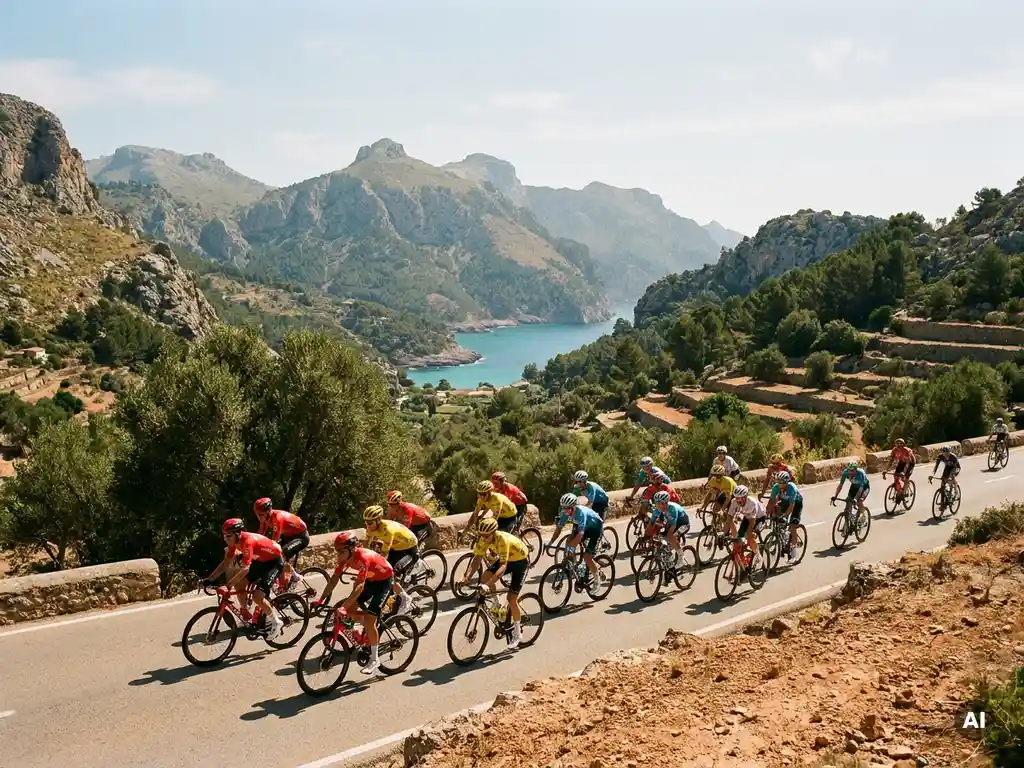
The most suitable climbing routes in Mallorca for a group of cyclists depend on the average level within the group. For mixed groups, the route via Coll de Sóller offers a good balance between challenge and accessibility. Stronger groups head straight for Sa Calobra or Puig Major, two of the toughest and most iconic climbs on the island.
Mallorca has a suitable route for every group, from gentle hills in the south to the demanding cols in the Serra de Tramuntana. In this article, we answer the most frequently asked questions about climbing routes in Mallorca for groups of cyclists.
Which climb in Mallorca is most suitable for a group with mixed ability levels?
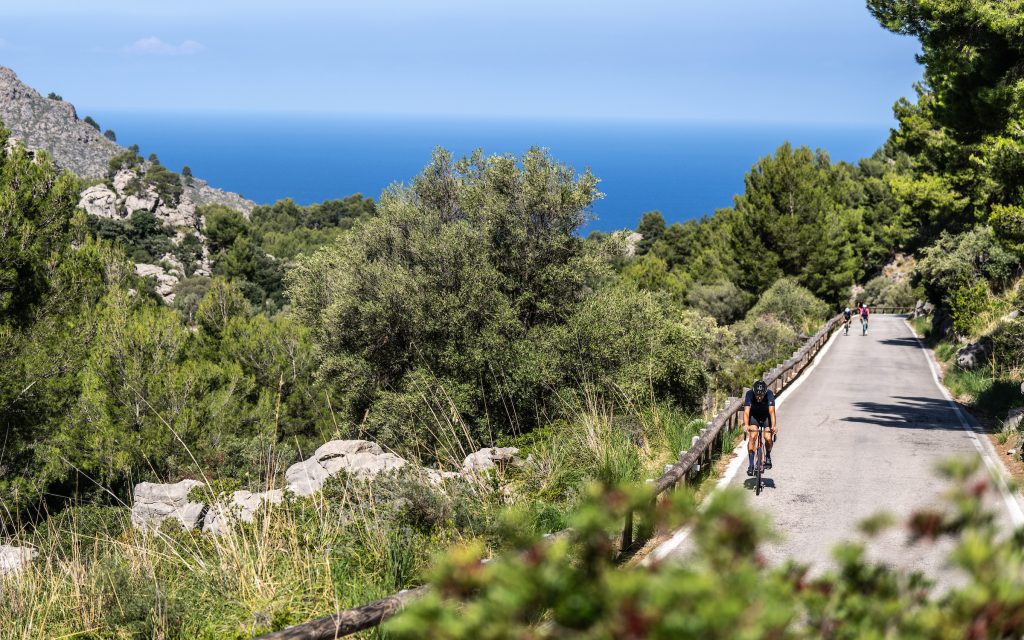
For a group with mixed ability levels, the Coll de Sóller is the most suitable climb in Mallorca. The ascent is challenging enough for advanced riders, yet achievable for recreational cyclists with a reasonable level of fitness. The elevation gain of approximately 500 metres and the consistent gradients make it a fair climb without any surprise steep sections.
Another good alternative for mixed groups is the climb to Puigpunyent or the route via Andratx towards the coast. These climbs are less well-known than Sa Calobra, but offer stunning views and a pleasant pace for the whole group.
From a practical standpoint, when ability levels vary it is smart to agree on a meeting point at the top. This way, everyone can ride at their own pace without the group splitting apart. Stronger riders can ride the climb twice or wait at the summit, while less experienced cyclists can find their own rhythm at a relaxed pace.
How tough is Sa Calobra for a cycling group?
Sa Calobra is one of the toughest climbs in Mallorca and demands a great deal from any cycling group. The ascent from the coast is 9.4 kilometres long with an average gradient of 7.1 percent and peaks of up to 12 percent. For a group, only riders with a solid base fitness and climbing experience will be able to ride this route comfortably.
What makes Sa Calobra particularly challenging for groups is the logistics. The road is narrow, traffic can be heavy during peak season, and the descent requires good braking technique and concentration. Groups are advised to set off early — before 9 a.m. — to avoid crowds and heat.
Through Rompelberg, Sa Calobra is offered as part of the Breakaway group rides, specifically aimed at competitive cyclists who want to push their limits. For less experienced riders, it is better to save Sa Calobra for a second or third training day, once the legs have already grown accustomed to the climbing demands of Mallorca.
What makes Puig Major the most challenging climb in Mallorca?
Puig Major is the most challenging climb in Mallorca due to the combination of length, elevation gain, and sustained gradient. The ascent from Sóller is more than 12 kilometres long and climbs to 852 metres above sea level, the highest point on the island reachable by bike. The average gradient hovers around 6 percent, but the total effort makes it mentally and physically demanding.
What sets Puig Major apart from other climbs in Mallorca is the unrelenting effort with no moments of recovery. There are virtually no flat sections to rest on. In addition, it can be considerably cooler and windier at the top than at the foot of the climb, which calls for thorough preparation in terms of clothing and nutrition.
For groups, Puig Major is the ultimate centrepiece of a multi-day training camp. Combine the climb with Sa Calobra on the same day for a legendary ride that is widely regarded in cycling circles as one of the toughest day trips on the island.
Which climbing routes are suitable for a first group training ride in Mallorca?
For a first group training ride in Mallorca, the climbs around Andratx and the route to Coll de sa Gramola are the most suitable. These ascents are shorter, less steep, and provide enough of a challenge to warm up the legs without immediately overloading the group. They also give riders the chance to get used to the road surface, traffic, and heat.
Another good option for the first day is the route via Calvià towards Puigpunyent. The elevation gain is modest, the roads are wide enough for a group, and the scenery makes the ride immediately worthwhile. Use the first day to align the group’s pace and assess who is at what level, so you can plan the rest of the week more effectively.
How do you plan a group day with multiple climbs in Mallorca?
The best way to plan a group day with multiple climbs in Mallorca is to start with the hardest climb while the legs are still fresh. Set off early, tackle the first major climb before midday, and use the return journey for the lighter ascents. This distributes the effort well and prevents the group from running out of energy halfway through the day.
A classic schedule for a tough group ride looks like this:
- Early departure from the hotel, before 8 a.m.
- First major climb (Sa Calobra or Puig Major) before the heat of the day
- Lunch stop in Sóller or Port de Pollença
- Return ride via a lighter route or along the coast
- Total distance between 100 and 140 kilometres, depending on the level
Don’t forget to bring enough water and nutrition. Water points are scarce on some routes and temperatures can rise quickly in summer. Also agree clearly on what to do in the event of a puncture or mechanical problem, so that no one is left behind alone.
What bike do you need for the climbing routes in Mallorca?
For the climbing routes in Mallorca, you need a lightweight carbon road bike with a compact chainset. A compact chainring (50/34) combined with a cassette of at least 28 or 32 teeth at the rear makes the steepest sections of Sa Calobra and Puig Major considerably more manageable. A heavy bike or an unfavourable gear ratio makes the climbs significantly harder than necessary.
Stiffness, weight, and handling are the three most important characteristics of a climbing bike in Mallorca. A lightweight bike of 7 to 8 kilograms provides a noticeable advantage on the long ascents. Good brakes — preferably disc brakes — are far from a luxury on the narrow and steep descents of Sa Calobra.
How we make your group ride in Mallorca complete
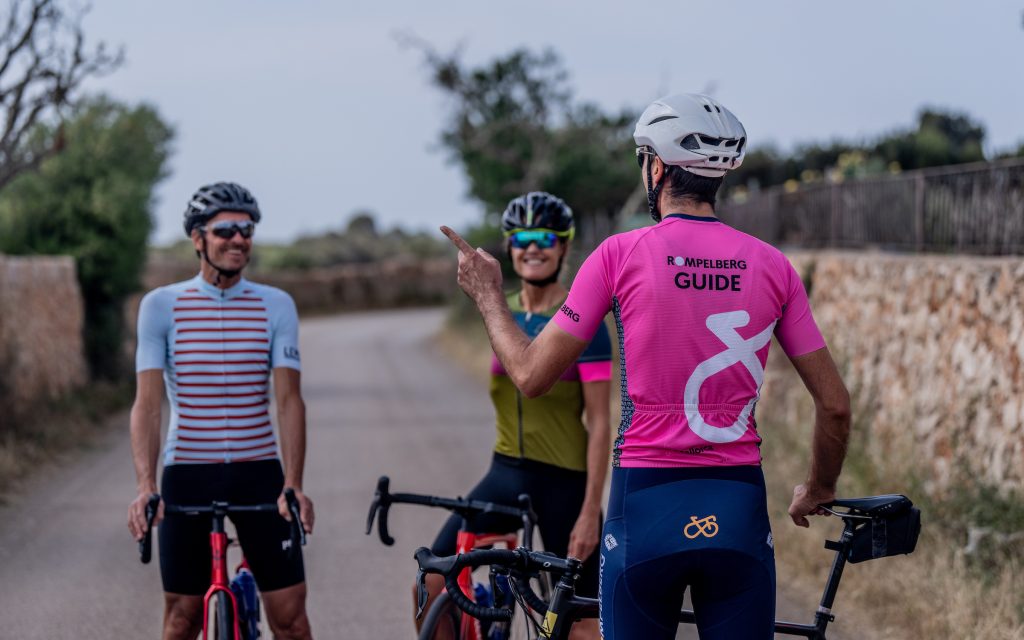
At Rompelberg Cycling Holidays, we help groups of cyclists get the most out of their time in Mallorca. Whether you are organising a training camp for a cycling club or planning a challenging group week with friends, we make sure everything is taken care of.
What we arrange for your group:
- High-quality carbon rental bikes, including the Wilier Filante SLR and Cento10, fitted to your measurements
- Guided group rides along the most beautiful climbing routes, including Sa Calobra, Puig Major, and Cap de Formentor
- Complete packages with flight, hotel, and bike, or flexible options where you decide the details
- Hotels with secure bike storage, a workshop, and experienced mechanics on site
- Personal advice on route planning and ability grouping within the group
View our climbing routes in Mallorca for an overview of all the ascents we offer, or contact us to plan your group week together. We are happy to think along with you.