The best routes with significant elevation gain in Mallorca can be found in the Serra de Tramuntana, the mountain range that runs along the northwest coast of the island. Climbs such as Sa Calobra, Puig Major, and Cap de Formentor are among the toughest and most spectacular ascents in Europe. In this article, we answer the most frequently asked questions about cycling in the mountains of Mallorca, so you can plan your training optimally.
Which mountains in Mallorca offer the most elevation gain?
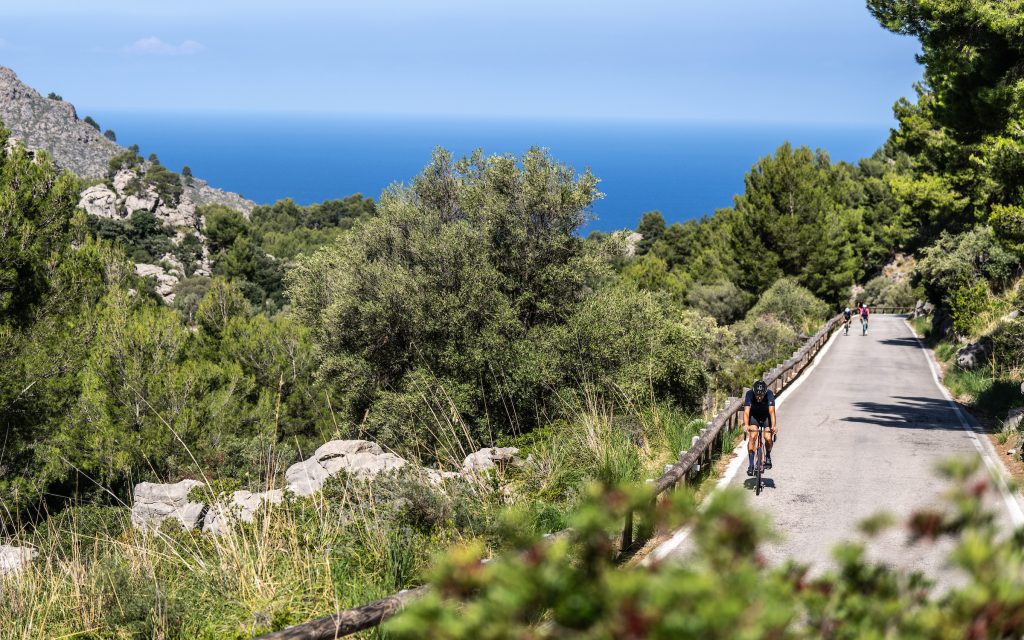
The Serra de Tramuntana is the heart of mountain cycling in Mallorca and offers by far the most elevation gain on the island. The most important peaks for cyclists are Puig Major (1,445 meters, the highest mountain in Mallorca), the Sa Calobra climb, and the route to Cap de Formentor. Those who are serious about climbing will push themselves to the limit on roads that professional cycling teams also regularly visit.
The Tramuntana stretches over approximately 90 kilometers along the northwest coast and offers an almost uninterrupted series of cols and climbs. In addition to the well-known names, there are also lesser-visited climbs such as the Coll de Sóller, Coll de Puig Major, and the Coll des Coloms, each with their own character. Cycling routes in the mountains of Mallorca are therefore never monotonous: every route combines breathtaking views with a serious physical challenge.
How difficult is the Sa Calobra climb compared to Puig Major?
Sa Calobra and Puig Major are both iconic climbs in Mallorca, but they differ greatly in character. Sa Calobra is technically harder, with steeper sections and almost legendary bends, while Puig Major is longer and rises more consistently. Both climbs are challenging for experienced cyclists and rank among the toughest ascents in Europe.
Sa Calobra: technical and spectacular
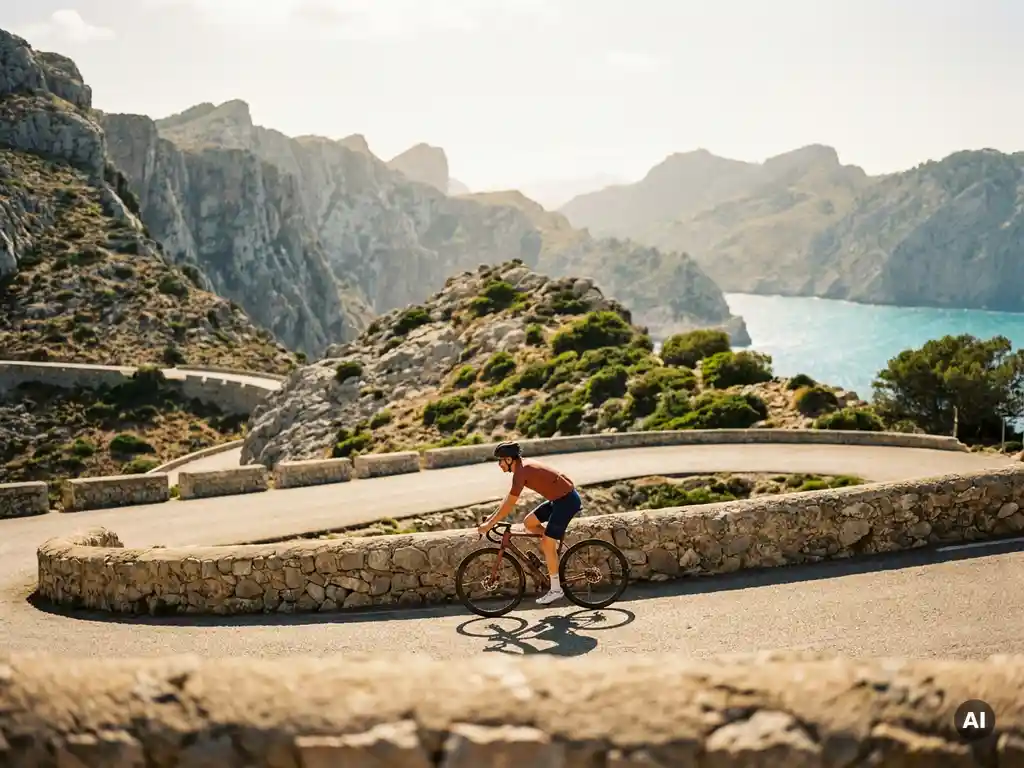
The Sa Calobra climb begins at the foot near the coastal road and ascends over 9.4 kilometers with an average gradient of approximately 7 percent. The road is famous for its renowned 270-degree bend, known as the Nus de sa Corbata. The steepest sections reach peaks of more than 10 percent, making the climb a serious test even for experienced cyclists. The descent to the sea is an experience in itself.
Puig Major: the longest climb on the island
Puig Major, at an altitude of 1,445 meters, is the highest climb in Mallorca. The route via the MA-10 from Sóller or Pollença is longer and demands more endurance than Sa Calobra. The average gradient is slightly lower, but the length of the climb and the altitude you reach make this one of the most demanding cycling routes on the island. Anyone who rides both climbs in a single day is in for a serious day in the saddle.
Which routes combine multiple cols for maximum elevation gain?
For maximum elevation gain in Mallorca, you combine multiple cols in a single ride through the Serra de Tramuntana. The classic grand loop via Sóller, Puig Major, Sa Calobra, and back via Pollença or Alcúdia delivers more than 3,000 meters of elevation gain and is considered by many competitive cyclists to be the ultimate Mallorca day.
A popular variant is the route that starts in Playa de Palma or Playa de Muro, rides via the Coll de Sóller to Puig Major, descends to Sa Calobra, and then returns via the coastal road toward Cap de Formentor. This route combines three of the most iconic climbs in Mallorca in a single stage and requires a solid base fitness and experience in the mountains. Those who reverse or adjust the route can increase the elevation gain further or pace it according to their own level.
Another favorite combination is the loop via Coll de Puig Major and Coll des Coloms, where you explore lesser-known roads while accumulating impressive elevation gain at the same time. These routes are less busy than the main roads and offer a more authentic experience of the Mallorcan mountain landscape.
When is the best season to ride high-elevation routes in Mallorca?
The best season for climbing routes in Mallorca is from March through May and from September through November. During these periods, temperatures are pleasant for strenuous climbing, the roads are less busy, and the risk of extreme heat or wintry conditions at altitude is minimal. Most professional cycling teams train on the island in February and March, which underscores the popularity of this period.
During the summer months, particularly July and August, temperatures in the mountains can rise above 35 degrees Celsius. Climbs such as Sa Calobra and Puig Major are then harder than usual and the risk of overheating is real. Those who ride in summer are wise to start early and bring sufficient water. In winter, the higher cols can be wet and slippery, making the climbs more dangerous.
In 2026, Mallorca is also easily accessible early in the season, with direct flights from across Europe. Those who book in March or April benefit from quiet roads and ideal climbing conditions.
Which bike is most suitable for the steep climbs in Mallorca?
For the steep climbs in Mallorca, a lightweight carbon road bike with a compact chainset is the most suitable choice. Low weight is crucial on climbs with gradients of 8 to 12 percent, and a wide cassette range ensures you can ride out even the steepest sections of Sa Calobra and Puig Major without grinding to a halt.
Electronic shifting offers extra comfort and precision when fatigued, which makes a noticeable difference on long climbing days. Good brakes, preferably disc brakes, are a safety advantage on the technical descents of the Tramuntana. Those who bring their own bike would do well to have it checked in advance for brakes, chain, and gears.
How we help you with climbing in Mallorca
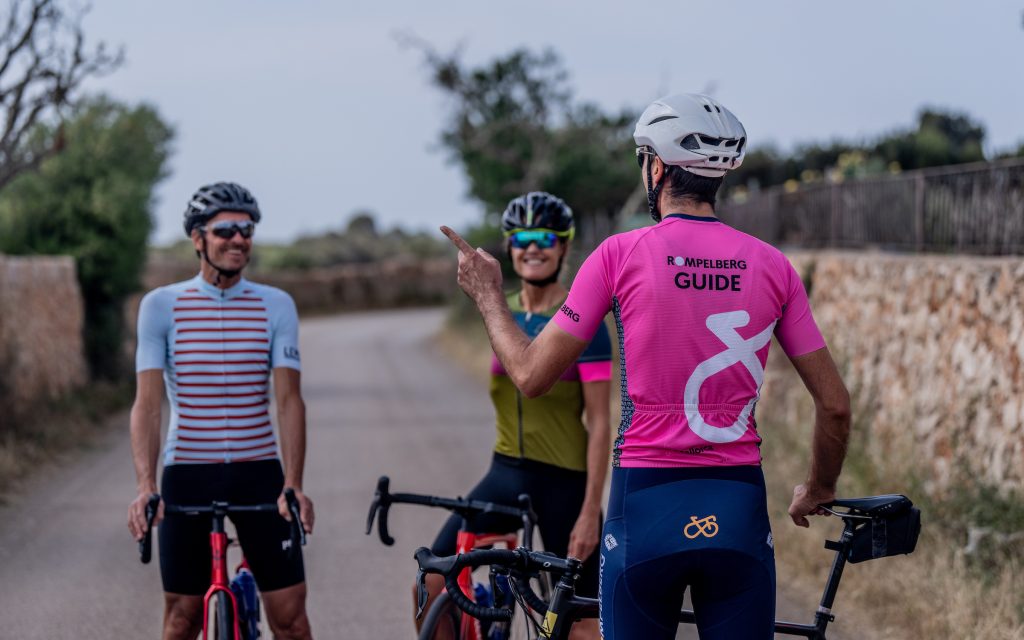
At Rompelberg Cycling Holidays, we offer everything you need for a successful climbing holiday in Mallorca. Whether you are riding Sa Calobra for the first time or looking for a challenging multi-day program with maximum elevation gain, we make sure you are well prepared and equipped at the start. What we arrange for you:
- Rental of high-quality carbon road bikes, including the Wilier Filante SLR and the Wilier Cento10, specially suited for the steep climbs of the Tramuntana
- Guided group rides for competitive cyclists through our Breakaway group, focused on speed and challenge
- Complete cycling holiday packages including flight, hotel, and cycling program, fully tailored to your needs
- Local knowledge about the best climbs in Mallorca, including the most challenging combination routes
- Experienced mechanics and a professional workshop on location in Playa de Palma and Playa de Muro
Want to know which package best suits your level and ambitions? Contact us and we will be happy to help you plan your perfect climbing holiday in Mallorca.