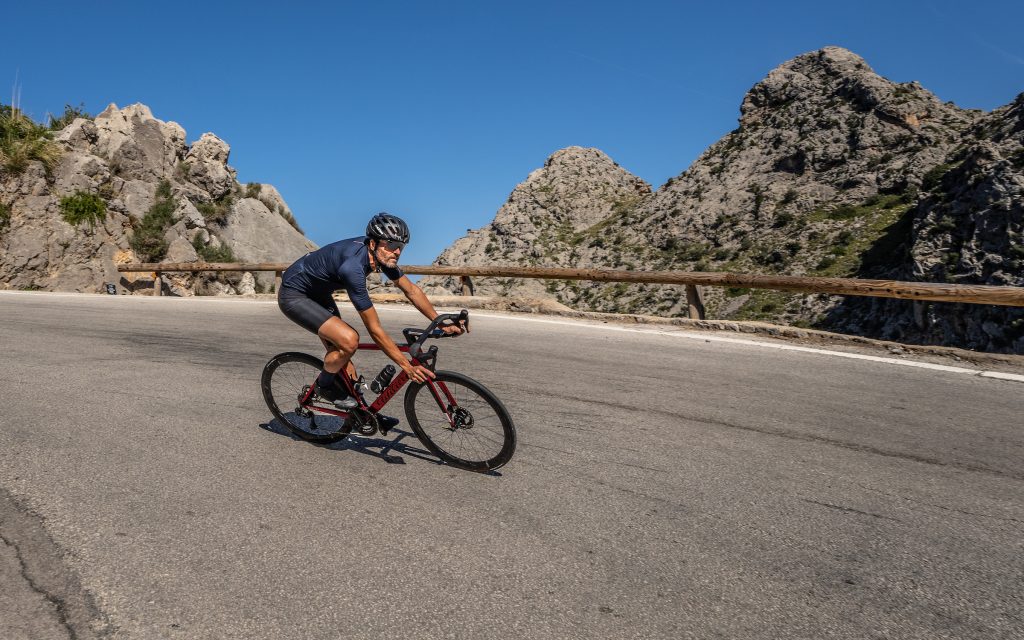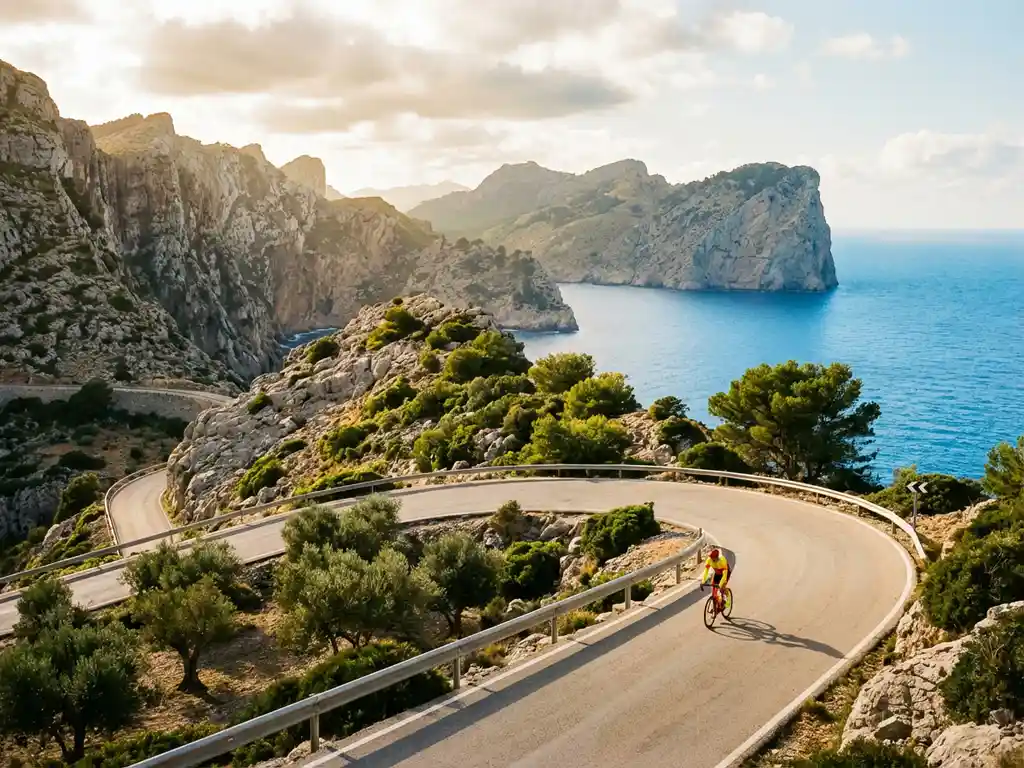
Mallorca offers excellent weather conditions for cyclists year-round thanks to its Mediterranean climate. Temperatures range from mild winters (15–18°C) to warm summers (25–30°C), with the best cycling conditions in spring and autumn. Rain is usually limited to short showers, especially in winter, while summers remain dry. This guide answers all questions about weather conditions during your cycling holiday in Mallorca.
What is the climate like in Mallorca for cyclists throughout the year?
Mallorca has a Mediterranean climate that is ideal for cycling almost year-round. Average temperatures range between 15°C in January and 29°C in August, with more than 300 days of sunshine per year.
Spring (March–May) brings temperatures of 18–24°C, with blooming landscapes and little precipitation. Summer (June–August) is warmer, with 25–30°C, perfect for early morning or evening rides. Autumn (September–November) offers ideal conditions with 20–26°C and stable weather. Even winter (December–February) is mild, with 15–18°C, keeping cycling comfortable.
The Tramuntana Mountains, UNESCO World Heritage site and a cyclist’s dream, create microclimates that make the island even more interesting. Coastal areas stay warmer due to sea influence, while mountain regions are a few degrees cooler. This Mediterranean climate makes Mallorca one of Europe’s best cycling destinations, which is why at Rompelberg we specialize in providing exceptional cycling experiences on this beautiful island.
When is the best time to cycle in Mallorca?
The best months to cycle in Mallorca are April and May, and September and October. These periods offer temperatures between 20 and 25°C, minimal rainfall and comfortable wind conditions for cyclists of all levels.
Spring (April–May) is perfect for longer tours, with blooming almond trees and green landscapes. Temperatures are ideal for intensive rides without overheating. Autumn (September–October) offers stable weather after the summer heat, with warm days and cool evenings.
The summer months (June–August) are suitable for experienced cyclists who start early or ride later in the evening. Temperatures can exceed 30°C, but the coastal breeze provides cooling. The winter months (November–March) are perfect for recreational cyclists who prefer mild temperatures. With us, you can enjoy high-quality rental bikes and personal guidance year-round, tailored to seasonal conditions. Learn more about us and how we tailor every cycling experience to the season.
What should you know about rain and wind while cycling in Mallorca?
Mallorca has an average of only 50 rainy days per year, mainly concentrated in the October–March period. Rain showers are usually short and intense, followed by quickly clearing weather. Wind is generally mild to moderate.
The rainy period falls mainly between November and February, with an average of 6–8 rainy days per month. These showers rarely last longer than a few hours and often occur at night. From May to September it hardly rains, with an average of only 1–3 rainy days per month.
Wind comes mainly from the north, with the tramontana as the strongest wind. This dry, cool wind can suddenly pick up, especially in winter and spring. Coastal areas usually experience a gentle sea breeze that brings cooling. During unexpected weather changes, you can always turn to our experienced mechanics and bike shops, spread across the island, for support. Feel free to contact us if you have any questions about weather-related preparations before your trip.
How do you prepare for different weather conditions during your cycling holiday?
Prepare for changing conditions by bringing layered clothing and planning flexibly. Always bring a light rain jacket, sunscreen and sufficient water, regardless of the season you travel in.
For spring and autumn: bring a windbreaker and both long and short sleeves. Temperatures can be cool in the morning and rise in the afternoon. In summer months you need light, breathable clothing, a cap and extra sun protection. Start early or cycle in the evening to avoid the heat.
Cycling in winter requires long pants, layers and possibly gloves, especially for mountain rides. Always check the weather forecast and adjust your route accordingly. Coastal routes are warmer than mountain tours. In extreme weather conditions we offer alternative routes and flexible programs, so you can always enjoy your cycling holiday. Our local expertise helps you make the best choices for optimal cycling enjoyment. Discover everything Rompelberg has to offer and start planning your perfect cycling adventure today.