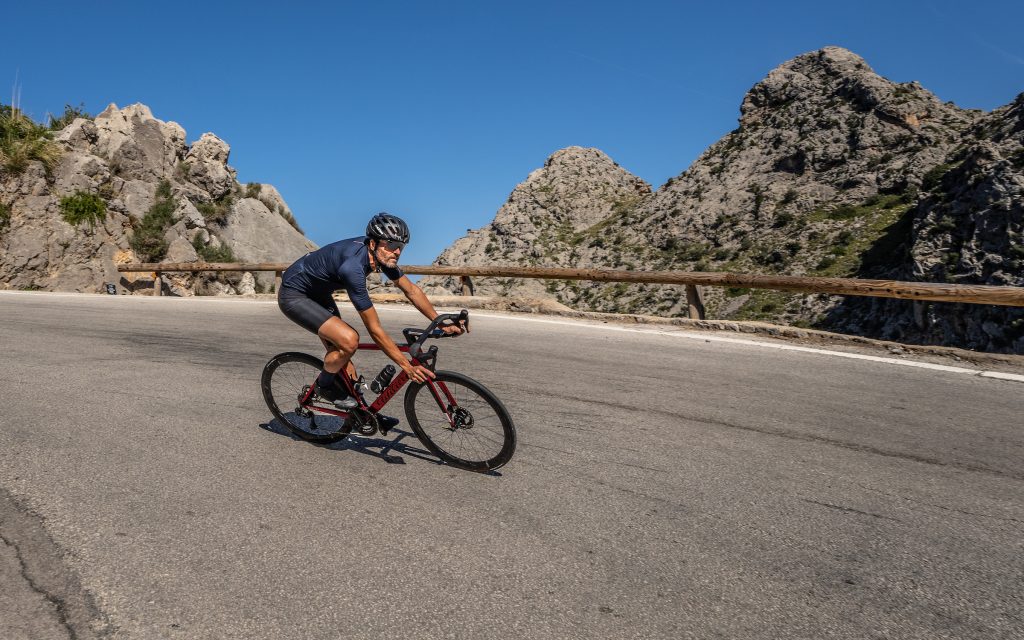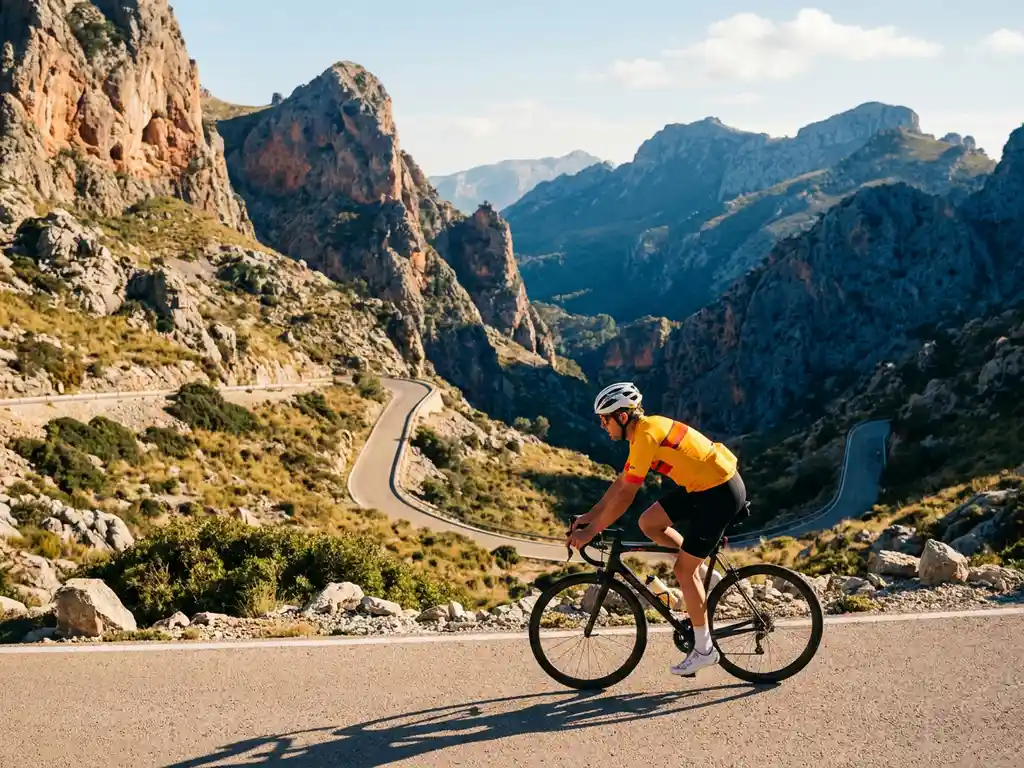
On a typical sporty cycling holiday, most cyclists spend 4 to 6 hours in the saddle per day, covering roughly 80 to 140 kilometres depending on terrain, fitness level, and the goals of the trip. Competitive riders and those on structured training camps often push toward the higher end of that range, while mixed-ability groups tend to settle around 3 to 5 hours. The sections below unpack the key questions around daily cycling volume so you can plan your next fietsvakantie with confidence.
How many kilometres do most cyclists cover on a sporty holiday?
On a sporty cycling holiday, most recreational and competitive cyclists cover between 80 and 140 kilometres per day. Riders focused on endurance training or mountain routes may average closer to 100 to 120 km, while those tackling significant elevation gain on climbs like Sa Calobra or Puig Major often cover fewer kilometres but spend just as long in the saddle.
The terrain plays a defining role here. Flat coastal routes allow higher average speeds and greater daily distances, whereas mountain stages on a fietsvakantie Mallorca can mean spending five or six hours riding while covering only 90 kilometres due to sustained climbs. For most sporty cyclists, a weekly total of 500 to 700 kilometres across six riding days is a realistic and productive target, leaving room for recovery without sacrificing training load.
What factors determine how long you spend in the saddle each day?
The time you spend cycling each day on a sporty holiday depends on a combination of fitness level, route elevation, group pace, and the structure of your programme. No two riders will experience the same daily duration even on identical routes, because individual power output, recovery capacity, and riding goals all vary significantly.
The most influential factors include:
- Terrain and elevation: Mountainous routes dramatically increase time in the saddle relative to distance covered.
- Group dynamics: Riding with a faster group or a guided breakaway session raises average pace and can shorten or lengthen your day depending on the route.
- Weather conditions: Headwinds, heat, and humidity on a Mediterranean island like Mallorca can add significant time to any planned ride.
- Fitness and training background: A well-trained cyclist recovers faster between efforts and can sustain higher output for longer periods.
- Holiday structure: Fully guided sportieve fietsvakanties with a set programme differ from self-planned trips where you choose your own start time and route each morning.
Understanding these variables before you arrive helps you set realistic daily targets and avoid overreaching in the first few days of your trip.
Is 4–6 hours of cycling per day too much for a training camp?
For most trained cyclists, 4 to 6 hours of cycling per day is not too much for a training camp, provided the intensity is managed correctly and rest days are built into the schedule. This range aligns with what professional and serious amateur riders target during structured training blocks, and it is widely considered the sweet spot for building aerobic fitness without accumulating excessive fatigue.
The key distinction is intensity. Six hours at a moderate endurance pace is very different from six hours with repeated hard efforts on mountain passes. If your racefiets vakantie includes challenging climbs every day, riding at maximum effort throughout will lead to accumulated fatigue by day three or four. Experienced coaches recommend keeping the majority of long riding days at a conversational, aerobic pace, reserving harder efforts for one or two sessions per week.
Riders who are newer to multi-day training blocks should start conservatively at 3 to 4 hours per day and increase volume gradually across the week rather than going all-in from day one.
How does a typical day-by-day cycling holiday schedule look?
A well-structured sporty cycling holiday typically follows a progressive weekly pattern, starting with moderate days to allow acclimatisation, building to peak volume mid-week, and tapering slightly toward the end to support recovery before the return journey.
Early days: acclimatisation and route familiarisation
The first one or two days are best used to settle into the local terrain, adjust to the climate, and calibrate your effort levels. On Mallorca, even experienced cyclists are often surprised by how much the heat and humidity affect their output compared to riding at home. A 70 to 90 km route with moderate climbing is a sensible opener.
Mid-week: peak training days
Days three through five are typically when the biggest rides happen. This is when most cyclists tackle the iconic climbs, join group rides, or complete their longest back-to-back training days. Routes like Cap de Formentor or the legendary Sa Calobra ascent fit naturally into this phase of the week.
Final days: consolidation and recovery
The last day or two should dial back the volume slightly, allowing the body to consolidate the training stimulus before travel home. A shorter, enjoyable ride of 50 to 70 km keeps the legs moving without adding unnecessary fatigue.
Should you ride every day or build in rest days?
For most cyclists on a one-week sporty holiday, one rest day mid-week is strongly recommended. Riding every day without a break accelerates fatigue accumulation, particularly when combining high daily volume with challenging terrain. A single rest day allows muscular repair, glycogen replenishment, and mental recovery, which directly improves the quality of the remaining riding days.
That said, a rest day does not have to mean complete inactivity. A short, easy spin of 30 to 45 minutes at very low intensity keeps the legs loose without adding meaningful training stress. Many cyclists on fietsvakantie programmes use their rest day to explore by bike at a relaxed pace, visit local towns, or simply enjoy the surroundings without any performance pressure.
For two-week trips, two rest days distributed across the fortnight is a more appropriate structure, with the second rest day ideally placed after the most demanding riding block.
What’s the best daily cycling volume for improving fitness on holiday?
The most effective daily cycling volume for fitness gains on a sporty holiday is 3 to 5 hours of aerobic riding, with one or two sessions per week that include structured intensity. This approach maximises the training stimulus while keeping cumulative fatigue at a manageable level across the full week.
Chasing maximum kilometres every day is a common mistake. More volume does not automatically mean more fitness improvement, especially if fatigue forces you to ride at reduced intensity by day four. A smarter approach is to prioritise quality over quantity on key days and use the remaining days for active recovery riding.
At Rompelberg Cycling Holidays, we design our cycling holiday programmes around exactly this principle, offering guided group rides at different levels so that every cyclist, whether you are targeting personal bests on mountain passes or building a solid aerobic base, rides at a volume and intensity that genuinely moves the needle. Our Breakaway group sessions are specifically structured for competitive riders who want to push hard on the right days and recover smart on the others. If you would like to find out more or discuss the right programme for your goals, feel free to get in touch with our team.
Ultimately, the best daily cycling volume is the one that leaves you tired but not broken at the end of each day, and genuinely stronger by the time you fly home.