You do not need to be an elite athlete to book a sporty cycling holiday, but you should be comfortable riding for two to four hours at a moderate pace before you go. The key is matching your current fitness to the right level of challenge, not waiting until you feel perfectly prepared. The sections below answer the most common questions cyclists ask before committing to a sporty fietsvakantie.
What counts as ‘sporty’ on a cycling holiday?
A sporty cycling holiday typically means daily rides of 60 to 120 kilometres, with significant elevation gain, at a pace that pushes you beyond a casual Sunday spin. It is distinct from a leisure cycling break in that the riding itself is the main event, not a gentle backdrop to sightseeing. Most sportieve fietsvakanties involve structured routes, group rides, and climbs that require genuine cardiovascular effort.
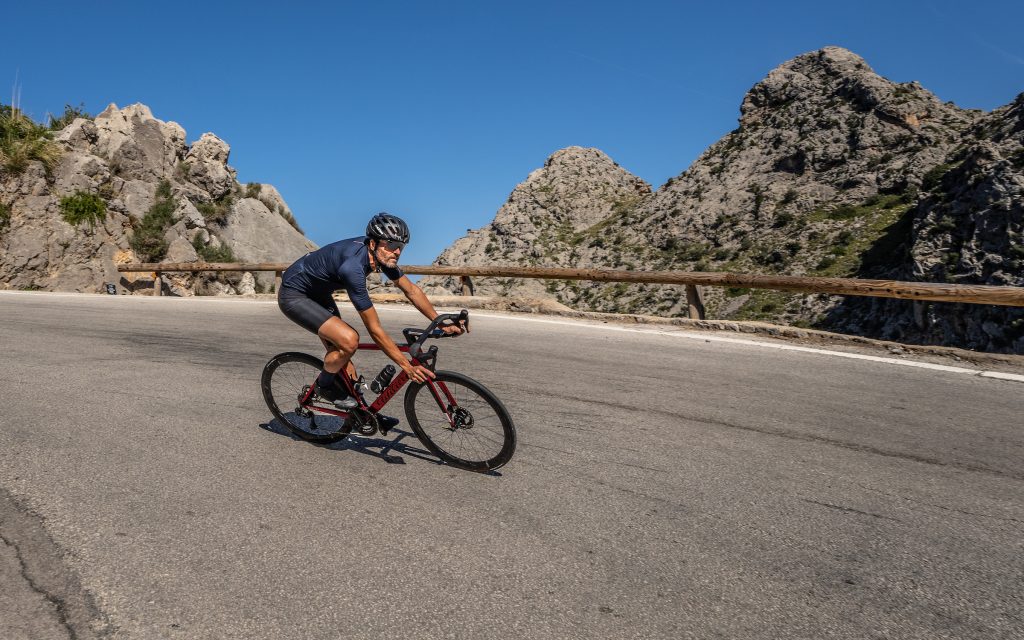
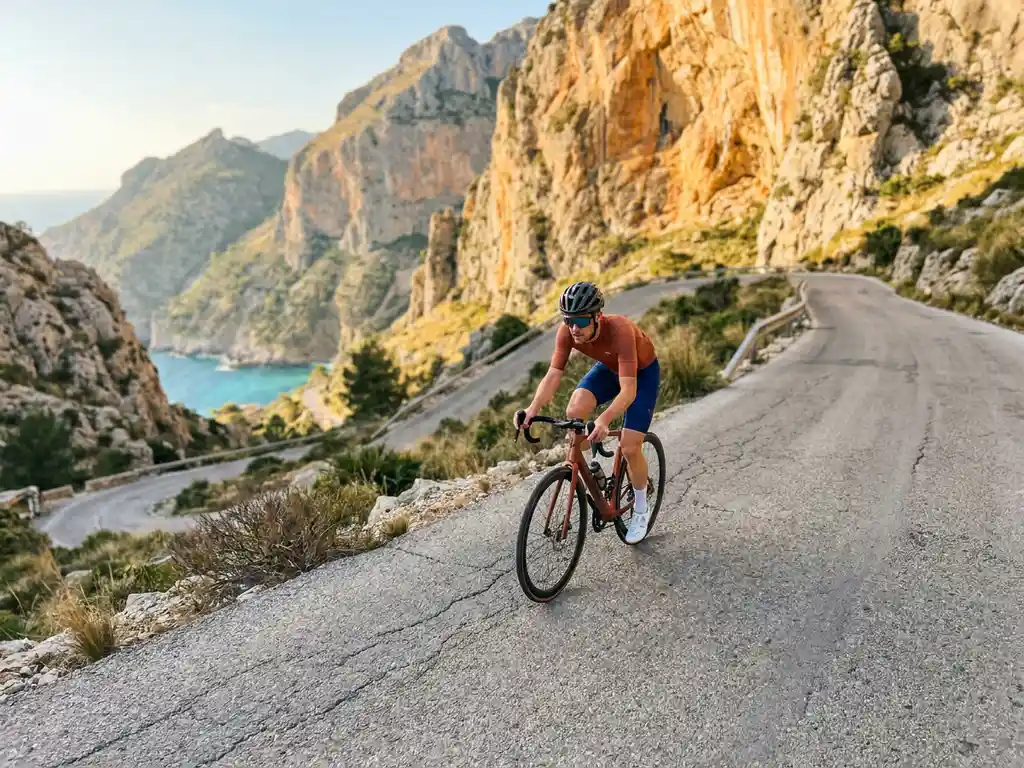
In practical terms, “sporty” covers a wide range. In a destination like Mallorca, it might mean tackling the legendary Sa Calobra climb, grinding up Puig Major, or riding out to Cap de Formentor. These are iconic routes that demand real fitness, but they are not exclusively the domain of racing cyclists. Many recreational riders complete them with the right preparation and pacing. The label “sporty” is less about speed and more about a commitment to riding with purpose every day of your holiday.
What fitness level do you need for a cycling holiday in Mallorca?
To enjoy a sporty fietsvakantie Mallorca comfortably, you should be able to ride for three hours continuously at a conversational pace and handle moderate hills without stopping. You do not need to be a competitive racer, but you should have a base of regular cycling behind you, ideally riding at least two to three times per week in the months before your trip.
Mallorca’s terrain varies considerably. The flat coastal roads around Playa de Palma and Playa de Muro are accessible to riders of most fitness levels, while the mountain routes in the Serra de Tramuntana demand a higher aerobic base and the ability to sustain effort over long climbs. If your goal is to ride Sa Calobra or Puig Major, you should be comfortable climbing for 30 to 45 minutes without resting. If you are aiming for the faster, more competitive group rides, a higher threshold power and race-level conditioning will serve you well.
How many weeks before your trip should you start training?
For most recreational cyclists planning a sporty cycling holiday, eight to twelve weeks of structured preparation is the right window. This gives you enough time to build an aerobic base, increase weekly mileage progressively, and include some climbing-specific work without risking overtraining or injury before you travel.
If you are already riding regularly, eight weeks is usually sufficient to sharpen your fitness and add volume. If you are returning from a longer break or starting from a lower base, twelve weeks gives you the buffer to build gradually. The final week before your trip should be lighter, with shorter rides, so you arrive fresh rather than fatigued. Arriving rested is just as important as arriving fit.
What types of rides should you do to prepare?
To prepare for a sporty fietsvakantie, your training should include three types of rides: long endurance rides to build aerobic capacity, climbing sessions to prepare your legs for sustained elevation, and back-to-back riding days to simulate the consecutive daily effort of a cycling holiday.
- Long endurance rides: Aim for at least one ride per week that progressively builds toward the duration you expect to ride on holiday. If your holiday days will average three to four hours, work up to that length in training.
- Climbing sessions: If you are heading to a mountainous destination, find the steepest roads near you and repeat them. Sustained climbing at a controlled pace trains both your legs and your pacing judgment.
- Back-to-back days: Ride on consecutive days at least twice during your preparation. This teaches your body to recover overnight and perform again the next morning, which is exactly what a cycling holiday demands.
- Threshold intervals: Short, harder efforts at a pace just above comfortable help raise your overall fitness ceiling and make the long days feel more manageable.
Should you book a guided or self-guided cycling holiday if you’re unsure of your fitness?
If you are uncertain about your fitness level, a guided cycling holiday is the safer and more rewarding choice. A guide can adapt the pace, suggest route alternatives, and provide real-time support if you struggle, which removes the anxiety of navigating unfamiliar terrain alone while tired.
Self-guided holidays offer more freedom and suit riders who are confident in their fitness, navigation, and ability to manage their own effort across multiple days. But if there is genuine doubt about whether you can complete the planned routes, that uncertainty tends to grow on day three when fatigue sets in. We offer both fully guided group rides and flexible arrangements, so you can choose the structure that matches your confidence level rather than stretching beyond it. A guided option also connects you with other riders at a similar level, which makes the experience more social and motivating. To find out more about how we organise our rides, visit our about us page.
What happens if you arrive less fit than expected?
Arriving less fit than planned is more common than most cyclists admit, and a good cycling holiday operator will have options to accommodate you. The practical response is to adjust your daily routes, reduce mileage, choose flatter alternatives, and ride at your own pace rather than forcing yourself through distances that will leave you exhausted or injured.
In a destination like Mallorca, this is genuinely manageable. The island offers everything from flat coastal rides to demanding mountain stages, so there is always a route that fits how your legs feel on a given day. We carry a fleet of over 800 bikes and have experienced staff on hand who understand that fitness levels vary and that the goal of any cycling holiday is enjoyment, not suffering. Communicating honestly with your guide or operator on arrival means you can recalibrate your week without disappointment. A slightly shorter ride completed with energy to spare is always better than a punishing day that puts you off the bike entirely. If you would like to discuss your fitness level and find the right programme before you book, do not hesitate to contact us directly.