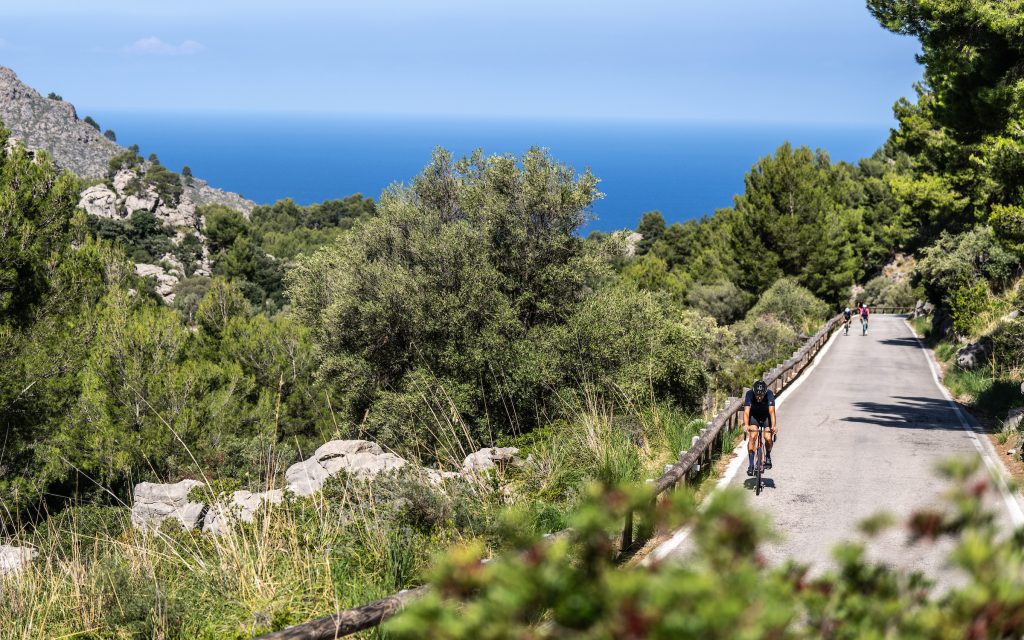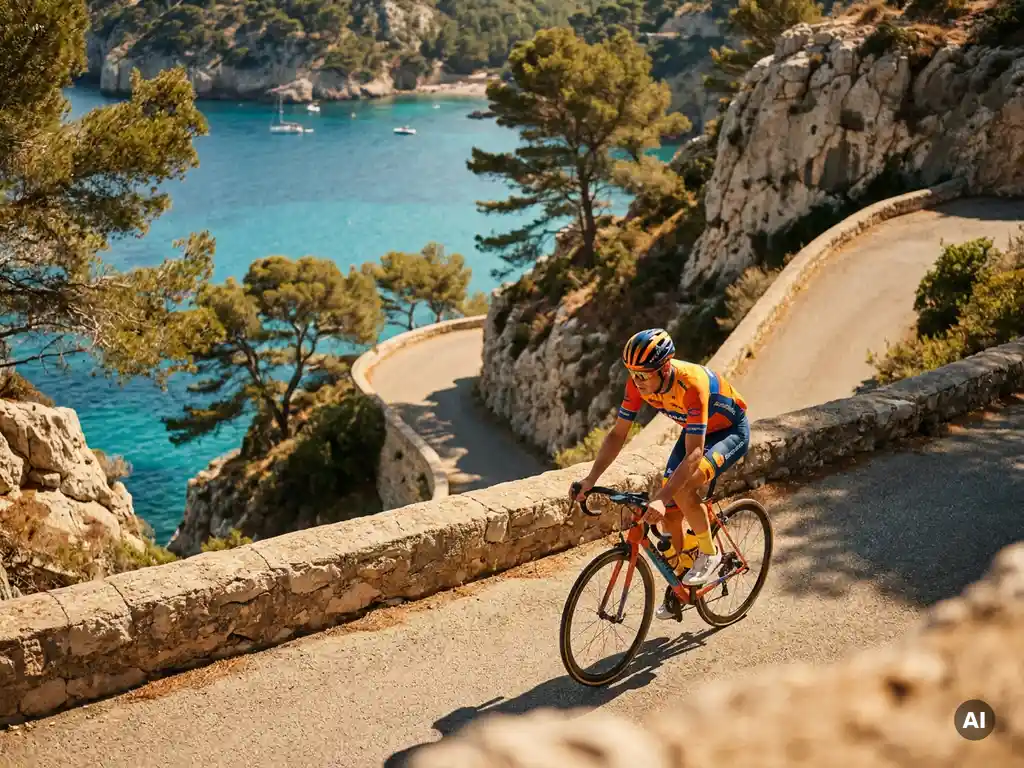
The most beautiful cycling route to Sa Calobra is the descent from Coll dels Reis, followed by the climb back up. This route combines spectacular bends, breathtaking views over the Serra de Tramuntana, and a technically challenging climb that makes Sa Calobra one of the most legendary cycling destinations in Europe. In this article, we answer the most frequently asked questions about the Sa Calobra route, so you can arrive at the start fully prepared.
Which side of Sa Calobra is the hardest to climb?
The climb from Sa Calobra towards Coll dels Reis is by far the hardest side. Over a distance of approximately 9.5 kilometres, you gain more than 650 metres of elevation, with average gradients of around 7 percent and peaks exceeding 10 percent. The climb offers virtually no recovery and demands a constant effort from start to finish.
What makes the Sa Calobra climb extra demanding is the combination of factors. The road winds through the rocks in a series of tight hairpin bends, including the famous Nus de sa Corbata, a loop where the road literally passes over itself. The narrow road width and lack of shade on many sections mean you can overheat quickly in warm weather. If you ride the climb in the morning, you benefit from cooler temperatures and less traffic.
The descent from Coll dels Reis towards Sa Calobra is technically challenging but physically less demanding. Nevertheless, the descent also requires concentration due to the narrow bends and ongoing traffic from buses and other cyclists.
What makes the route via Coll dels Reis so iconic?
The route via Coll dels Reis is iconic because it is one of the most visually spectacular and technically challenging mountain passes on Mallorca. The combination of rugged rock formations, the Nus de sa Corbata, and the views over the Tramuntana make this route an experience that cyclists from all over Europe come specifically to ride.
Coll dels Reis sits at 669 metres above sea level and is accessible via the road from Escorca. What makes the Sa Calobra route via this pass so special is the sense of isolation and grandeur. The road cuts through a bare, rocky landscape that feels like another world. There are hardly any buildings, no distractions — just the road, the rocks, and you.
For competitive cyclists, this route also has historical significance. Professional cycling teams have been training here for decades, and the climb has been featured multiple times in the Challenge Mallorca. If you take Sa Calobra cycling seriously, the route via Coll dels Reis is the only real option.
How do you combine Sa Calobra with Puig Major in one ride?
The classic combination of Sa Calobra and Puig Major is ridden by departing from Sóller or Port de Sóller, first climbing Puig Major via the MA-10, then descending to Escorca, riding into Sa Calobra, and returning via the same route. The total ride typically covers between 80 and 110 kilometres, depending on your starting point.
This combination is one of the most sought-after routes on Mallorca, and for good reason. Puig Major, at 1,032 metres, is the highest climbable mountain on the island, and the ascent from the coast is long and gradual but relentless. After Puig Major comes the descent to Cuber lake, after which you take the turn-off towards Sa Calobra.
Practically speaking, there are a few things to keep in mind:
- Set off early, preferably before 8 a.m., to avoid the heat and tourist bus traffic on Sa Calobra
- Bring enough water and food, as there are few resupply points along the route
- Allow a total climbing time of 3 to 4 hours for both ascents combined
- The descent from Puig Major is fast and technical — brake early and watch out for oncoming traffic
This ride is not suitable for beginners. However, experienced climbers accustomed to long efforts in the mountains will enjoy it enormously.
When is the best time to ride Sa Calobra?
The best time to ride the Sa Calobra route is early in the morning, between 7 and 9 a.m., and preferably in the shoulder seasons: March to May or September to November. During these periods, temperatures are pleasant, traffic is limited, and the roads are less busy with tourists and buses.
In the summer months, particularly July and August, temperatures on the Sa Calobra climb can rise above 35 degrees Celsius. The road offers little shade and the heat reflects off the rocks. This makes the climb not only harder but also more dangerous due to the risk of overheating. If you do ride in summer, set off before sunrise.
In 2026, the busiest tourist season on Mallorca is expected to be concentrated once again in the months of June to August. Those who want to experience the most beautiful cycling route on Mallorca in relative peace would do well to visit outside this period. The roads are quieter, the hotels cheaper, and the riding experience considerably more enjoyable.
What type of bike is most suitable for Sa Calobra?
For the Sa Calobra climb, a lightweight carbon road bike with a compact chainset is the most suitable choice. A bike weighing under 8 kilograms with a low enough gear ratio, such as a 34×32 or 34×28 combination, makes a real difference on the steepest sections of the climb.
The quality of the brakes is at least as important as the weight. The descent to Sa Calobra is fast and winding, and hydraulic disc brakes offer more control and consistency than rim brakes, especially in warm weather when rims heat up quickly. For cyclists who take Sa Calobra seriously, a modern endurance or climbing bike with disc brakes is the ideal choice.
If you are leading a group of cyclists of varying abilities, it is wise to match the bike choice to the weakest climber in the group. A slightly more comfortable geometry with more gearing options can make the difference between a great experience and an exhausting ordeal.
How Rompelberg helps you ride Sa Calobra at your best
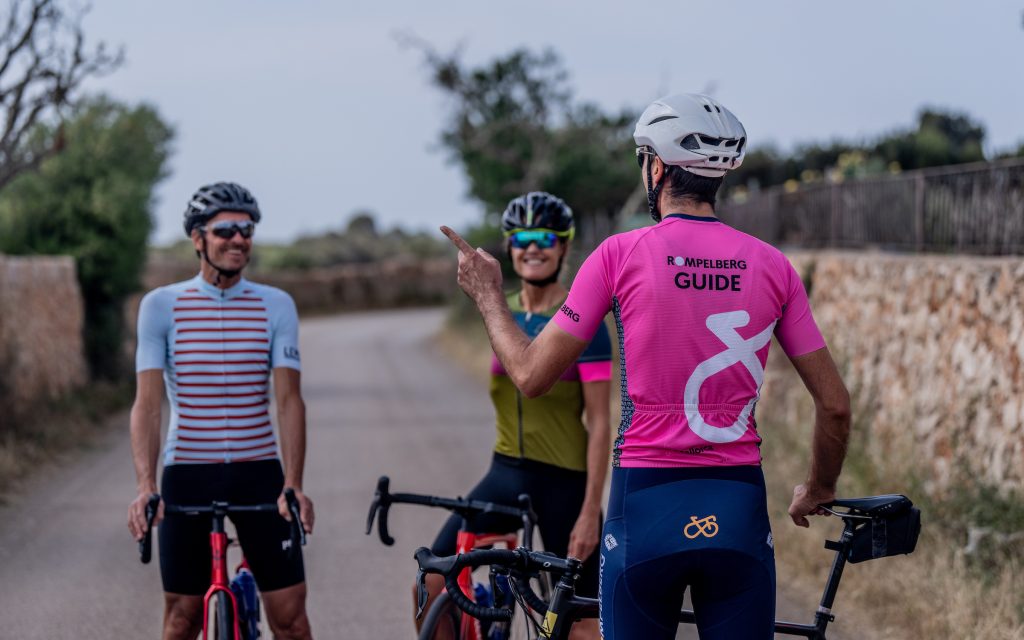
We know the Sa Calobra route like the back of our hand. As a specialist in cycling holidays on Mallorca, we help you experience this legendary climb in the best possible way — from the right bike to the perfect route planning. Here is what we arrange for you:
- High-end carbon rental bikes such as the Wilier Filante SLR and Cento10, specially suited for tough climbs like Sa Calobra and Puig Major
- Guided group rides through our Breakaway group for competitive cyclists who want to push their limits
- Local route knowledge about the best departure times, resupply points, and combinations with other iconic climbs
- Complete cycling holiday packages including flights, hotel, and bike, so all you need to think about is riding
- Workshop and mechanics on site for technical support before and after your ride
Would you like to ride the Sa Calobra climb as part of a complete cycling holiday on Mallorca? Check out our climbs on Mallorca or contact us for personalised advice tailored to you.