The most beautiful cycling climbs through the Serra de Tramuntana are Sa Calobra, Puig Major, and Cap de Formentor. These three ascents represent the absolute pinnacle of cycling on Mallorca and attract thousands of cyclists from across Europe every year. In this article, we answer the most frequently asked questions about the cycling climbs in the Serra de Tramuntana, so you can start your adventure fully prepared.
Which climbs in the Serra de Tramuntana are the hardest?
The hardest climbs in the Serra de Tramuntana are Puig Major, Sa Calobra, and the Coll de Sóller. Puig Major, at 1,445 meters, is the highest mountain on Mallorca and demands serious legs. Sa Calobra combines steep gradients with a technical course, while the Coll de Sóller is a classic mountain pass that will truly test your lungs.
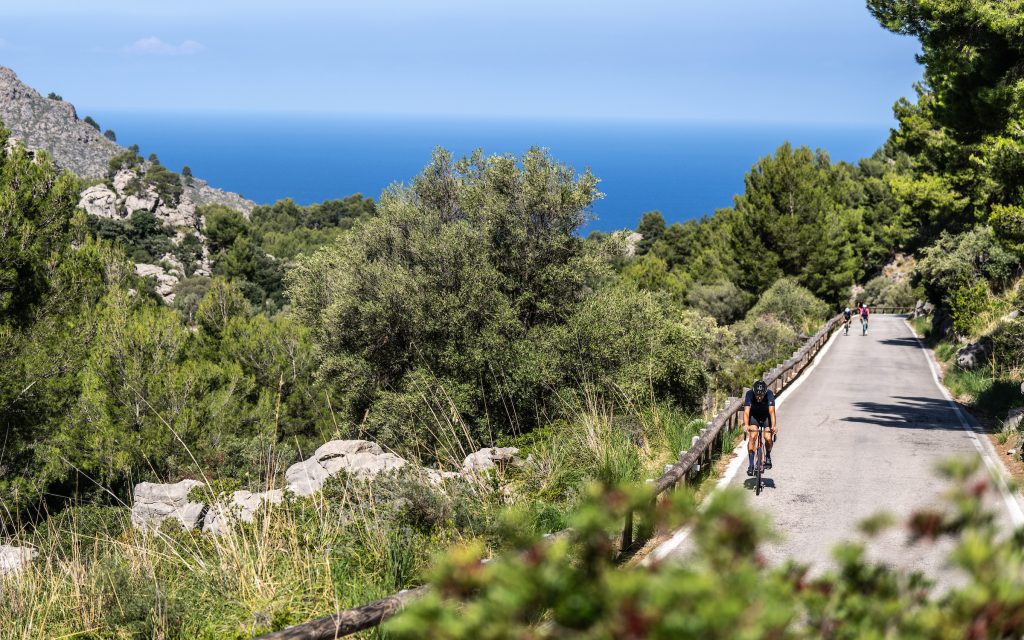
Puig Major has an average gradient of around 7 percent over a distance of more than 12 kilometers, with peaks approaching 10 percent. The road winds along spectacular rock faces and offers views that take your breath away — quite literally. Anyone who reaches the summit has achieved something every cyclist can be proud of.
The Coll de Sóller is slightly more accessible, but don’t underestimate it. The climb from Palma toward Sóller builds steadily and will destroy your legs if you push too hard too early. Combine these climbs in a single ride and you have a training day you won’t forget for a long time.
What makes Sa Calobra so legendary for cyclists?
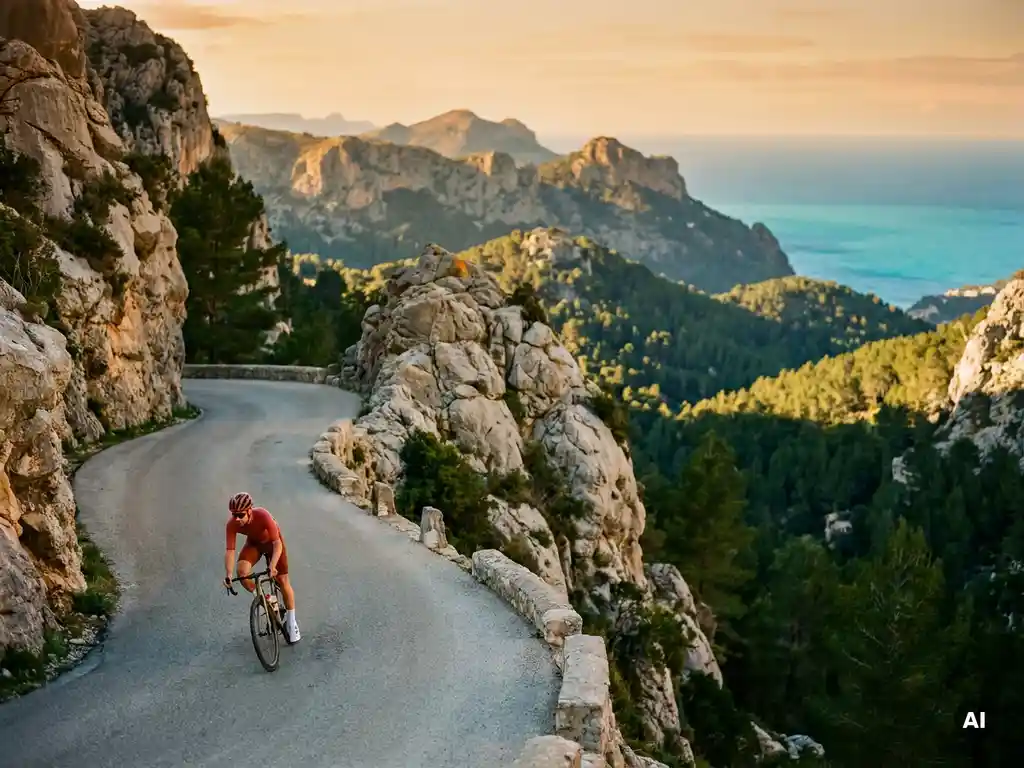
Sa Calobra is legendary because it is one of the most iconic and challenging climbs in the world. The road descends 9.4 kilometers to the coast via spectacular hairpin bends, including the famous Nus de sa Corbata, a loop where the road literally passes over itself. Cycling back up means a climb averaging 7 percent with views found nowhere else on earth.
What makes Sa Calobra unique is the combination of technical challenge and raw beauty. Rock walls rise hundreds of meters on both sides of the road, the sea shimmers blue on the horizon, and the asphalt is of excellent quality. It is no coincidence that professional cycling teams choose Sa Calobra as a regular training venue for their spring preparation.
The climb begins in Escorca and ends at the entrance to the ravine leading toward the beach. In terms of fitness, you need a solid base: anyone who regularly rides longer climbs at home can handle Sa Calobra. But expect a serious effort and plan sufficient recovery time afterward.
How does Cap de Formentor differ from the other climbs?
Cap de Formentor differs from the other climbs in the Serra de Tramuntana in that it is less of a pure test of strength and more of a rhythmic, scenic ride to the northernmost point of Mallorca. The road has less extreme gradients than Sa Calobra or Puig Major, but compensates with constant undulations that gradually drain your legs.
The route to Cap de Formentor starts from Port de Pollença and takes you past dramatic cliff coastlines, turquoise bays, and pine forests. The total distance is around 20 kilometers one way, with elevation changes that keep you constantly moving. It is a climb that demands good rhythm more than brute strength.
For competitive cyclists, Cap de Formentor is a perfect addition to a training week. Combine it with a harder day on Sa Calobra or Puig Major and you have an excellent variation in intensity. The road is also popular for its tranquility — riding early in the morning means little traffic and the best light of the day.
When is the best time to climb in the Tramuntana?
The best time to ride the cycling climbs in the Serra de Tramuntana is from February through May, and from September through November. During these periods the temperatures are pleasant, traffic is limited, and the roads are in optimal condition. The summer months are too hot for intensive mountain rides, while winter can bring wet and slippery roads.
Many professional cycling teams choose February and March for their training camps on Mallorca, and that is no coincidence. Temperatures then range between 12 and 18 degrees Celsius, ideal for long climbing rides without overheating. In 2026, early spring is once again a popular period, with many cycling clubs and recreational cyclists seeking the quiet of the pre-season.
If you want to avoid the crowds, October is an excellent choice. The island is quieter, temperatures are still pleasantly warm, and the mountain roads are free from the summer tourist rush. Ride early in the morning if possible, especially in the warmer months, so you tackle the hardest sections before the heat sets in.
What bike do you need for the climbs on Mallorca?
For the climbs on Mallorca you need a lightweight road bike with a compact crankset or a cassette with enough gears for the steepest sections. A carbon frame makes a noticeable difference on the longer ascents, and good brakes are essential for the technical descent of Sa Calobra.
A compact crankset (50/34) combined with an 11-32 or 11-34 cassette gives you the low gears you need for the steepest sections. Riders on a standard crankset will quickly find their legs running out on the longer climbs. Have your bike serviced before you leave and check the brake pads, as the descent of Sa Calobra demands reliable braking power.
High-end carbon road bikes such as the Wilier Filante SLR and the Wilier Cento10 are popular among competitive cyclists who want to get the most out of their climbs. These bikes combine low weight with stiffness and riding comfort — exactly what you need for a day full of elevation gain in the Tramuntana.
How do you combine multiple climbs in one training ride?
The most popular combination for a tough training ride in the Serra de Tramuntana is Sa Calobra and Puig Major in one day. Ride from Sóller or Port de Pollença toward the foot of Puig Major, turn off toward Sa Calobra, climb back up, and then continue to the summit of Puig Major. This combination gives you more than 2,500 meters of elevation gain in a single ride.
Another classic route is the so-called Tramuntana loop from Palma, via the Coll de Sóller, through the valley to Sóller, up to Sa Calobra, and back via the coastal road. Depending on your starting point and the detour you choose, you will ride between 120 and 160 kilometers with significant elevation gain.
Plan your combination rides wisely by tackling the hardest climb first, while your legs are still fresh. Bring enough food and water, as there are few opportunities to refuel on the mountain roads along the way. Good preparation at home, with sufficient base miles and climbing training, makes the difference between a great day and one you would rather forget.
How we help you conquer the finest climbs on Mallorca
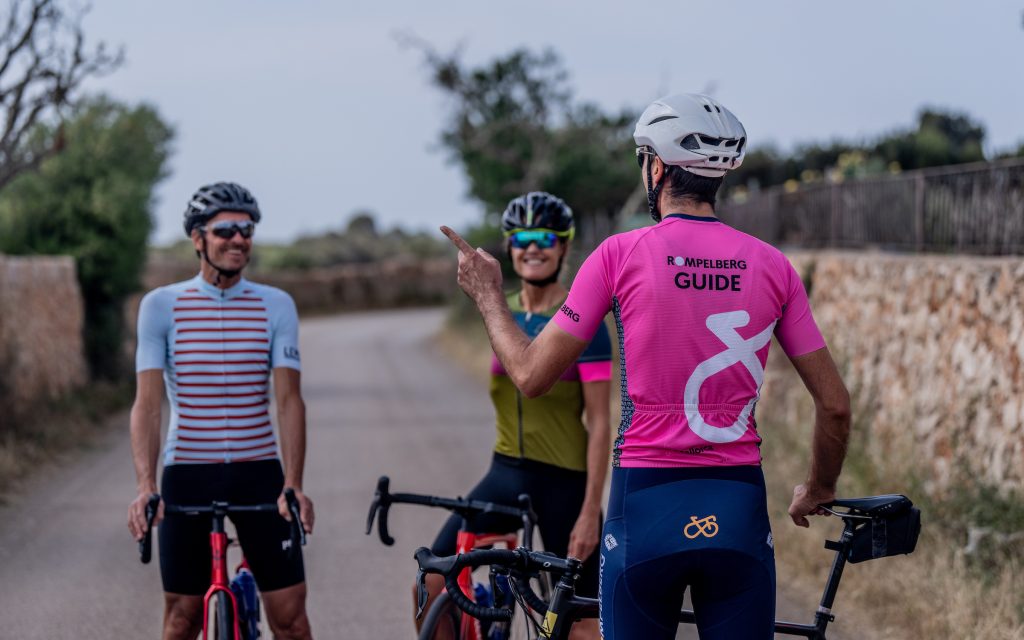
At Rompelberg Cycling Holidays, we know better than anyone what it means to explore the Serra de Tramuntana by bike. We offer everything you need for a successful cycling climbing holiday on Mallorca:
- High-end rental bikes such as the Wilier Filante SLR and Cento10, fitted to your measurements and ready for the toughest ascents
- Guided group rides through our Breakaway group, specially designed for competitive cyclists who want to ride Sa Calobra, Puig Major, and Cap de Formentor
- Complete cycling packages including flights, hotel, bike, and transfers, so you can focus solely on cycling
- Local expertise from experienced guides who know the Tramuntana inside out and will show you the most beautiful routes
- Cycling hotels with secure storage, a workshop, and mechanics, in prime locations in Playa de Palma and Playa de Muro
Whether you want to explore the climbs on Mallorca for the first time or are planning a serious training camp, we make sure everything is arranged down to the last detail. Contact us and we will help you put together a cycling holiday that perfectly matches your ambitions and level.