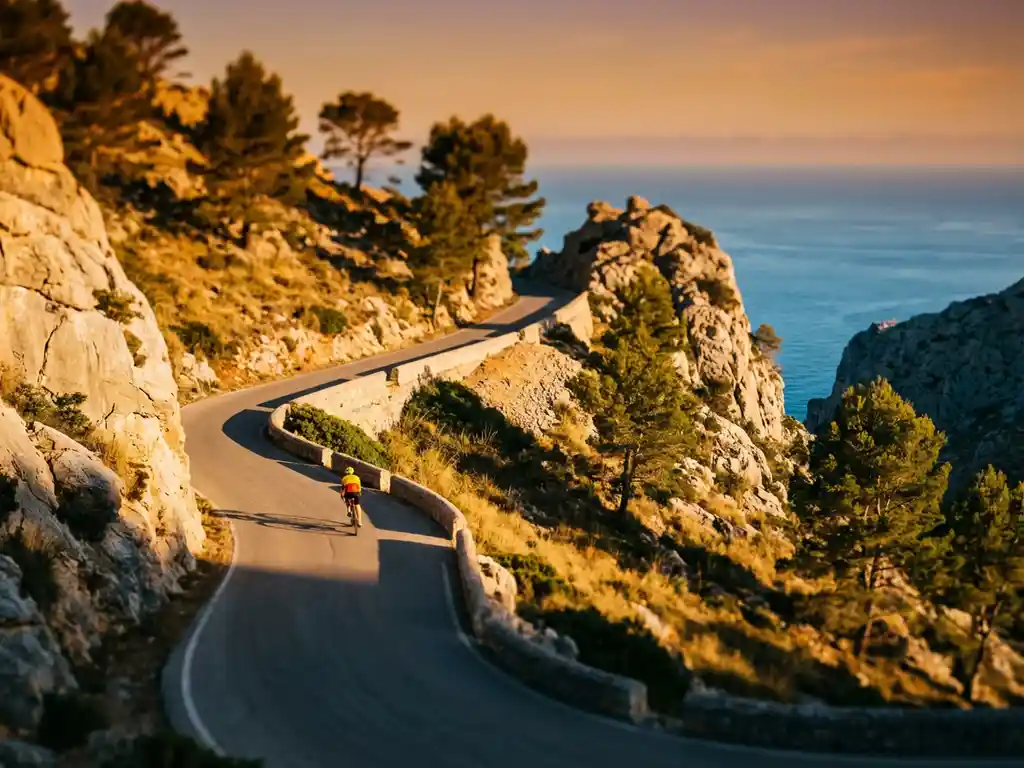
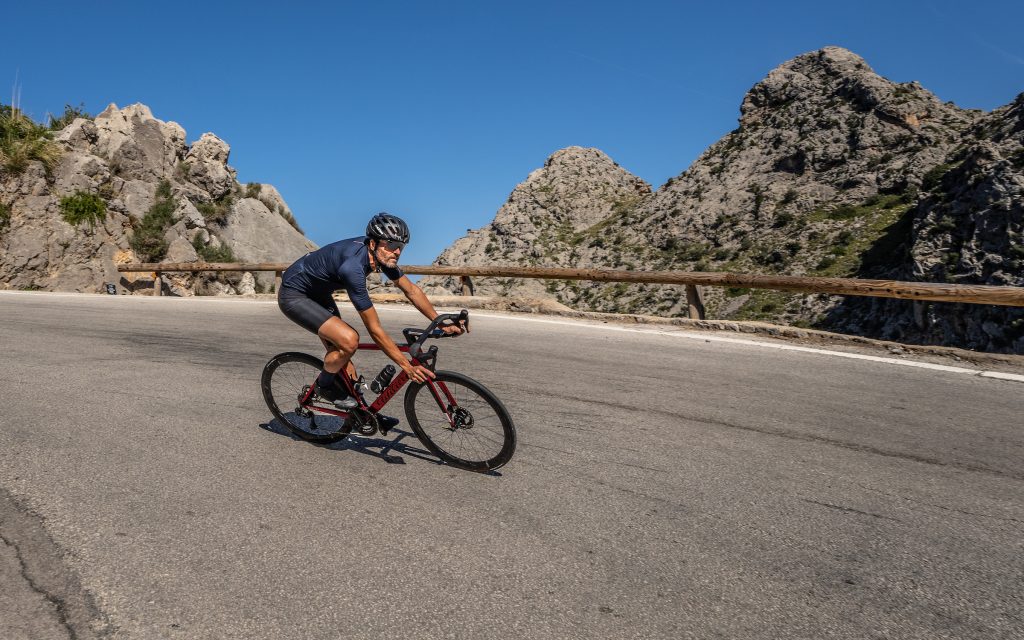
Mallorca offers recreational cyclists accessible climbs that are perfectly suited for beginners and leisure cyclists. The easiest climbs, such as the Coll de sa Creu and the Coll de Sóller, have moderate gradients between 3 and 6% and offer beautiful views. With proper preparation and equipment, you can safely and comfortably explore these beautiful mountain roads during your cycling holiday in Mallorca.

What are the easiest climbs in Mallorca for beginner cyclists?

The Coll de sa Creu, Coll de Femenia and Coll de Sóller are ideal first climbs for recreational cyclists. These climbs have average gradients of 4 to 6%, are 8 to 12 kilometers long and offer sufficient rest points along the way. The roads are well maintained and the beautiful views make the climbing extra worthwhile.
The Coll de sa Creu (399 m) from Alcúdia is perfect for beginners with 8 kilometers and an average gradient of 4%. The climb runs through pine forests and offers a beautiful viewpoint halfway. The Coll de Femenia (468 m) from Pollença is slightly more challenging, with 10 kilometers and 5% gradient, but the route past the mountain village of Lluc more than makes up for it.
The Coll de Sóller is perhaps the most beautiful beginner-friendly climb. The 12-kilometer route from Palma to Sóller has a moderate profile, with steeper sections alternating with flatter parts. Along the way you pass traditional Mallorcan terraces and olive groves, perfect for a relaxed cycling holiday experience.

How do you prepare for your first climb during a cycling holiday in Mallorca?

Good preparation begins weeks before your cycling holiday in Mallorca, with regular training on hills at home. Practice your breathing technique, get to know your own pace and gradually train your legs for longer efforts. Mentally, it’s important to have realistic expectations and enjoy the process.
Physical preparation means regularly doing longer rides with climbs at home. Start with short hills and build up slowly. Train your breathing by consciously breathing deeply and regularly during exertion. Get to know your heart rate, so you don’t start too hard in Mallorca.
Pacing is crucial for a successful first climb. Always start more calmly than you think necessary. You can always speed up, but if you start too hard, it’s difficult to recover. Plan stops at beautiful viewpoints: this makes climbing much more enjoyable and gives you time to recover.
Mental preparation means accepting that climbing requires effort. See it as an opportunity to experience beautiful nature, rather than as an ordeal. Many recreational cyclists discover that uphill cycling becomes addictive once they have the right mindset.

What are the best times of year to cycle climbs in Mallorca?

March to May and September to November are ideal for recreational cyclists who want to try climbing. The temperatures are between 18 and 25°C, there is less traffic on the mountain roads and nature shows itself at its most beautiful. Avoid July and August due to the heat and crowds.
Spring (March-May) offers perfect conditions, with blooming almond trees and pleasant temperatures. The roads are quiet because the high season has yet to begin. April is often the best month, with stable weather and temperatures around 22°C: ideal for longer climbs.
Autumn (September-November) also offers excellent cycling conditions. September can still be warm, but October and November are perfect for beginners. The landscape takes on beautiful autumn colors and most tourists have left, ensuring quiet mountain roads.
Winter cycling is possible, but requires more preparation. December through February can have rainy periods and temperatures sometimes drop below 15°C. For recreational cyclists who prioritize comfort, these months are less suitable, although sunny winter days offer beautiful cycling opportunities.

What equipment and bike type do you need for climbing in Mallorca?

A road bike or gravel bike with compact gearing (50/34 chainrings and an 11-32 cassette) is ideal for recreational climbers. Comfortable cycling clothing, a helmet, sufficient water and energy bars are essential. When renting bikes, pay attention to the quality of the brakes and shifting system, for safe descents.
The right bike makes climbing much more enjoyable. Compact gearing gives you light gears for steep sections, without having to struggle. Carbon or aluminum road bikes are light enough for climbing and at the same time stable on descents. Gravel bikes offer more comfort during longer rides.
Clothing should be breathable and comfortable. Choose layers that you can put on and take off, as temperatures in the mountains can vary. A windbreaker is handy for descents. Don’t forget a good helmet either: mountain descents require extra safety.
When renting bikes, you can count on professionally adjusted bikes with high-quality components. Experienced rental companies ensure that the bike is perfectly adjusted to your size and provide advice on the best routes for your level. A good bike rental also offers breakdown service and support during your climbing adventures.
Climbing in Mallorca opens up a world of beautiful mountain landscapes and unforgettable cycling experiences. With the right preparation, equipment and timing, every climb becomes a highlight of your cycling holiday. Start with the easier climbs and gradually build your confidence: before you know it, you’ll be exploring the most beautiful mountain roads on the island. For more information about us and our guidance, you can always contact us.