Both a fully guided cycling holiday and a self-organised cycling holiday offer genuine benefits, but the right choice depends on what you want from your time on the bike. Guided holidays deliver structure, support, and social connection, while self-organised trips offer flexibility and independence. The best option comes down to your experience level, travel style, and how much planning you want to take on before you even clip in.
What do you actually get with a fully guided cycling holiday?
A fully guided cycling holiday provides a complete, managed experience where route planning, mechanical support, group leadership, and often accommodation are arranged for you. You show up, ride, and enjoy the destination. The logistical burden is lifted entirely, allowing you to focus on the cycling itself and the landscapes around you.
In practice, this means a knowledgeable guide leads each ride, sets a pace appropriate for the group, and handles unexpected situations like punctures, navigation errors, or medical concerns. For many cyclists, this peace of mind is the single biggest draw. You are never alone on an unfamiliar road, wondering whether you have taken a wrong turn or whether help is nearby.
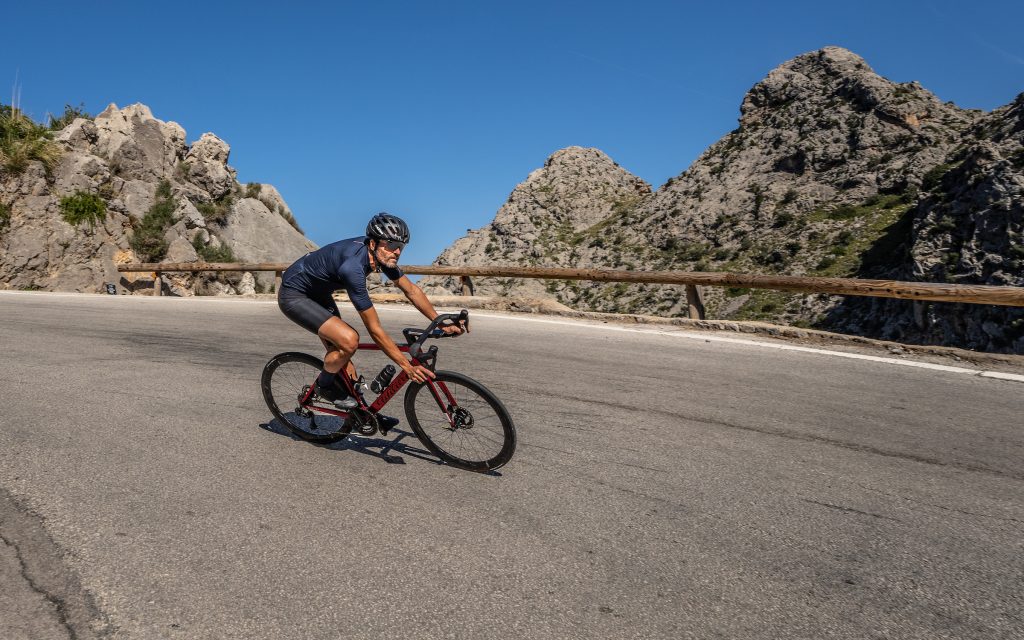
Guided cycling holidays also tend to create a strong social atmosphere. Riding with a group of like-minded people, sharing coffee stops and post-ride meals, is a big part of what makes these trips memorable. We organise guided group rides on Mallorca across five different levels, from the relaxed Easy Riders rides covering 50 to 60 kilometres at around 20 km/h, through to the more challenging Peloton and Pacers groups for stronger cyclists. Each group rides with a guide who knows the island’s roads intimately, so you discover routes you would never find on your own.
What are the main advantages of organising your own cycling holiday?
The main advantages of a self-organised cycling holiday are freedom, flexibility, and the ability to tailor every detail to your personal preferences. You choose your own routes, set your own start times, stop wherever you like, and adjust your plans day by day without needing to coordinate with a group or guide.
For experienced cyclists who already know how to navigate, handle basic mechanical issues, and manage their own nutrition and pacing, a self-organised trip can feel more rewarding. There is a genuine satisfaction in planning a route across a mountain pass, executing it successfully, and knowing you did it entirely on your own terms.
Self-organised holidays can also be easier to adapt to personal fitness levels or interests. If you want to spend a morning exploring a coastal village rather than riding, you simply do. If you feel strong and want to extend a route, nothing is stopping you. This kind of spontaneity is harder to achieve within a structured guided programme.
Which type of cycling holiday is better for beginners?
A fully guided cycling holiday is almost always the better choice for beginners. Newcomers to cycling holidays benefit enormously from having a guide who manages the route, sets a manageable pace, and provides reassurance throughout the ride. The social support of a group also helps less confident riders push through moments of doubt.
Without local knowledge, beginners attempting to self-organise a cycling holiday in an unfamiliar destination like Mallorca can quickly find themselves on roads that are too challenging, too busy, or simply not what they expected. A guided group removes that uncertainty entirely.
There is also a practical dimension. Beginners are more likely to encounter mechanical problems they cannot solve, or to misjudge distances and elevation. Having a guide and support structure in place means those situations are handled quickly rather than turning into stressful setbacks that overshadow the whole trip.
How do costs compare between guided and self-organised cycling trips?
Guided cycling holidays typically cost more upfront than self-organised trips because you are paying for professional guiding, route planning, and often additional support services. However, the total cost difference is often smaller than it first appears once you account for everything a self-organised trip requires.
When you organise a cycling holiday independently, you still need to budget for bike hire, accommodation, route planning tools or apps, and any mechanical support if something goes wrong. If you are travelling to a destination like Mallorca, you may also spend considerable time researching routes, which has its own cost in effort even if not in money.
Guided holidays bundle many of these elements into a single package, which makes budgeting more straightforward. For cyclists who value their time and want a seamless experience, the premium paid for a guided trip often represents good value. For those who genuinely enjoy the planning process and have the experience to manage independently, self-organisation can be the more economical route.
What should you consider before choosing between guided and self-guided?
Before choosing between a guided and self-organised cycling holiday, consider your experience level, how much you enjoy planning, your preferred social dynamic, and the destination itself. Each of these factors can shift the balance significantly towards one option or the other.
- Experience and confidence: If you have cycled in unfamiliar terrain before and can handle navigation and basic mechanicals, self-organisation is a realistic option. If this is your first cycling holiday abroad, guided support will make the experience far more enjoyable.
- Social preference: Guided holidays are inherently social. If you thrive in group settings and enjoy meeting fellow cyclists, a guided trip adds real value. If you prefer solitude or travelling as a pair at your own pace, self-organisation suits you better.
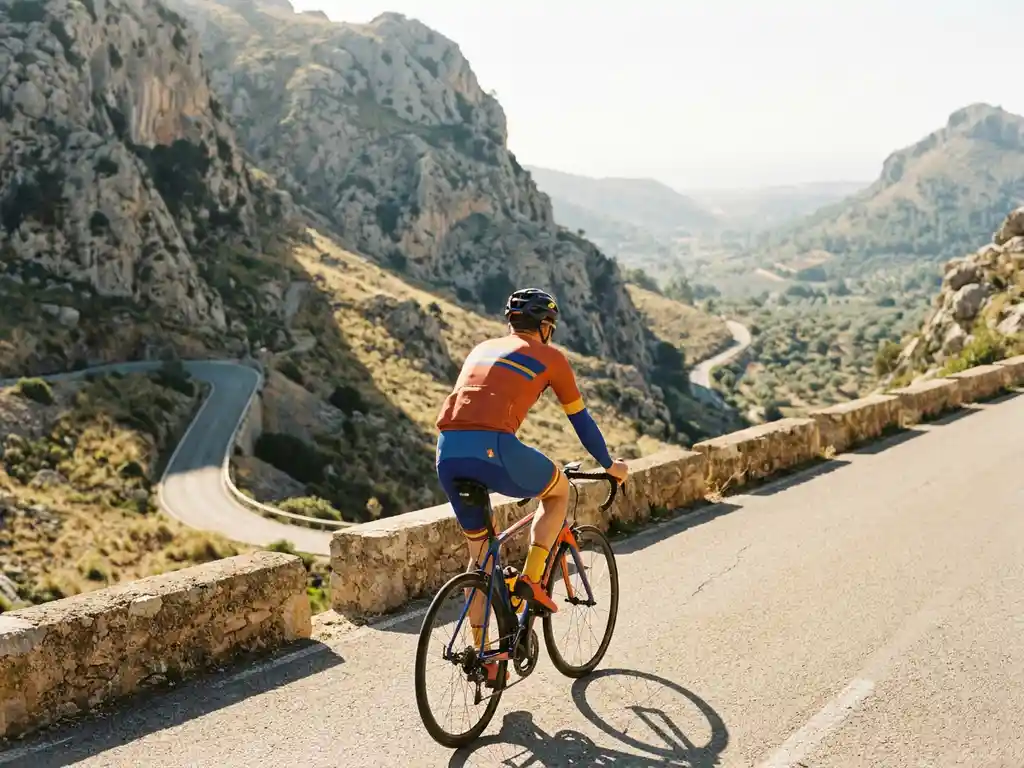
- Destination complexity: Some destinations reward local knowledge more than others. Mallorca, for example, has an extraordinary network of mountain climbs and scenic roads that are far easier to discover with a guide who knows them well than through independent research alone.
- Time and energy for planning: A self-organised holiday requires real preparation. If you enjoy that process, it is part of the experience. If planning feels like a chore, a guided package removes the burden entirely.
- Fitness level and pace: Guided groups ride at defined paces. Make sure the available groups match your fitness. If no group suits your speed, self-organisation gives you the freedom to ride at exactly the pace that works for you.
There is no universally correct answer. The most important thing is to be honest about what you actually want from your cycling holiday, not what you think you should want. Both options can deliver an outstanding experience on the right roads, in the right company, and with the right level of support.