Cycling in the Serra de Tramuntana is significantly more demanding than riding Mallorca’s flat coastal routes. The mountain range delivers steep gradients, technical descents, and sustained climbs that challenge even experienced cyclists, while flat routes along the island’s plains and coastline offer a relaxed, accessible experience. Below, we unpack the key differences across terrain, scenery, fitness requirements, and timing.
What makes the Serra de Tramuntana so challenging to cycle?
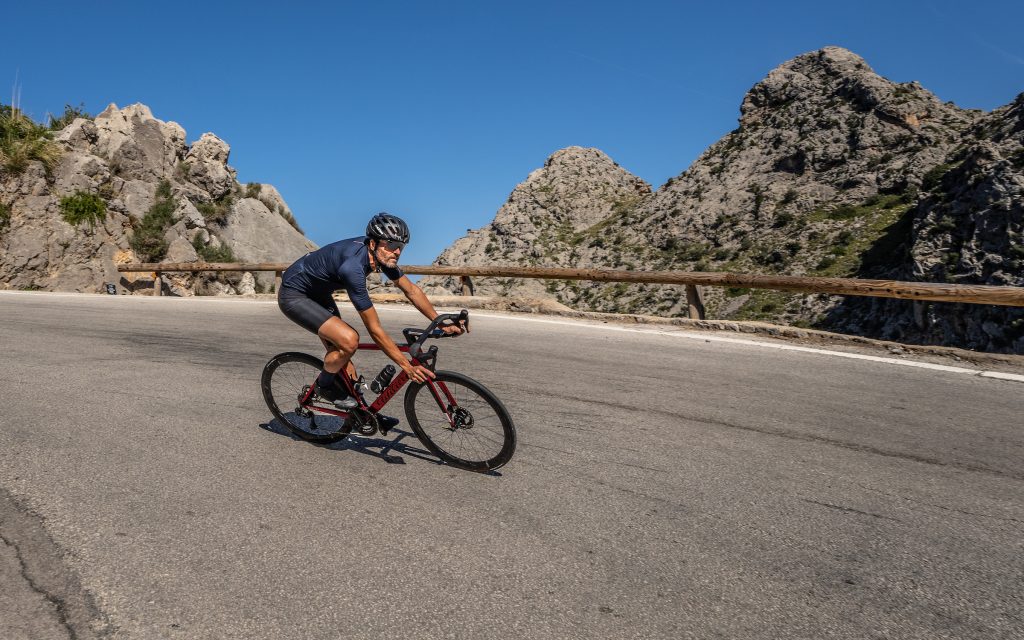
The Serra de Tramuntana is challenging to cycle because of its relentless elevation gain, sharp gradients, and technical road surfaces. Climbs like Sa Calobra and Puig Major gain hundreds of metres over relatively short distances, with gradients regularly exceeding 7 to 10 percent. Unlike flat routes where you can settle into a rhythm, mountain cycling on Mallorca demands constant effort management and bike-handling skill.
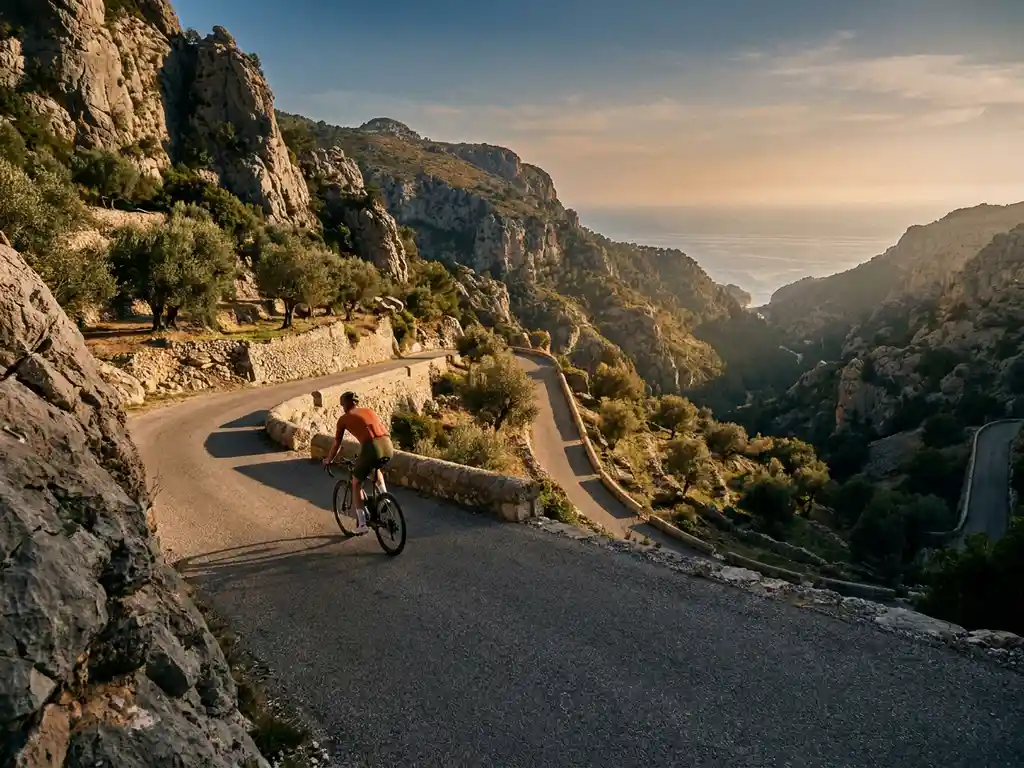
The roads through the Tramuntana are narrow and winding, carved into limestone cliffs that drop sharply toward the sea. Descents require full concentration, particularly on hairpin bends where loose gravel or wet patches can appear without warning. Wind is another factor. The mountain range funnels Atlantic air currents in unpredictable directions, meaning a tailwind on the way up can become a headwind on the descent, or crosswinds can push you toward the edge of the road.
The sheer length of some routes also adds to the challenge. A full traverse of the range from Andratx in the south to Pollença in the north covers well over 100 kilometres, with cumulative climbing that leaves even strong riders tired by the finish. For those exploring Mallorca’s iconic climbs, the Tramuntana is the centrepiece, and it earns that reputation honestly.
How does the scenery differ between mountain and flat routes?
Mountain cycling in the Serra de Tramuntana delivers dramatic, ever-changing scenery, while flat routes on Mallorca offer wide, open landscapes with a gentler, more pastoral character. Both are beautiful, but they create entirely different visual and emotional experiences on the bike.
In the Tramuntana, you ride through ancient olive groves, past stone villages perched on cliff edges, and along roads that reveal sudden views of the Mediterranean hundreds of metres below. The light shifts constantly as you move between shaded valleys and exposed ridgelines. Villages like Valldemossa, Deià, and Fornalutx feel like they belong to another century, and the silence at altitude is striking.
Flat routes, particularly around the Pla de Mallorca or along the Bay of Alcúdia, offer a different kind of reward. Almond and orange groves line the roads, windmills dot the horizon, and the pace is relaxed enough to actually look around without worrying about the next switchback. The coastline routes near Playa de Muro are especially pleasant in the morning, when the light is soft and the roads are quiet. For riders who want to enjoy the island without the physical intensity of the mountains, these flat corridors are genuinely rewarding.
What fitness level do you need for Tramuntana cycling?
Cycling the Serra de Tramuntana requires a solid aerobic base and experience with sustained climbing. Riders should be comfortable maintaining effort over climbs lasting 30 minutes or more and confident handling a road bike on technical descents. Complete beginners or occasional cyclists will find the major Tramuntana climbs genuinely difficult and potentially discouraging.
That said, the range is not exclusively for elite riders. Many routes within the Tramuntana include shorter, less severe sections that intermediate cyclists can enjoy without tackling the full ascents. The key is honest self-assessment. If you regularly ride 60 to 80 kilometres at home with some climbing included, you can approach the gentler Tramuntana roads with confidence. If your usual rides are flat and under 40 kilometres, starting with the island’s plains and building up gradually is a smarter approach.
Gearing matters enormously in the mountains. A compact chainset with a wide-range cassette makes a real difference on long gradients, and many riders underestimate how much they need it until they are halfway up Sa Calobra with burning legs. Ensuring your hire bike is set up correctly for climbing before you head into the hills saves considerable suffering.
Which Mallorca cycling routes suit relaxed riders?
Relaxed riders are best suited to Mallorca’s flat and rolling routes through the central plains, along the Bay of Alcúdia, and around Cap de ses Salines in the south. These routes offer beautiful scenery, manageable distances, and the kind of pace that lets you stop for a coffee and a pastry without losing momentum.
The area around Playa de Muro is particularly well suited to easy, enjoyable riding. Roads fan out toward the wetlands of the Albufera natural park and along quiet lanes through small villages, with minimal traffic and almost no significant climbing. Similarly, the route from Palma toward Llucmajor crosses gently undulating terrain through almond groves and farmland, rewarding riders with authentic Mallorcan countryside without demanding much physically.
We organise guided group rides specifically designed for riders who want to enjoy the island at a comfortable pace. Our Easy Riders group covers 50 to 60 kilometres at around 20 kilometres per hour, with routes chosen for their scenery and accessibility rather than their difficulty. It is a great way to explore roads you might not find on your own while riding with friendly company. Rides go out on Sundays, Mondays, Tuesdays, Thursdays, and Fridays, so there is plenty of flexibility to fit a group ride into your week.
When is the best time to cycle in the Serra de Tramuntana?
The best time to cycle in the Serra de Tramuntana is between March and May, and again from September to November. During these shoulder seasons, temperatures are mild, roads are less crowded, and the landscape is at its most vivid. Spring brings wildflowers and green hillsides, while autumn offers golden light and cooler air after the summer heat.
Summer, particularly July and August, brings intense heat that makes climbing in the Tramuntana genuinely uncomfortable and potentially dangerous. Temperatures in the mountains can still reach 35 degrees Celsius or more, and the combination of heat, exertion, and limited shade on exposed ridgelines is a serious consideration. Riders who visit in summer should plan to start very early, ideally before 8am, and be off the exposed climbs before midday.
Winter is a popular choice for more experienced and competitive cyclists who use Mallorca as a training base. From January through February, the weather is cooler and drier than northern Europe, and the roads are quiet. However, some higher mountain passes can be affected by rain or occasional frost, so checking conditions before heading out is always wise. In 2026, the shoulder season windows remain the sweet spot for most recreational riders who want to enjoy the Tramuntana without battling extreme temperatures.
Whatever time of year you plan to visit, good preparation makes the difference between a memorable ride and a difficult one. If you want personalised advice on routes, timing, or bike hire, get in touch with us and we will help you plan a Mallorca cycling holiday that matches your fitness level and expectations.