Planning a cycling route with multiple climbs in Mallorca requires strategically combining the ascents based on total elevation gain, order, and season. Start by determining your fitness level and daily capacity, then choose climbs that connect logically by geography, and structure the route so that the hardest climb does not come last. Below we answer the most frequently asked questions about planning a climbing route in Mallorca.
Which climbs in Mallorca are best suited to combine?
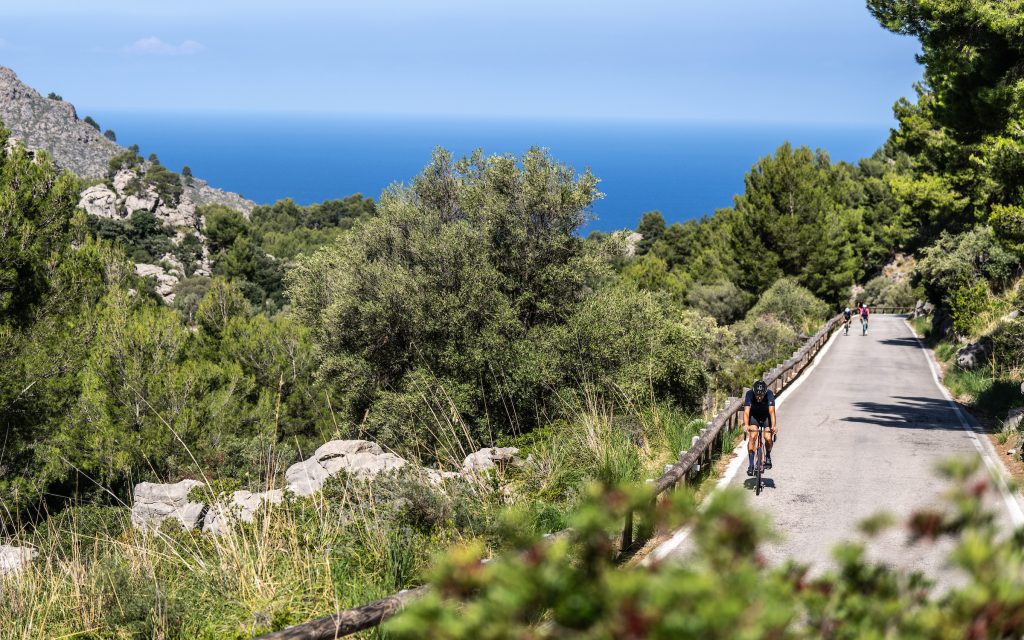
The most suitable combinations in Mallorca are routes that link Sa Calobra, Puig Major, and Cap de Formentor, as these climbs are geographically close to one another in the Serra de Tramuntana. For a tough day ride, combine Sa Calobra with Puig Major via the Coll de Sóller. For a slightly more accessible route, combine Cap de Formentor with the Coll de Sóller or the Coll de Femenia.
The Serra de Tramuntana is the heart of cycling in Mallorca and offers the most opportunities for multi-day climbing combinations. Some popular combinations include:
- Sa Calobra + Puig Major: The queen stage of Mallorca. Sa Calobra (9.4 km, average 7%) followed by Puig Major (12.5 km, average 5.5%) delivers a total of more than 1,400 meters of elevation gain in a single day.
- Coll de Sóller + Cap de Formentor: A slightly less extreme combination, but with spectacular views and varied climbing over more than 100 kilometers.
- Coll de Femenia + Coll de Sa Batalla: Less well known, but ideal for cyclists who want to avoid crowds while still accumulating serious elevation gain.
The climbs in Mallorca vary greatly in character, from technical switchback roads to long, steadily rising gradients. Combining two or three climbs in a single day requires thorough preparation and a realistic assessment of your own ability.
How do you calculate the total elevation gain for a day ride?
You calculate the total elevation gain for a day ride by adding up the positive elevation meters of each individual climb, including the intermediate ascents on the connecting roads. Use apps such as Komoot, Strava, or Garmin Connect for this, as they automatically calculate the total positive elevation difference based on an entered or uploaded route.
A rule of thumb for competitive cyclists: a day ride with 2,000 to 2,500 meters of elevation gain is a serious training day. Anything above 3,000 meters is a demanding mountain ride that requires a solid base fitness and sufficient recovery afterward. Also take into account:
- The total distance in kilometers, not just the elevation gain
- The average gradient per climb, not just the absolute height
- The approach route from your accommodation, which may also include elevation gain
- Descents, which are tiring on the muscles and require concentration
Always calculate the total load of the ride, not just the sum of the official climb statistics. The connecting roads between Sa Calobra and Puig Major, for example, already contain hundreds of extra meters of elevation gain that are not included in the standard climb statistics.
In what order should you plan the climbs for optimal performance?
For optimal performance, plan the hardest or most technically demanding climb as the second or third climb of the day, never last. Start with a longer but less steep climb to warm up your muscles, then tackle the queen climb while you are still fresh enough, and finish with a shorter or less steep ascent.
With the Sa Calobra and Puig Major combination, the most logical order from Sóller is: first climb the Coll de Sóller as a warm-up, then descend toward the turnoff to Sa Calobra, climb Sa Calobra as the main climb, and then tackle Puig Major before returning. This order is also the most geographically efficient.
Also take wind direction and sun into account. In Mallorca, the wind often blows from the north in the morning, meaning a northward climb in the morning encounters less wind resistance. In the afternoon, the sun on the exposed slopes of the Tramuntana can be intense, so plan the longest climbs preferably before 1:00 PM.
Which season is best for tough climbing routes in Mallorca?
The best season for tough climbing routes in Mallorca is from March through May and from September through November. During these periods, temperatures are pleasant for intensive effort, the roads are less busy, and the risk of extreme heat or wintry conditions on the higher passes is minimal.
In summer (June to August), temperatures on the exposed slopes of the Serra de Tramuntana can rise above 35 degrees Celsius, which significantly affects performance and increases the risk of overheating. In winter (December to February), the higher passes such as Puig Major can be temporarily closed due to snow or ice.
For cyclists planning a training camp in Mallorca in 2026, April or October is the ideal choice. The peloton of professional teams heads to Mallorca every spring for exactly the same reason: ideal climatic conditions combined with excellent roads and little tourist traffic.
What bike do you need for a route with multiple climbs?
For a route with multiple climbs in Mallorca, you need a lightweight carbon road bike with a compact gear combination. A weight under 7.5 kilograms and a low rear sprocket of at least 32 teeth make a noticeable difference on long, steep climbs such as Sa Calobra or the ascent of Puig Major.
The choice of bike has a direct impact on your ability to ride multiple climbs back to back without completely running out of energy. Specific features to look for:
- Weight: Every kilogram less makes a noticeable difference in pace and effort on a climb averaging 7%
- Gear ratio: A 34×32 or 34×34 combination provides sufficient reserve for the steepest sections
- Stiffness: A stiff carbon frame converts power efficiently, saving energy on repeated climbs
- Brakes: Hydraulic disc brakes provide better control on the long, technical descent of Sa Calobra
Renting a carbon road bike in Mallorca is the most practical solution for many cyclists, especially if you prefer not to travel with your own bike. This way you always ride a well-tuned machine without the stress of transport.
Where can you find reliable GPX routes for climbing routes in Mallorca?
Reliable GPX routes for climbing routes in Mallorca can be found via Komoot, Strava Routes, Wikiloc, and the official tourism websites of the Balearic Islands. Komoot has an extensive collection of cyclist-verified routes specifically for the Serra de Tramuntana, including elevation profiles, road quality, and up-to-date user reviews.
When selecting a GPX route, pay attention to the following points:
- Date of the route: Roads in Mallorca are regularly resurfaced or temporarily closed. Choose routes that have been recently updated.
- Number of users: Routes with many downloads and positive ratings are more reliable than unknown routes.
- Elevation profile: Check whether the profile matches your expectations and fitness level.
- Starting point: Choose a GPX route whose starting point connects logically to your accommodation to avoid unnecessary approach kilometers.
In addition to digital sources, local knowledge is indispensable. Guides and mechanics on the ground know which roads are currently in good condition, where you can refill your water, and which descent can become dangerously slippery after rain.
How we help you plan your climbing routes in Mallorca
At Rompelberg Cycling Holidays, we combine more than 30 years of local cycling experience with a fully equipped service team in Mallorca. Whether you want to explore a single climb or put together a multi-day climbing program, we are here to help. Specifically, we offer:
- High-quality carbon rental bikes, including the Wilier Filante SLR and Cento10, perfectly tuned for climbing
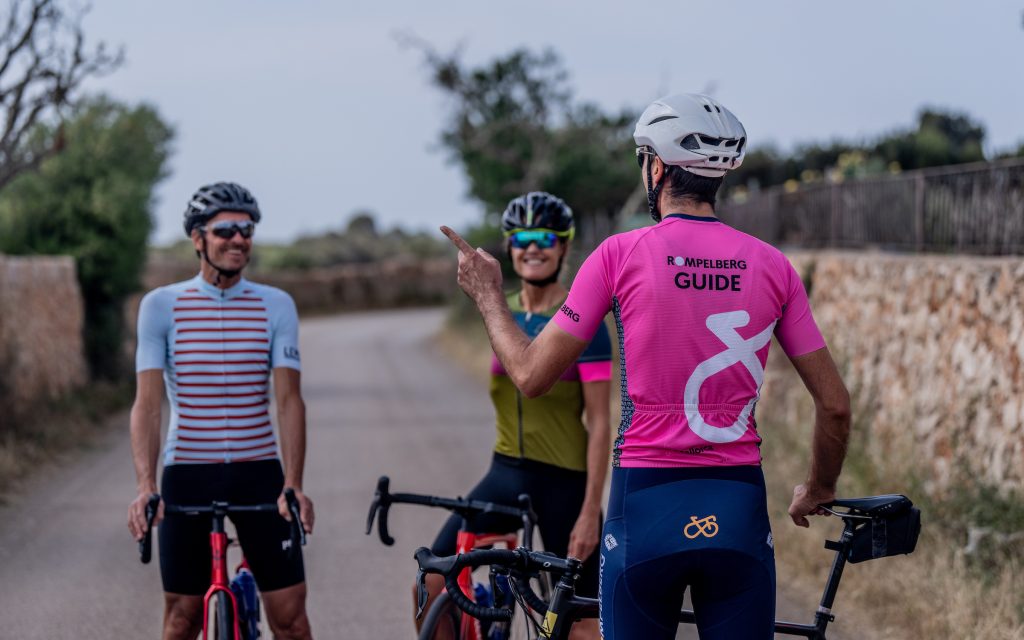
- Personal guidance through our Breakaway group for competitive cyclists who want to tackle Sa Calobra, Puig Major, and Cap de Formentor
- Complete cycling holiday packages including flights, hotel, and cycling program, fully tailored to your needs
- Local route knowledge from our experienced guides, including up-to-date road information and tips on timing and nutrition
- A workshop with experienced mechanics for last-minute adjustments or repairs
Would you like your climbing route in Mallorca planned by people who know the roads like the back of their hand? Get in touch with us and we will discuss together what the best approach is for your level and ambitions.