For a first cycling holiday in Mallorca, the climbing routes around the Serra de Tramuntana are the most suitable, but the difficulty varies greatly from climb to climb. Beginners would do well to start with accessible ascents such as the Coll de Sa Batalla or the route to Valldemossa before tackling the harder cols. In this article, we answer the most frequently asked questions about climbing routes in Mallorca, so you can start your first cycling holiday well prepared.
Which climb in Mallorca is the least challenging for beginners?
The least challenging climbing routes in Mallorca for beginners are the Coll de Sa Batalla (also known as the climb to Lluc from Caimari), the route to Valldemossa, and the ascent of the Coll de Sóller from the east. These climbs offer a good introduction to mountain cycling on the island without being immediately overwhelming.
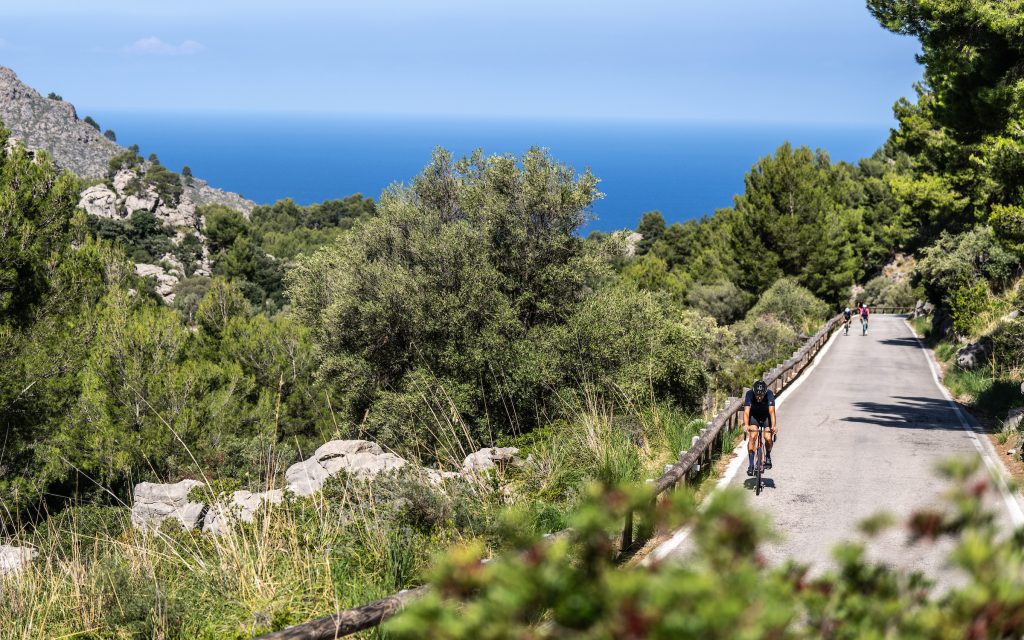
The climb to Lluc from Caimari is particularly popular among beginner climbers. The elevation gain is manageable, the road surface is excellent, and traffic is relatively quiet. The route offers stunning views over the Tramuntana without immediately confronting you with extreme gradients.
The Coll de Sóller from Palma or from the east is another good choice. The climb is long but consistent in gradient, making it ideal for finding a good pace and learning how to distribute your effort over a longer ascent. For those just starting out with climbing on a road bike, this is an excellent training ground.
- Coll de Sa Batalla (Lluc from Caimari): Gradual ascent, quiet traffic, beautiful views
- Valldemossa: Short but atmospheric climb, ideal as a warm-up
- Coll de Sóller (east side): Long and consistent, perfect for finding your rhythm
How difficult is Sa Calobra really for a first cycling holiday?
Cycling Sa Calobra is tough and is generally not recommended as a starting point for a first cycling holiday. The ascent from the coast covers approximately 9.5 kilometres with an average gradient of 7 percent and peaks above 10 percent. For cyclists without experience of mountain riding, this can be a mentally and physically demanding challenge.
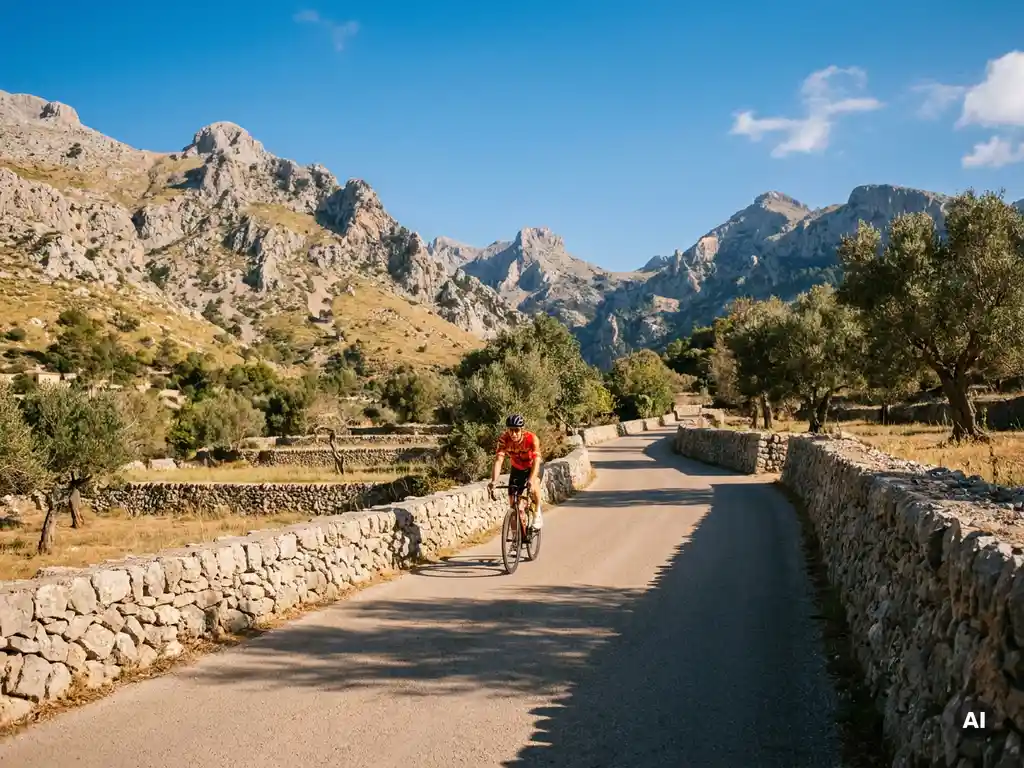
That said, Sa Calobra is one of the most iconic climbing routes in Mallorca. The spectacular hairpin bends, the rugged rock faces, and the arrival at the sea make it an unforgettable experience. But it is precisely that challenge that makes it a climb best tackled after you have already ridden a few other climbs on the island.
A realistic piece of advice: if you are cycling in Mallorca for the first time and Sa Calobra is on your list, plan it for the end of your holiday. Use the first few days to acclimatise, test your legs on lighter climbs, and build your confidence. That way, Sa Calobra becomes the crowning moment of your holiday rather than a demoralising experience on day one.
What is the difference between Puig Major and Cap de Formentor?
Puig Major and Cap de Formentor are both legendary climbing routes in Mallorca, but they differ greatly in character. Puig Major is the highest mountain on the island and is known for its long, grinding ascent with little opportunity to recover. Cap de Formentor is technically less demanding but requires endurance due to its length and undulating profile.
Puig Major: the queen of the Tramuntana
The ascent of Puig Major is one of the hardest climbs in Mallorca. The route climbs to 1,445 metres, making it the highest accessible road on the island. The gradient is high over long stretches and there is little flat terrain to recover on. This is a climb for cyclists with a solid base fitness and experience of mountain riding. The reward is a breathtaking view over the Cuber reservoir and the surrounding mountain peaks.
Cap de Formentor: long and varied
Cap de Formentor is more accessible for beginners but should not be underestimated. The route to the northernmost point of Mallorca is approximately 20 kilometres long from Port de Pollença and has an undulating profile with several shorter climbs. Traffic can be busy during peak season, but leaving early largely solves that problem. The route ends at an iconic lighthouse with one of the most beautiful views on the island.
When is the best time to ride climbing routes in Mallorca?
The best time to ride climbing routes in Mallorca is in early spring (March to May) or in autumn (September to November). During these periods, temperatures are pleasant, traffic is limited, and the roads are at their best. The summer months are less suitable for intensive climbing due to the heat.
In summer, temperatures in Mallorca can rise above 35 degrees Celsius. On the climbs, where the effort is already high, this can be dangerous for inexperienced cyclists. If you do want to ride in summer, set off early in the morning and make sure you have enough water and sun protection.
Spring is by far the most popular period for cyclists in Mallorca. Many professional teams and cycling clubs choose March and April for their training camps, which means you will have like-minded company on the roads. Nature is also at its most beautiful at this time, with blossoming almond trees and fresh green slopes in the Tramuntana.
- March to May: Ideal climate, quiet roads, professional atmosphere
- September to November: Pleasantly warm, fewer tourists, stable weather
- December to February: Cool but rideable, popular with hard-training cyclists
- June to August: Avoid the afternoon, ride only early in the morning
What bike do you need for the climbs in Mallorca?
For the climbing routes in Mallorca, you will benefit most from a lightweight road bike with a compact chainset. A low-weight bike makes the longer ascents considerably more enjoyable, and having enough gears ensures you can keep pedalling even on the steepest sections without overloading your knees.
Hiring a carbon road bike is the smartest choice for many visitors. You do not have to lug an expensive bike onto a plane, you ride a well-set-up machine that is ready for the Mallorcan roads, and you can choose a bike that suits your level and riding style.
For beginners, a bike with a 34-tooth chainring at the front and a 32-tooth sprocket at the rear is a good choice. This gives you enough of a “bailout” gear on the steepest sections of climbs like Sa Calobra or Puig Major. Experienced climbers can manage with a slightly higher ratio, but do not underestimate the Mallorcan mountains, even if you climb regularly at home.
How we help you with your first cycling holiday in Mallorca
At Rompelberg Cycling Holidays, we understand that a first cycling holiday in Mallorca can seem overwhelming. That is precisely why we offer everything you need to head into the mountains with confidence:
- High-quality hire bikes for every level, from lightweight carbon road bikes to comfortable endurance models with the right gear ratios for the climbs
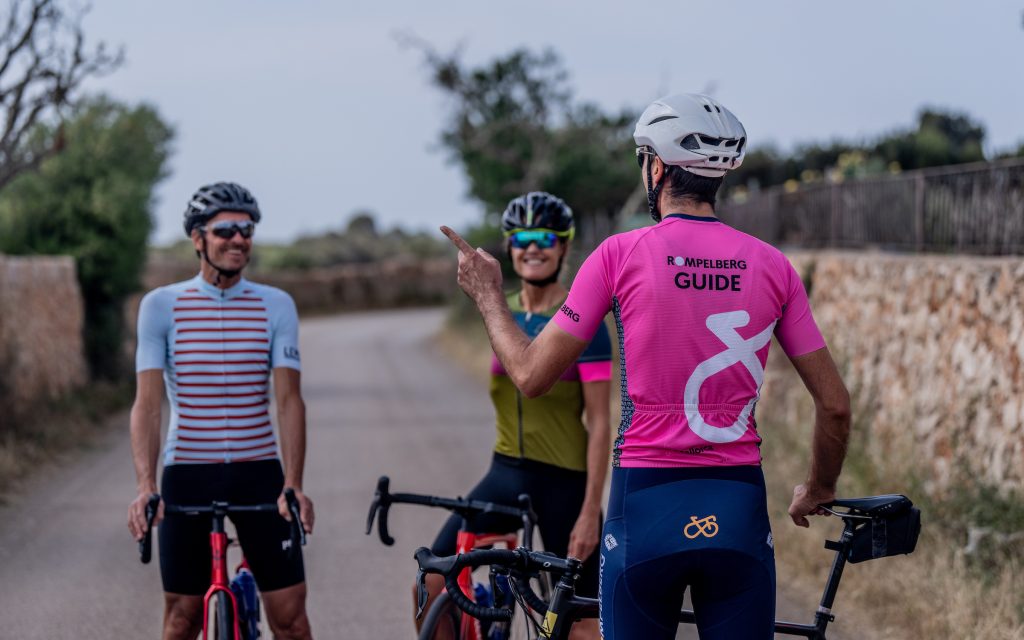
- Personal guidance from experienced guides who know the routes in Mallorca inside out and respect your pace and level
- Complete packages including flights, hotel, and bike, so you only need to focus on the cycling
- Varied cycling programme for every level, from relaxed rides along the coast to challenging mountain stages towards Sa Calobra or Puig Major
- Local knowledge about the best departure times, routes, and tips to get the most out of the climbs in Mallorca
Whether you are cycling up a mountain for the first time or want to know which climbs in Mallorca suit your level, we are happy to help you on your way. Contact us and together we will put together a cycling holiday that perfectly matches your ambitions.