A sporty cycling holiday suits your fitness level if you can comfortably ride for three to five hours at a moderate to high pace and have some experience with varied terrain, including hills or climbs. The key indicator is not raw speed but sustained endurance and the ability to recover between consecutive riding days. The sections below break down exactly how to assess your readiness, what to expect on the road, and how to prepare.
What fitness level do you actually need for a sporty cycling holiday?
For a sporty cycling holiday, you need a baseline of aerobic fitness that allows you to ride 60 to 120 kilometres per day on consecutive days, handle an elevation gain of at least 1,000 metres, and maintain a steady effort without needing long recovery stops. You do not need to be a racing cyclist, but casual weekend rides alone are unlikely to be enough preparation.
The distinction lies in volume and consistency. A sporty fietsvakantie is designed for riders who train regularly, typically three or more times per week, and who feel comfortable pushing their limits on climbs or longer flat stretches. If your longest recent ride is around 60 kilometres and you can finish it feeling tired but not destroyed, you are likely in the right range for an entry-level sporty programme.
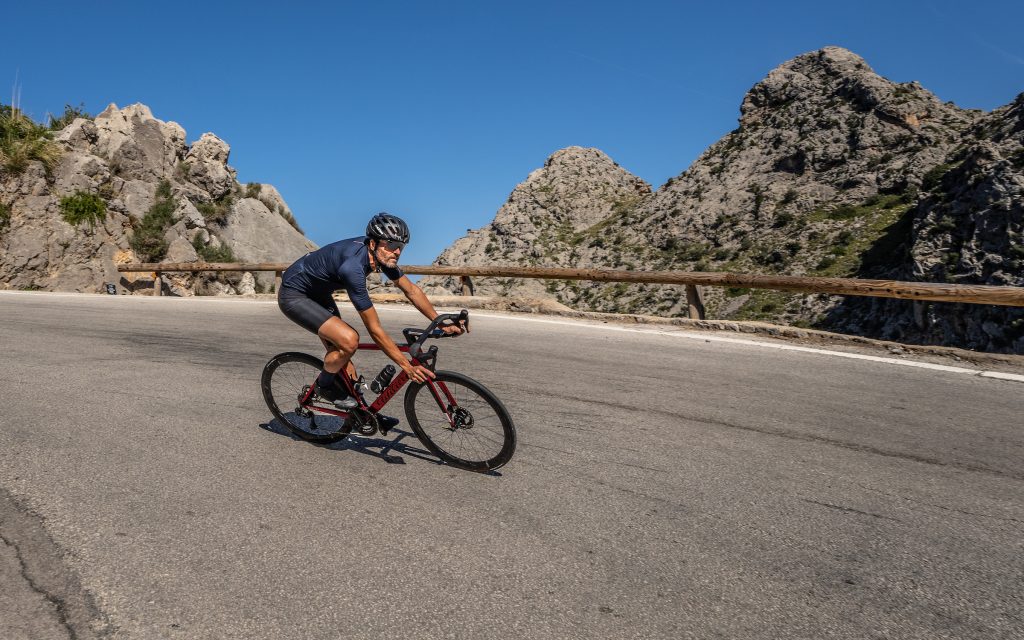
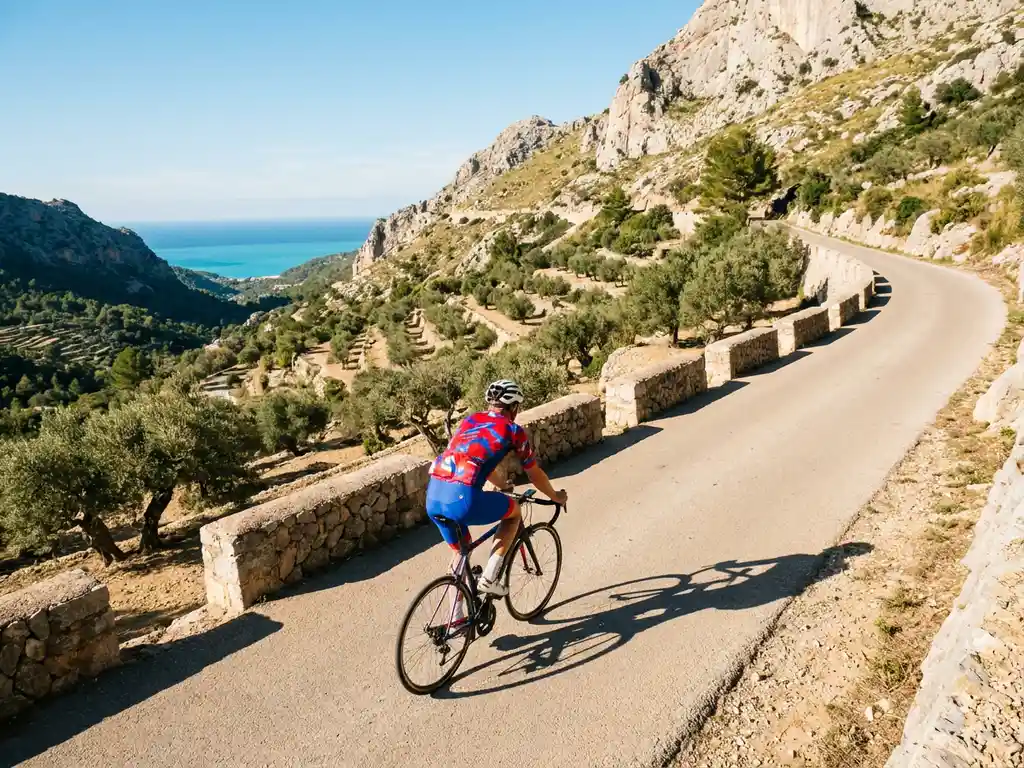
On a destination like Mallorca, the terrain adds an important layer. The island’s famous mountain roads such as Sa Calobra and Puig Major involve sustained gradients that demand genuine climbing fitness. Riders who have never trained on hills may find these routes significantly harder than their flat-road fitness would suggest.
How do you honestly assess your current cycling fitness?
To honestly assess your cycling fitness, look at three factors: your longest recent ride in kilometres, how quickly you recover the day after a hard effort, and how you perform on climbs compared to flat terrain. These three indicators together give a more accurate picture than average speed alone.
Start by reviewing the last four to six weeks of your riding. Ask yourself the following questions:
- Can you ride 60 kilometres or more without stopping for extended rest?
- Do you ride at least three times per week, including at least one longer session?
- Can you handle a second hard ride the day after a demanding effort?
- Have you ridden on hills or climbs in the past month?
- Do you feel comfortable riding in a group at a consistent pace?
If you answer yes to most of these, a sporty cycling holiday is a realistic goal. If several answers are no, that does not mean a cycling holiday is off the table. It means a leisure-oriented programme may be a better starting point, or you need a focused preparation block before booking a sporty option.
What types of rides are included in a sporty cycling holiday?
A sporty cycling holiday typically includes structured group rides with set distances and elevation profiles, guided climbs on iconic routes, tempo rides on flat coastal roads, and optional rest days or shorter recovery spins. The programme is built around daily riding with a mix of intensity levels across the week.
On Mallorca specifically, a sporty fietsvakantie programme often features:
- Mountain climbs such as Sa Calobra, Cap de Formentor, and Puig Major
- Long coastal routes along the island’s flat southern and eastern roads
- Group rides where pace is set collectively, often split by ability level
- Guided rides with a local expert who knows the roads and can adjust the route
At Rompelberg Cycling Holidays, we offer a varied ride programme that covers all of these formats, with groups divided so that competitive riders and those looking for a strong but manageable challenge can both find the right fit. Our Breakaway group is specifically designed for speed-focused riders who want to push their limits on the island’s most demanding roads.
What’s the difference between a sporty and a leisure cycling holiday?
The key difference between a sporty and a leisure cycling holiday is the daily riding volume, pace, and terrain difficulty. A leisure cycling holiday prioritises enjoyment, sightseeing, and relaxed distances of 30 to 60 kilometres per day on flat or gently rolling roads. A sporty holiday focuses on performance, with longer distances, significant elevation, and a structured training approach.
Beyond the rides themselves, the two formats also differ in their overall rhythm. On a leisure fietsvakantie, the schedule is flexible, stops are frequent, and the emphasis is on the experience of the destination. On a sporty holiday, the riding is the centrepiece. Meals, rest, and recovery are planned around training, and riders are expected to show up ready to perform each morning.
The equipment also differs. Sporty holidays typically pair with high-performance carbon race bikes, while leisure programmes work well with more relaxed endurance or hybrid models. If you are considering a racefiets vakantie on Mallorca, the sporty format is the natural match, and the quality of the bike you ride will have a direct impact on how much you enjoy the climbs.
How can you prepare for a sporty cycling holiday in 4–8 weeks?
In four to eight weeks, you can meaningfully improve your readiness for a sporty cycling holiday by increasing your weekly riding volume, adding at least one hill or climbing session per week, and including back-to-back riding days to simulate the consecutive effort of a holiday week.
A practical preparation structure looks like this:
- Weeks 1 and 2: Build your base. Ride four times per week, keeping the effort moderate. Focus on extending your longest ride by 15 to 20 kilometres each week.
- Weeks 3 and 4: Add intensity. Include one interval session per week and one dedicated climbing ride if your local terrain allows. If not, use a turbo trainer with resistance to simulate a gradient.
- Weeks 5 and 6: Simulate the holiday. Plan two consecutive longer rides on the weekend, aiming for 80 to 100 kilometres on day one and 60 to 80 kilometres on day two.
- Weeks 7 and 8: Taper and sharpen. Reduce total volume slightly but keep one quality session per week. Focus on recovery, sleep, and nutrition in the final ten days.
This kind of structured block will not turn a beginner into an elite rider, but it will make a significant difference to how you feel on day three and four of a sportieve fietsvakantie, which is typically when fatigue starts to accumulate.
Which cycling holiday format suits your fitness level on Mallorca?
On Mallorca, the right cycling holiday format depends on your weekly training volume and experience with mountain terrain. Riders who train consistently and have some climbing experience are well suited to a structured sporty programme. Those newer to cycling or returning after a break are better served by a flexible leisure format that can be upgraded as the week progresses.
We offer both formats at Rompelberg Cycling Holidays, and our team can help you choose based on an honest conversation about your current riding. For riders targeting the island’s legendary climbs, our complete fietsvakantie Mallorca packages include high-end carbon race bikes, experienced guides, and a ride programme that matches your ambition to the right route and group. Feel free to contact us directly if you would like personalised advice on which programme fits your fitness level best.
If you are unsure where you fall, the simplest guide is this: if you can ride 80 kilometres comfortably and have ridden hills before, start with the sporty option. If your longest recent ride is under 50 kilometres on flat roads, begin with the leisure programme and build from there. Mallorca rewards every level of rider, and the most important thing is choosing a format that leaves you energised rather than exhausted by day two.